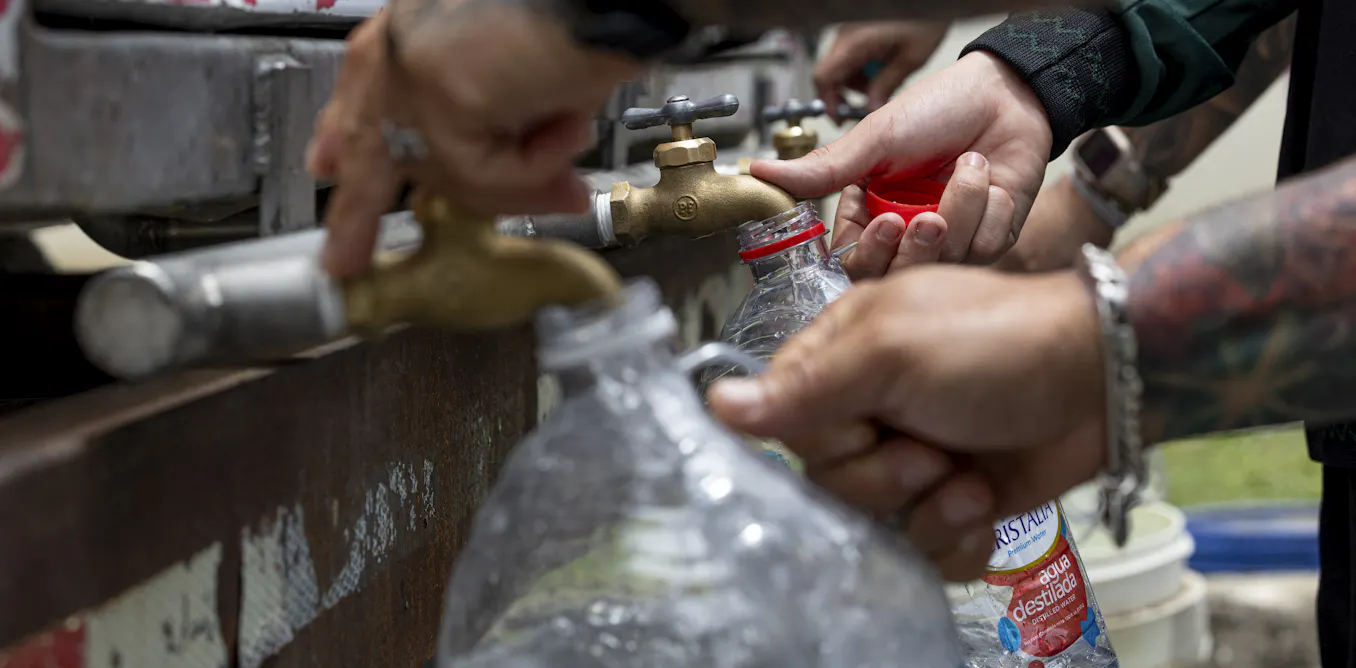
Puerto Rico Water Crisis: Drought and Decaying Infrastructure Drive Rationing
Over 180,000 customer accounts across San Juan and six surrounding municipalities in Puerto Rico face mandatory 48-hour rotating water outages under government-imposed rationing. According to data tracked by the U.S. Drought Monitor, approximately 36% of the territory experiences severe drought conditions, while another 32% faces moderate drought. Triggered by record-low rainfall—including the driest July recorded in San Juan in over 120 years—the crisis has exposed long-standing vulnerabilities in aging water distribution lines and transmission infrastructure managed by the Puerto Rico Aqueduct and Sewer Authority.
The Anatomy of the Current Outages
The rolling shutoffs began on August 7, 2026, forcing households and businesses into alternating two-day supply cuts. Government officials, including Governor Jenniffer González, have attributed the emergency directly to weather conditions and the severe depletion of the crucial Carraízo reservoir. Meteorological experts at local station WAPA-TV, such as chief meteorologist Ada Monzon, have noted that overcoming the current deficit will require multiple tropical systems alongside sustained winter precipitation.
Yet weather is only one piece of a complex equation. Infrastructure failures have exacerbated the shortage. In June 2026, a major rupture occurred along the Superaqueduct, a critical large-diameter pipe system supplying the metropolitan area. Beyond major transmission mains, the broader distribution network suffers from staggering physical losses. Data from the federally appointed Financial Oversight and Management Board for Puerto Rico show that in fiscal year 2024, the utility lost 267 million of the 513 million gallons it produced each day, close to half, to leaks from pipes.
Decades of Unreliable Service and Deepening Distrust
For many residents, the formal August 2026 rationing order formalized a reality they already knew. Neighborhoods in San Juan documented at least 118 days of intermittent service disruptions earlier in the year before the official schedule took effect. This chronic unreliability echoes past emergencies, such as the 2015 drought that restricted 400,000 customers to water every third day, and the prolonged outages following Hurricane Maria in 2017.

This persistent instability has severely eroded public confidence. Academic surveys conducted by engineering and research teams from institutions including Iowa State University reveal that a majority of surveyed residents in regions like Loíza, Comerío, and Aguas Buenas mistrusted their tap water, citing persistent issues with taste, color, and odor. With a median household income of $26,297 and a poverty rate hovering around 37.3%, low-income families carry a heavy financial burden, often paying baseline utility charges while simultaneously purchasing expensive bottled water for daily consumption.
When municipal infrastructure fails to deliver safe or consistent utility services, managing household safety requires immediate intervention.
Financing Constraints and Repair Priorities
Repairing the territory’s crumbling water grid remains an immense financial hurdle. According to estimates from the U.S. Environmental Protection Agency, upgrading Puerto Rico’s transmission and distribution pipe network requires approximately $2.2 billion. The utility’s operating costs of roughly $1.3 billion annually, paired with $240 million to $270 million in yearly debt service on $3.8 billion in long-term debt, routinely outpace its $1.1 billion in yearly revenue.

Consequently, capital projects rely heavily on federal disaster recovery funds from the Federal Emergency Management Agency and other agencies. However, federal funding is typically disbursed as reimbursements, and administrative requirements added by FEMA in 2025 have further slowed project execution. Most obligated funds prioritize treatment plants, meters, and hurricane-resilient restoration rather than replacing the thousands of miles of smaller distribution lines where the vast majority of water losses occur.
As the rotating outages continue, officials have warned that shutoffs could stretch to 72 hours if precipitation fails to arrive. Without significant structural overhauls to the thousands of miles of leaking pipes threading beneath the island, Puerto Rico’s water crisis will likely persist long after the current drought subsides.