PSX Rebounds as Auto Stocks Surge on Draft Policy Optimism
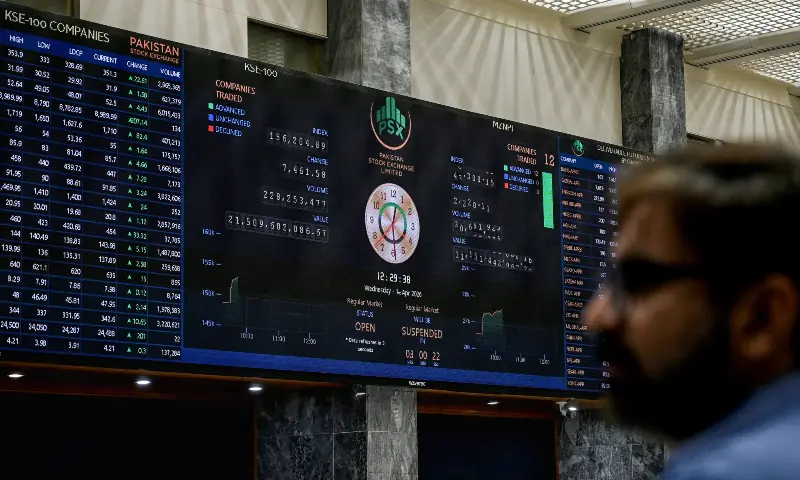
The Pakistan Stock Exchange recovered 779.35 points on Wednesday to close at 165,930.99, gaining 0.47 percent following two consecutive sessions of losses, Dawn reported.
Topline Securities Ltd noted that the benchmark KSE-100 index traded between an intraday low of 164,732 and a high of 166,242 as selective buying emerged at lower levels. The rebound countered recent selling pressure, though the recovery remained restrained by macroeconomic uncertainty, elevated international oil prices, and persistent geopolitical concerns.
United Bank, Hub Power, Habib Bank, Oil and Gas Development Company, and Mari Energies drove the session’s gains, collectively adding approximately 493 points to the index. Meanwhile, the automotive sector drew heavy investor interest amid optimism surrounding the proposed draft Auto Policy 2026-31. The five-year roadmap aims to push automotive exports to $6 billion through tariff rationalization, localization, and electric vehicle incentives, though the plan remains subject to requisite approvals including International Monetary Fund clearance.
Institutional Buying Offsets Refinery Earnings Pressure
The refinery sector moved in the opposite direction under immediate earnings pressure. The government reduced the high-speed diesel crack spread from $41.89 to $38 per barrel for a three-month duration, dampening sentiment across refining equities.
Ali Najib, Deputy Head of Trading at Arif Habib Ltd, said the market gained momentum from renewed institutional buying. That buying was fueled by optimism over intensified diplomatic efforts to resolve the US-Iran conflict and expectations of easing geopolitical tensions.
Despite the broader index gains, overall market activity contracted. Trading volume dipped 14.98 percent to 379.9 million shares, while total turnover rose 9.54 percent to Rs21.2 billion. Pakistan Refinery led the volume chart with 49.4 million shares traded during the session.
Diplomatic Breakthroughs May Sustain Market Momentum
Analysts point to ongoing institutional participation, potential diplomatic breakthroughs, and sector-specific policy shifts as primary forces capable of sustaining positive market momentum. However, persistent geopolitical uncertainty and evolving macroeconomic risks threaten to keep market volatility elevated.