
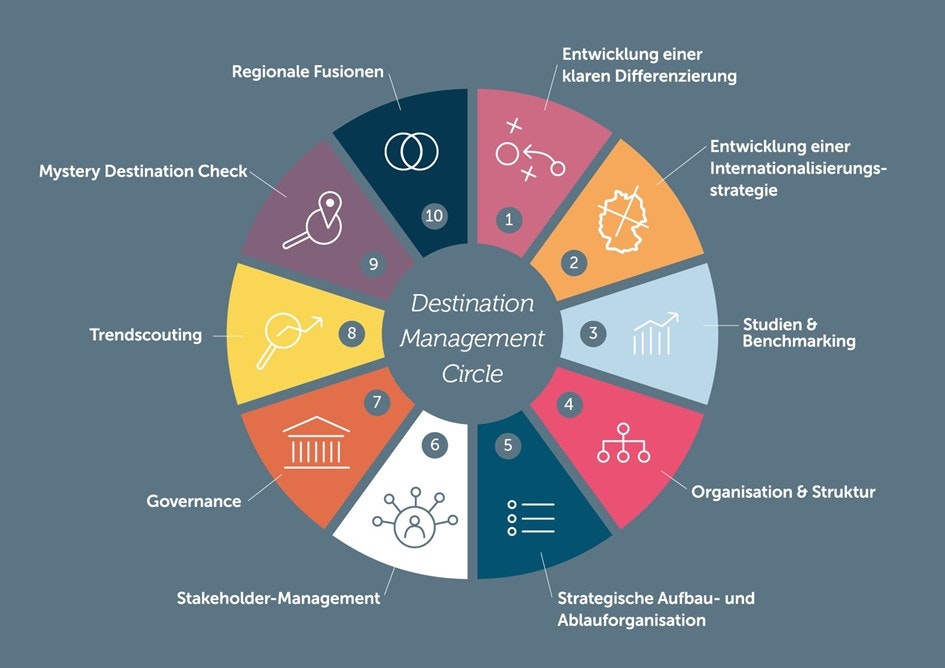
Destination Management Circle offers New Tourism Consulting Model
Prodinger Tourismus Consulting, in collaboration with tourism expert Hermann Fercher, has launched a new consulting service centered around the “Destination Management Circle.” This innovative approach aims to provide tourism regions with a practical control model to navigate the evolving landscape of modern tourism. The initiative comes as destinations face increasing pressure from global trends, technological advancements, and shifting social values, requiring a more dynamic and individualized approach to destination management.
Addressing the Changing Needs of Tourism Regions
Tourism regions are undergoing important structural changes, necessitating a shift from conventional, predictable models to more adaptable strategies. Destination management now requires strategic development, organizational restructuring, effective marketing, and robust control mechanisms. According to a 2023 report by the World Tourism Organization, destinations that prioritize sustainable practices and embrace digital innovation are more likely to attract visitors and maintain a competitive edge World Tourism Organization.
Prodinger Tourismus Consulting aims to support regions, tourism associations, and decision-makers in realigning their strategies, organizations, and content. The Destination Management Circle serves as a central framework, systematically addressing the critical areas of modern destinations.
Did You Know? The global tourism industry is projected to reach $15.5 trillion by 2033, highlighting the importance of effective destination management strategies Statista.
Key Components of the Destination Management Circle
The Destination management Circle comprises ten interconnected fields of action, providing regions with a foundation for analysis, strategy development, and implementation support. This holistic approach ensures that existing potential is fully utilized. Key advisory points include:
- Strategy and profile development
- Hotel property strategies and offer analyses
- ESG (Environmental, Social, and Governance) benchmarks and value creation analyses
- Feasibility studies for tourist infrastructure
- Support for organizational and structural issues
- Workshop moderation with stakeholders
- Assistance in tourism region mergers
- alpine Destination Report for location assessment and positioning analysis
Pro Tip: Engaging local stakeholders in the planning process can lead to more sustainable and community-supported tourism initiatives.
Expert insights on Modern Governance
Hermann Fercher, drawing from 30 years of experience in destination management organizations (DMOs), emphasizes the need for an objective, external perspective. He notes that many tourism organizations are frequently enough influenced by political factors and individual self-interests, hindering objective decision-making and modern governance.
“Tourism is changing rapidly,and destinations must adapt continuously,” says Thomas Reisenzahn,Managing Director of Prodinger Tourismusberatung. “With our destination Management Circle, we offer a structured basis for strategically developing regions without losing sight of individual measures.”
The Future of Destination Management
The Destination Management Circle by Prodinger offers decision-makers a practical tool to address future challenges in a structured manner. Weather for tourism associations, communities, regional developers, or investors, the model provides the orientation, expertise, and courage needed to drive change and actively shape the future of tourism.
| Area | Description |
|---|---|
| Strategy Development | Creating clear and effective strategies for tourism regions. |
| Hotel Strategies | Analyzing and optimizing hotel property offerings. |
| ESG Benchmarks | Implementing environmental, social, and governance standards. |
| Feasibility Studies | Assessing the viability of tourist infrastructure projects. |
| Organizational Support | Assisting with structural and organizational improvements. |
How can tourism regions better balance economic growth with environmental sustainability? What innovative strategies can DMOs employ to engage younger travelers?
Evergreen Insights: The Evolution of Destination Management
Destination management has evolved considerably over the past few decades. initially focused on marketing and promotion, it now encompasses a broader range of responsibilities, including sustainable development, community engagement, and crisis management. The rise of digital technologies and social media has also transformed how destinations interact with potential visitors, requiring a more personalized and data-driven approach.
Historical trends show that destinations that invest in infrastructure, preserve their cultural heritage, and prioritize visitor experiences are more likely to thrive in the long term. Effective destination management requires collaboration among various stakeholders, including government agencies, tourism businesses, and local communities.
Frequently Asked Questions About Destination management
- What are the main challenges facing tourism regions today?
- Tourism regions face challenges such as increasing competition, environmental concerns, changing traveler preferences, and the need for sustainable development.
- How can destinations attract more visitors?
- Destinations can attract more visitors by offering unique experiences, investing in marketing and promotion, improving infrastructure, and ensuring high-quality service.
- What role does technology play in destination management?
- Technology plays a crucial role in destination management by enabling data-driven decision-making, enhancing visitor experiences, and facilitating communication and collaboration among stakeholders.
- How can tourism regions ensure sustainable tourism practices?
- Tourism regions can ensure sustainable tourism practices by implementing environmental regulations, promoting responsible behavior among visitors, and investing in conservation efforts.
- What is the importance of community engagement in destination management?
- Community engagement is essential for ensuring that tourism benefits local residents, preserves cultural heritage, and fosters a sense of ownership and pride in the destination.
ready to transform your tourism destination? share this article and join the conversation below!
