
Power Flexible AI Factories Stabilize UK Grid During Peak Demand
The “TV Pickup” Problem: Why AI Factories Are Becoming Grid Stabilizers
When England played Germany in the Euro 2020 semi-final, the U.K. National Grid didn’t just see a spike in viewership; it saw a 1-gigawatt surge in electricity demand as millions simultaneously boiled kettles at halftime. That is the output of a standard nuclear reactor, hitting the grid in minutes. As we move into 2026, the energy profile of hyperscale AI factories is beginning to mirror this volatility. The question isn’t just about generating more power; it’s about architectural flexibility. Can a data center act as a shock absorber rather than a parasitic load?
The Tech TL;DR:
- Dynamic Load Shedding: Emerald AI’s Conductor Platform allows AI clusters to reduce power consumption by 30% in under 40 seconds without killing high-priority inference jobs.
- Infrastructure Bypass: Flexible power usage enables faster grid interconnection, bypassing the multi-year wait times for physical substation upgrades.
- Hardware Telemetry: The solution relies on NVIDIA’s System Management Interface (NVSMI) to fetch second-level GPU power data, moving beyond coarse PDU metrics.
The traditional data center model is binary: it is either on or off. For grid operators, this rigidity is a nightmare when trying to balance intermittent renewable sources against sudden demand spikes. The recent collaboration between Emerald AI, NVIDIA, and National Grid ESO demonstrates a shift toward “power-flexible” computing. This isn’t just PR fluff about “green AI”; it is a hard engineering constraint driven by the physical limits of the transmission network.
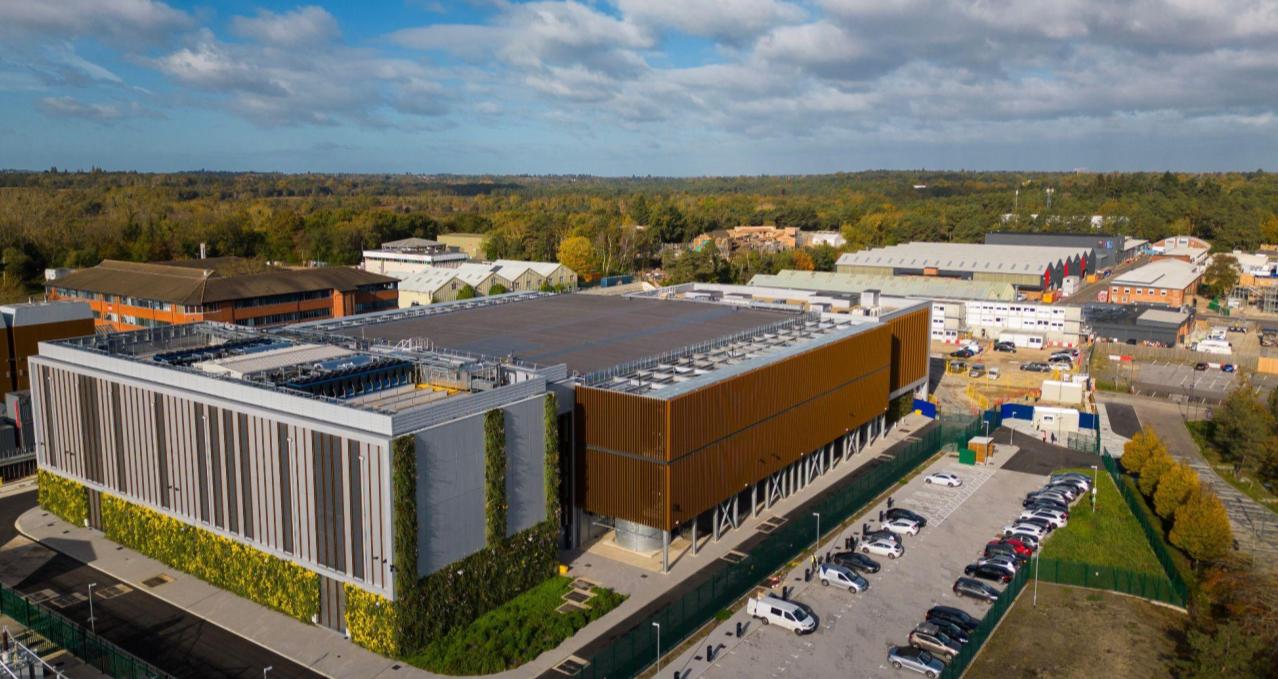
Following the latest production push in late 2025, Emerald AI deployed its Conductor Platform at the Nebius AI factory in London. The setup is aggressive: a cluster of 96 NVIDIA Blackwell Ultra GPUs connected via the Quantum-X800 InfiniBand fabric. The architectural challenge here is latency. Grid frequency regulation happens in milliseconds. If the AI cluster takes ten seconds to throttle down, the grid has already destabilized.
Under the Hood: The Blackwell Ultra Power Profile
To understand the significance of this deployment, we have to look at the thermal design power (TDP) of the hardware involved. The NVIDIA Blackwell architecture, shipping in volume for enterprise use in 2026, pushes the boundaries of silicon density. Unlike the H100 era, where power scaling was linear, Blackwell Ultra introduces non-linear power spikes during tensor core activation.
According to the NVIDIA System Management Interface documentation, retrieving consistent, seconds-level telemetry is critical for this use case. Standard SNMP polling on PDUs (Power Distribution Units) is too slow, often lagging by minutes. The Conductor Platform hooks directly into the GPU driver layer, allowing for granular control over clock speeds and voltage.
Emerald AI, backed by a Series B round led by Breakthrough Energy Ventures, has positioned itself not just as a software vendor but as a grid asset manager. Their whitepaper details a proof-of-concept where the AI cluster successfully mimicked the “TV pickup” phenomenon. When the simulated kettle surge hit, the cluster didn’t shut down; it intelligently downclocked flexible training jobs although maintaining throughput for latency-sensitive inference tasks.
“We’ve proved the value that this technology brings by testing not just the GPUs, but also the CPUs and everything that sits around it. It’s about total IT equipment power consumption, not just chip TDP.” — Steve Smith, Group Chief Strategy Officer, National Grid
The IT Triage: Why Your Data Center Needs an Energy Audit
For enterprise CTOs, the implication is clear. As energy costs rise and grid constraints tighten, the ability to modulate power consumption becomes a financial and operational imperative. However, implementing this level of telemetry and control requires significant architectural overhaul. Most legacy data centers lack the sensor granularity to even detect these micro-spikes, let alone react to them.
This creates an immediate bottleneck for organizations looking to scale AI workloads without waiting three to five years for grid interconnection approvals. The solution often lies in engaging specialized data center optimization firms that specialize in power modeling and thermal management. These entities can audit your current PUE (Power Usage Effectiveness) and determine if your infrastructure is capable of supporting dynamic load shedding.
the security implications of exposing grid-control APIs to external signals cannot be ignored. Allowing a third-party grid operator to signal your hardware to throttle requires a zero-trust architecture. Organizations should be consulting with cybersecurity auditors to ensure that these demand-response channels are isolated from the public internet and protected against spoofing attacks that could intentionally disrupt compute availability.
Implementation: The Logic of Throttling
How does this look in code? It’s not magic; it’s a priority queue management system. Below is a simplified conceptual representation of how a workload manager might interact with the NVSMI to enforce a power cap during a grid stress event.
import pynvml import time def enforce_grid_cap(target_watts, priority_jobs): """ Dynamically throttle GPU power based on grid signal. Preserves high-priority inference jobs; throttles background training. """ pynvml.nvmlInit() device_count = pynvml.nvmlDeviceGetCount() current_load = get_cluster_power_draw() if current_load > target_watts: print(f"Grid Stress Event: Reducing load from {current_load}W to {target_watts}W") for i in range(device_count): handle = pynvml.nvmlDeviceGetHandleByIndex(i) # Check if GPU is running a priority job if not is_priority_job_running(handle, priority_jobs): # Aggressive downclock for non-critical training tasks pynvml.nvmlDeviceSetApplicationsClocks(handle, 800, 1200) pynvml.nvmlDeviceSetPowerManagementLimit(handle, 250000) # 250W limit else: # Maintain performance for inference pynvml.nvmlDeviceSetPowerManagementLimit(handle, 400000) # 400W limit time.sleep(5) # Re-evaluate in 5 seconds pynvml.nvmlShutdown() Comparative Analysis: Static vs. Flexible Architecture
The shift from static power allocation to flexible demand response represents a fundamental change in data center economics. The table below contrasts the traditional “always-on” model with the emerging flexible AI factory model.
| Metric | Traditional Data Center | Flexible AI Factory (Emerald/NVIDIA) |
|---|---|---|
| Response Time | Minutes to Hours (Manual intervention) | < 40 Seconds (Automated API) |
| Grid Interconnection | 3-5 Years (Requires substation upgrade) | < 1 Year (Utilizes existing capacity) |
| Telemetry Granularity | PDU Level (Rack aggregate) | GPU/Chip Level (NVSMI) |
| Cost Impact | High CapEx for infrastructure | OpEx savings via demand response credits |
Looking at the published Emerald AI whitepaper, the data shows 100% alignment with over 200 power targets during the London trials. This level of compliance suggests that the software layer is mature enough for production deployment, moving beyond the “proof of concept” phase that plagues so much energy-tech.
However, skepticism remains regarding the long-term wear and tear on hardware. Frequent voltage scaling and clock shifting could theoretically impact the longevity of silicon, a concern that hardware maintenance specialists will demand to monitor closely over the next 12 to 18 months. While the grid benefits are immediate, the total cost of ownership (TCO) calculation must include potential hardware degradation.
The Editorial Kicker
The era of the “dumb” data center is ending. As AI factories consume an increasing percentage of global electricity, they will be forced to evolve from passive consumers to active grid participants. The technology demonstrated by Emerald AI and NVIDIA proves that compute can be elastic, not just in terms of cycles, but in terms of joules. For the CTOs planning the next generation of infrastructure, the question is no longer “How much power do we need?” but “How flexible can our load be?” The companies that answer this correctly will secure their grid connections first; the rest will be waiting in line for the next decade.
Disclaimer: The technical analyses and security protocols detailed in this article are for informational purposes only. Always consult with certified IT and cybersecurity professionals before altering enterprise networks or handling sensitive data.