
From well to Aqueduct: Uncovering the Evolution of Pompeii’s Water systems
A recent study, published in PNAS in 2025, has shed new light on the evolution of water infrastructure in the ancient Roman city of Pompeii. Researchers examined the Stabian Baths,republican Baths,Forum Baths,and the city’s aqueduct – a system featuring 14 water towers constructed during the reign of Emperor Augustus – to understand how water access impacted daily life and hygiene in the city. The findings reveal a progression from well-based systems to a more robust aqueduct-supplied network, which considerably enhanced both the scale of bathing facilities and public health.
A History of Pompeii’s Bathing Culture
The Stabian Baths, the oldest public bath complex in Pompeii, were built after 130 BCE and remained in use until the city’s destruction in 79 CE. These baths, alongside the Republican Baths (constructed around the same time but abandoned by 30 BCE) and the later Forum baths (built after 80 BCE), served as vital social and hygienic centers for the population. The archaeological record shows these bath complexes weren’t static; they were continuously improved and adapted to meet the needs of a growing population and changing hygiene standards.[[1]]
Unlocking Insights Through Carbonate deposits
The study utilized a novel approach of analyzing carbonate deposits found within the water systems. These deposits, formed over time by dissolved minerals in the water, act as a physical record of the water’s journey and its chemical composition.By examining the thickness and composition of these deposits, researchers were able to reconstruct the history of water usage, identify instances of infrastructure repair, and even detect signs of contamination. This method provided a high-resolution timeline of changes to Pompeii’s water supply.
From Wells to Aqueducts: A Technological Leap
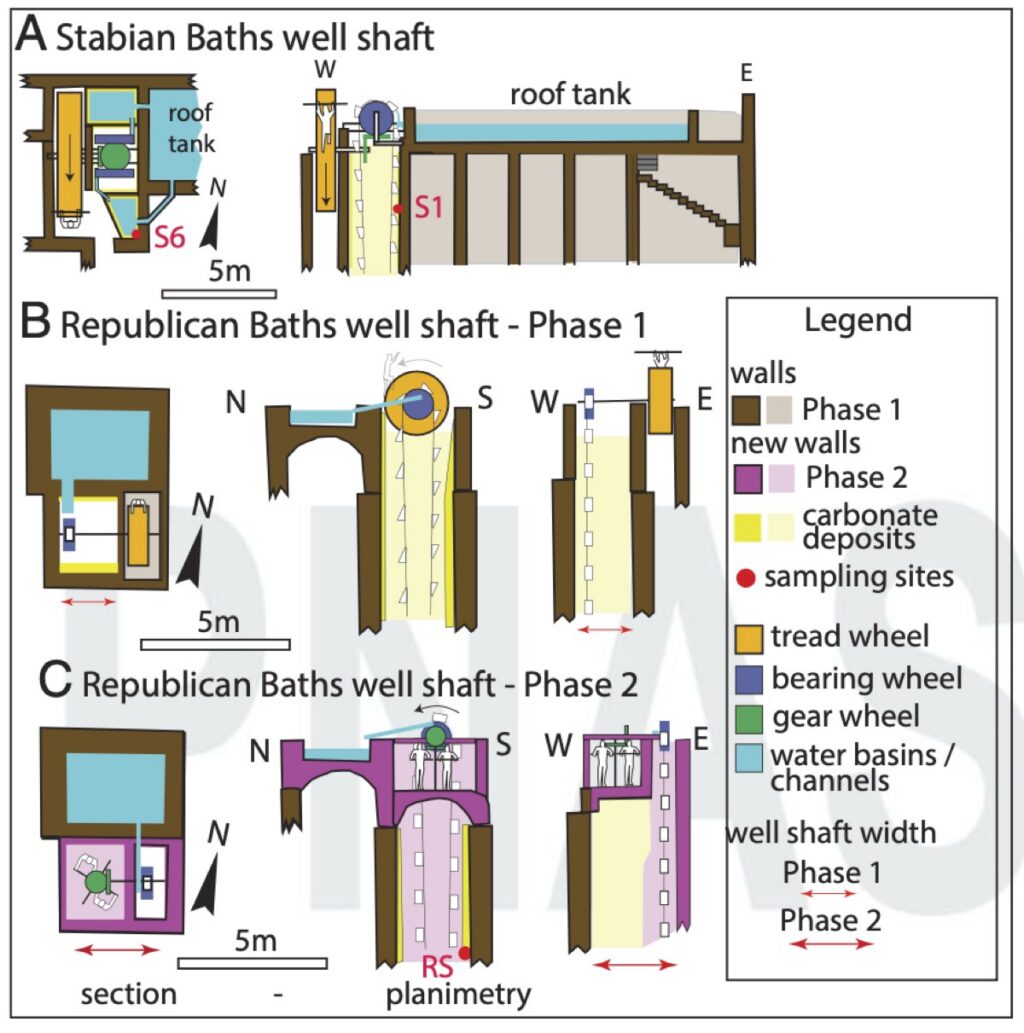
Initial reliance on wells presented challenges. The study revealed evidence of frequent boiler replacements and pipe repairs in the earlier bath complexes, indicating a constant need for maintenance. Moreover, analysis of the Republican Baths’ heated pools showed concerning levels of contamination from human waste—sweat, sebum, urine, and bathing oils—suggesting infrequent water changes. The limitations of manual water-lifting machines, capable of refreshing the water only once daily, contributed to this issue.
The construction of the aqueduct during the Augustan period dramatically changed the landscape. Investigations revealed that after the well shafts were enlarged, the carbonate deposits became thinner, pointing to more efficient water flow and reduced turbulence. with the aqueduct in place, the scale of the bathing facilities expanded, and hygiene levels likely improved significantly.The aqueduct provided a more reliable and abundant water supply, facilitating better sanitation and public health.
Addressing Concerns: Led Contamination and Water Source
While the aqueduct represented a major advancement,the study didn’t shy away from acknowledging potential drawbacks. Analysis detected evidence of lead contamination in the aqueduct’s water supply. However, researchers observed that the formation of carbonate deposits within the lead pipes over time appeared to mitigate these levels, diminishing the health risks associated with lead exposure.
A long-standing debate regarding the source of the aqueduct’s water was also addressed. Was the water sourced from the nearby town of Avella, channeled through the Aqua Augusta aqueduct, or did it originate from local wells and springs of mount Vesuvius? The researchers, through isotopic analysis, concluded that the carbonate composition of the aqueduct water was inconsistent with volcanic sources, strongly supporting the hypothesis that the water was, actually, supplied from Avella. [[2]]
Implications for Understanding Roman Engineering and Public Health
This research provides invaluable insight into the refined engineering and public health practices of the ancient Romans. The detailed analysis of Pompeii’s water systems demonstrates a commitment to continuous improvement, resourcefulness in addressing challenges, and a keen awareness of the importance of sanitation. The study underscores how technological advancements, like the aqueduct, could have a profound impact on the quality of life for urban populations.
Looking Ahead
Further research building on these findings could explore the socioeconomic implications of improved water access in Pompeii. Investigating how the changes in water supply influenced social stratification, trade, and overall urban growth promises to deliver an even richer understanding of Roman civilization. By utilizing advanced analytical techniques and historical archaeology, scholars continue to unlock the secrets of the past, providing valuable lessons for the present and future.
