
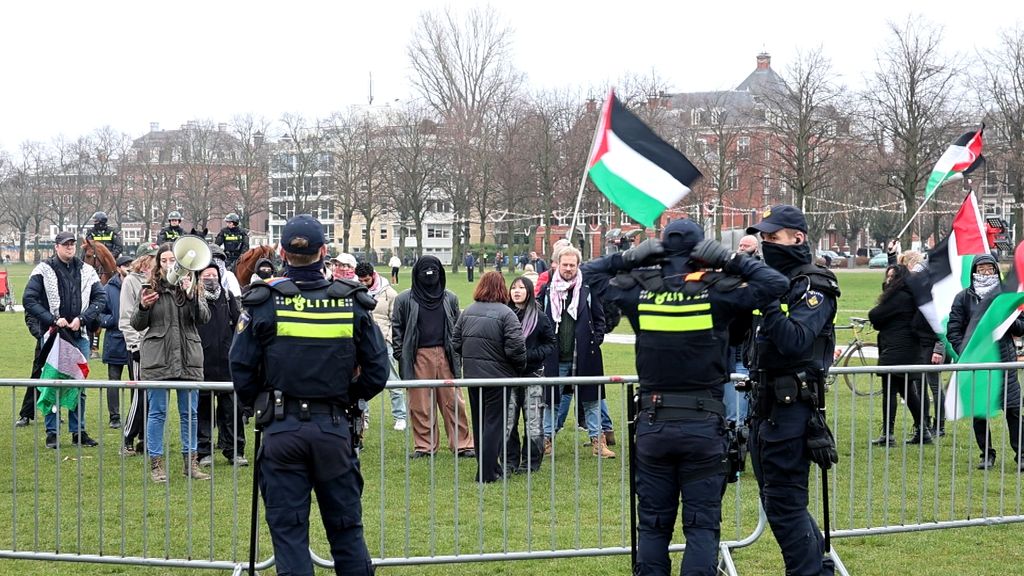
Concertgebouw (Amsterdam’s premier concert hall) is now at the center of a structural shift involving cultural diplomacy and domestic protest over Israeli‑linked performances. The immediate implication is heightened societal polarization that forces cultural institutions to navigate geopolitical sensitivities while maintaining public order.
The Strategic context
Since the post‑Cold‑War era, Western European cultural policy has emphasized openness, cross‑border artistic exchange, and the protection of free expression. At the same time, the EU’s internal market has been increasingly intersected by identity‑based activism, especially around the Israel‑Palestine conflict. The Netherlands, with its tradition of liberal values, has seen a rise in pro‑Palestinian street actions that target high‑visibility symbols of cultural prestige. this creates a structural tension between the liberal‑democratic norm of artistic freedom and the emerging demand for “ethical programming” that reflects foreign‑policy concerns.
Core Analysis: Incentives & Constraints
Source Signals: Police arrested demonstrators at a small protest outside the Concertgebouw against Israeli singer Shai Abramson, whose military ties were cited. The municipality initially banned the protest at the venue,relocating it to Museumplein; a judge later permitted a “silent and static” protest with strict limits. The Concertgebouw asked the Hanukkah concert foundation to replace Abramson, later reaching a compromise that moved his performance to private, invitation‑onyl events. Additional protests are scheduled for the evening, with a strong police presence.
WTN Interpretation:
– Protesters* seek to leverage the Concertgebouw’s public profile to amplify opposition to Israeli military affiliations, using cultural events as a proxy battlefield for broader geopolitical grievances. Their incentive is to force institutional accountability and signal solidarity with the Palestinian cause.
– *Concertgebouw* aims to preserve its reputation as a neutral cultural hub, avoid alienating donors, and maintain operational continuity. By negotiating a private‑event compromise, it balances artistic freedom with pressure from activist groups and municipal authorities.
– *Municipal authorities* (Mayor Halsema’s office) are constrained by legal obligations to protect the right to protest while also ensuring public safety and the city’s cultural tourism appeal. The judicial allowance for a limited, silent protest reflects a calibrated approach to uphold civil liberties without disrupting venue operations.
– *Funding bodies* (public and private sponsors) may be sensitive to reputational risk; any perception of endorsing controversial figures could affect future allocations, creating a financial constraint on programming decisions.
WTN Strategic insight
“Cultural venues are becoming de‑facto arenas for geopolitical contestation,turning artistic programming into a proxy for state‑level diplomatic pressure.”
Future Outlook: Scenario Paths & Key Indicators
Baseline Path: The compromise on private performances holds, protests remain limited to small, regulated actions, and the Concertgebouw continues to vet future artists for overt military affiliations. Institutional stability is maintained, and the venue’s programming proceeds with minimal disruption.
Risk Path: If additional Israeli‑linked artists are booked or if activist networks coordinate larger-scale demonstrations, the city could face repeated arrests, legal challenges to protest bans, and pressure from sponsors to adopt an explicit cultural boycott policy. This could trigger broader debates on artistic freedom versus ethical programming across Dutch cultural institutions.
- Indicator 1: Declaration of future performances by artists with documented Israeli military or governmental ties at major Dutch venues.
- Indicator 2: Public statements or policy revisions from the Dutch ministry of Culture or municipal authorities regarding cultural boycotts or protest regulations.
