
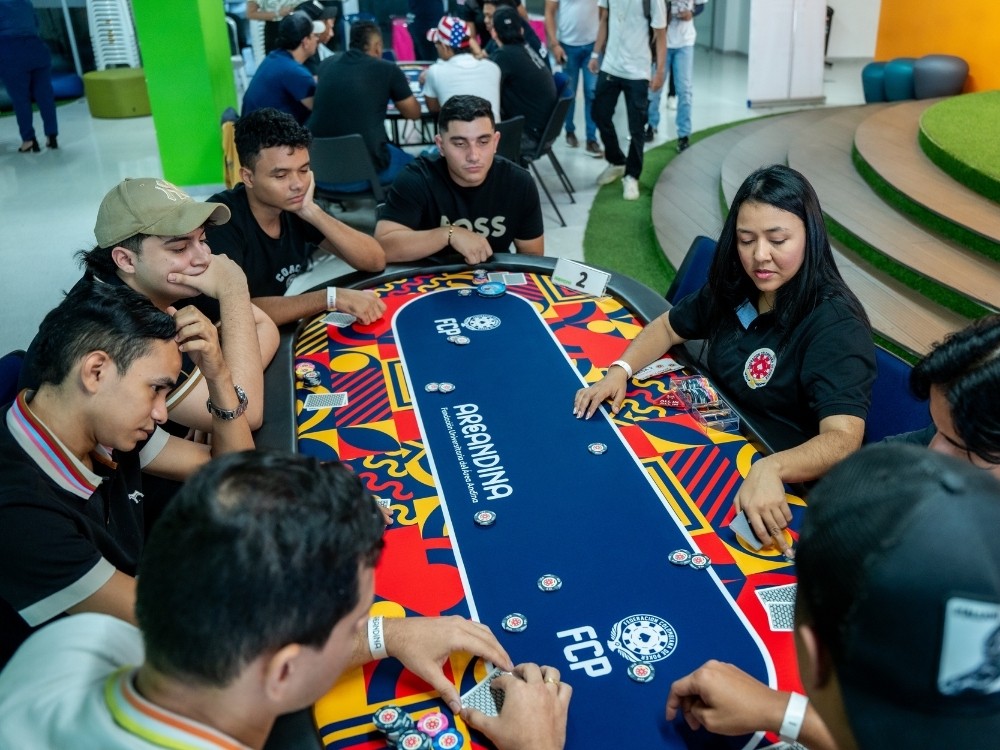
Poker as a Pedagogical Tool: Cultivating Critical Thinking and STEAM Skills in Valledupar
A groundbreaking educational initiative is underway in Valledupar, Colombia, leveraging the strategic depth of poker too enhance critical thinking, analytical skills, and STEAM (Science, Technology, Engineering, Art, and Mathematics) competencies in young people. This innovative “Strategic Minds and Critical Thinking” Bootcamp, launched coinciding with the 23rd anniversary of the University Foundation of the andean Area, positions Valledupar as a pioneer in adopting unconventional pedagogies.
The program directly addresses crucial cognitive functions – management of information, active memory, and strategic analysis – all vital for tackling complex problems and fostering a critical mindset. Rector Gelca Gutiérrez emphasizes that this approach not only strengthens informed decision-making but also lays a foundation for future academic and professional success, highlighting the strong institutional backing for the initiative.
This Bootcamp represents a shift towards educational models prioritizing critical thinking and metacognition, competencies identified by the OECD’s PISA 2022 Report as essential for navigating a rapidly changing social and professional landscape. Beyond purely academic benefits, the introduction of poker cultivates crucial soft skills like resilience, emotional control, and social intelligence – attributes highly valued in the modern workforce.
The application of poker as a learning tool also resonates with principles from the sociology of education. By employing unconventional strategies, the program aims to democratize access to strategic and cognitive learning, moving away from conventional, rote memorization-based methods and towards experiential learning (drawing on the philosophies of Freire, 1970, and Oilleris, 2018). Valledupar’s ambition extends beyond improved academic scores; it seeks a basic transformation of its local educational culture, establishing itself as a national benchmark for innovative pedagogical practices.
The Colombian Poker Federation envisions Valledupar becoming a national hub for mental sports, with plans to replicate this successful model across other regions. This expansion will open avenues for further research into the impact of these methodologies on both academic performance and student psychological well-being – areas requiring increased attention within the Latin American educational context.
The Power of Gamification in Education
Central to this initiative is the concept of gamification: the application of game mechanics and dynamics to non-game contexts, like education. The goal is to boost student motivation, engagement, and participation. The use of poker as an educational tool exemplifies how game elements can be adapted to foster cognitive and social skill progress, transforming traditional learning into an interactive and practical experience. Recognizing the potential of gamification allows educators to embrace initiatives like the Bootcamp as a means of creating more dynamic and relevant learning environments.
Strengthening STEAM Competencies Thru Strategic Play
The STEAM framework encompasses Science, Technology, Engineering, Art, and Mathematics. Poker’s integration into the curriculum especially reinforces logical-mathematical reasoning, analytical capabilities, and problem-solving skills – core tenets of the STEAM approach. A clear understanding of these skills is crucial for effectively implementing innovative programs and ensuring their impact translates into expanded academic, professional, and personal opportunities for students, preparing them for the challenges of the 21st century.
