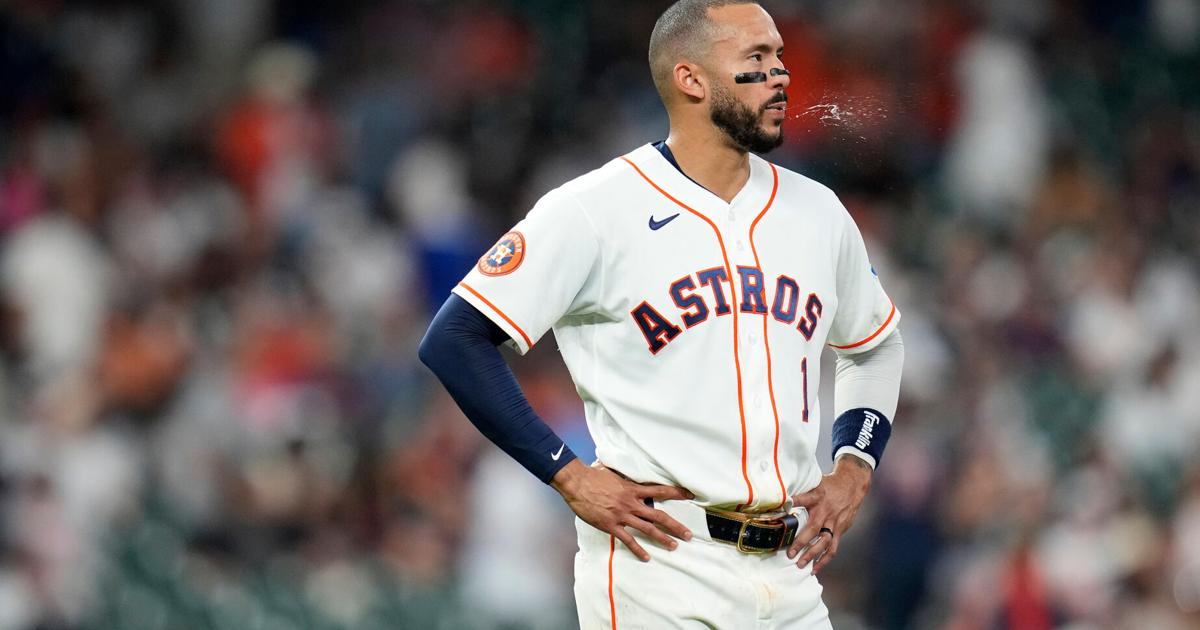
Player Faces 6-8 Month Recovery After Batting Practice Surgery
The sudden loss of a cornerstone athlete to a season-ending injury is more than a strategic blow to a franchise. It’s a clinical case study in the vulnerability of the human kinetic chain under extreme rotational stress. Carlos Correa’s recent ankle injury during batting practice, necessitating surgery and a projected recovery window of six to eight months, highlights the precarious balance between peak athletic performance and joint stability.
Key Clinical Takeaways:
- The required surgical intervention and 6-8 month recovery period suggest a high-grade ligamentous rupture or syndesmotic instability rather than a simple sprain.
- Return-to-play (RTP) success in professional athletes depends on the restoration of joint proprioception and the mitigation of chronic ankle instability (CAI).
- Post-surgical rehabilitation for elite athletes now prioritizes phased loading and neuromuscular retraining to prevent secondary morbidity.
The biomechanical demands of a professional baseball swing place immense torque on the lead and trailing ankles. When an athlete experiences a traumatic event during batting practice, the pathogenesis often involves a forced external rotation of the foot relative to the tibia. This mechanism frequently results in a syndesmotic injury—a tear of the ligaments connecting the tibia and fibula—which disrupts the “mortise” of the ankle joint. Without surgical stabilization, the resulting instability can lead to premature articular cartilage degradation and a permanent decline in explosive lateral movement.
The Clinical Challenge of Syndesmotic Instability
For an athlete of Correa’s caliber, the standard of care typically shifts from conservative management to surgical stabilization when there is evidence of diastasis, or the widening of the gap between the tibia and fibula. The surgical objective is to restore the anatomical relationship of the distal tibiofibular joint, often utilizing syndesmotic screws or dynamic stabilization systems like the “TightRope” suture-button construct. These interventions are designed to allow for physiological micro-motion while preventing the gross instability that would make professional competition impossible.

The recovery timeline of six to eight months is indicative of a comprehensive biological healing process. The first phase focuses on protecting the surgical site and managing inflammation, followed by a gradual introduction of weight-bearing activities. For those navigating the complexities of post-surgical joint stiffness, it is critical to engage with board-certified orthopedic surgeons who specialize in sports medicine to ensure that the hardware is integrated correctly and that the joint range of motion is restored without compromising stability.
“The primary goal in high-performance ankle reconstruction is not merely the closure of the ligamentous gap, but the restoration of the proprioceptive feedback loop. Without this, an athlete may be structurally sound but functionally compromised, increasing the risk of recurrent injury.”
Epidemiology of Return-to-Play (RTP) Outcomes
Analyzing the prognosis for professional athletes requires a appear at longitudinal data. According to research published in the American Journal of Sports Medicine, athletes undergoing surgical stabilization for high-grade ankle syndesmosis injuries show a high rate of return to their previous level of competition, though the timeline varies significantly based on the specific surgical technique used. These studies, often funded by grants from the National Institutes of Health (NIH) or specialized sports medicine foundations, emphasize that the “biological clock” of ligamentous scarring and remodeling cannot be bypassed, regardless of the athlete’s conditioning.

The morbidity associated with these injuries often manifests as a loss of “explosiveness” or a perceived lack of stability during rapid directional changes. To combat this, modern rehabilitation protocols have evolved from simple strength training to complex neuromuscular retraining. This transition is where many athletes struggle; the gap between clinical discharge and game-ready performance is where the risk of re-injury is highest. To bridge this gap, elite players typically utilize specialized sports physical therapists who employ force-plate analysis and isokinetic testing to quantify readiness.
Navigating the Recovery Arc: From Surgery to Stadium
The six-to-eight-month window is broken down into critical clinical milestones. The first two months are generally dedicated to edema control and the prevention of atrophy in the gastrocnemius and soleus muscles. By month three, the focus shifts to gait normalization and the introduction of low-impact cardiovascular conditioning. The final phase—the most precarious—involves sport-specific drills: pivoting, sprinting, and eventually, the rotational torque required for batting.
One of the most significant hurdles in this process is the management of arthrofibrosis, or the development of excessive scar tissue that restricts the joint. If a patient experiences persistent stiffness that inhibits their functional movement, it may be necessary to seek a secondary consultation with interventional pain management specialists or orthopedic surgeons to perform a targeted lysis of adhesions. This ensures that the mechanical constraints of the surgery do not grow a permanent ceiling on the athlete’s performance.
The integration of regenerative medicine, such as Platelet-Rich Plasma (PRP) injections, has become a common adjunct to surgical recovery in professional sports. While the primary stabilization is mechanical, these biologic therapies aim to accelerate the healing of the surrounding soft tissues. However, the efficacy of such treatments remains a subject of ongoing clinical debate, with the medical community calling for more double-blind, placebo-controlled trials to establish a definitive standard of care.
The Future of Athletic Joint Preservation
As we look toward the future of sports medicine, the focus is shifting from “repair” to “regeneration.” The goal is to move beyond screws and sutures toward bio-scaffolds and stem-cell-mediated ligament reconstruction that could potentially shorten recovery windows and reduce the long-term risk of post-traumatic osteoarthritis. For now, the trajectory for Carlos Correa remains a disciplined adherence to a rigorous, evidence-based rehabilitation protocol.
The path from the operating table back to the diamond is a grueling exercise in patience and precision. For athletes and active individuals facing similar orthopedic challenges, the quality of the multidisciplinary team—comprising the surgeon, the therapist, and the nutritionist—is the single greatest predictor of a successful outcome. Finding vetted, high-authority providers is the first step in ensuring that a season-ending injury does not become a career-altering event.
*Disclaimer: The information provided in this article is for educational and scientific communication purposes only and does not constitute medical advice. Always consult with a qualified healthcare provider regarding any medical condition, diagnosis, or treatment plan.*