Plastic Cutting Boards Release Millions of Microplastic Particles During Food Prep
Plastic cutting boards can release up to 79 million microplastic particles during a single year of food preparation, according to research published in Environmental Science & Technology.
Key Clinical Takeaways:
- Chopping hard vegetables like carrots on polyethylene and polypropylene boards generates millions of microplastic fragments annually.
- Wooden cutting boards shed 4 to 22 times more micro-sized fibers than plastic surfaces in laboratory testing, though these consist of natural cellulose rather than synthetic polymers.
- Surface wear and deep knife scars directly increase particle release, prompting researchers to recommend replacing heavily damaged boards.
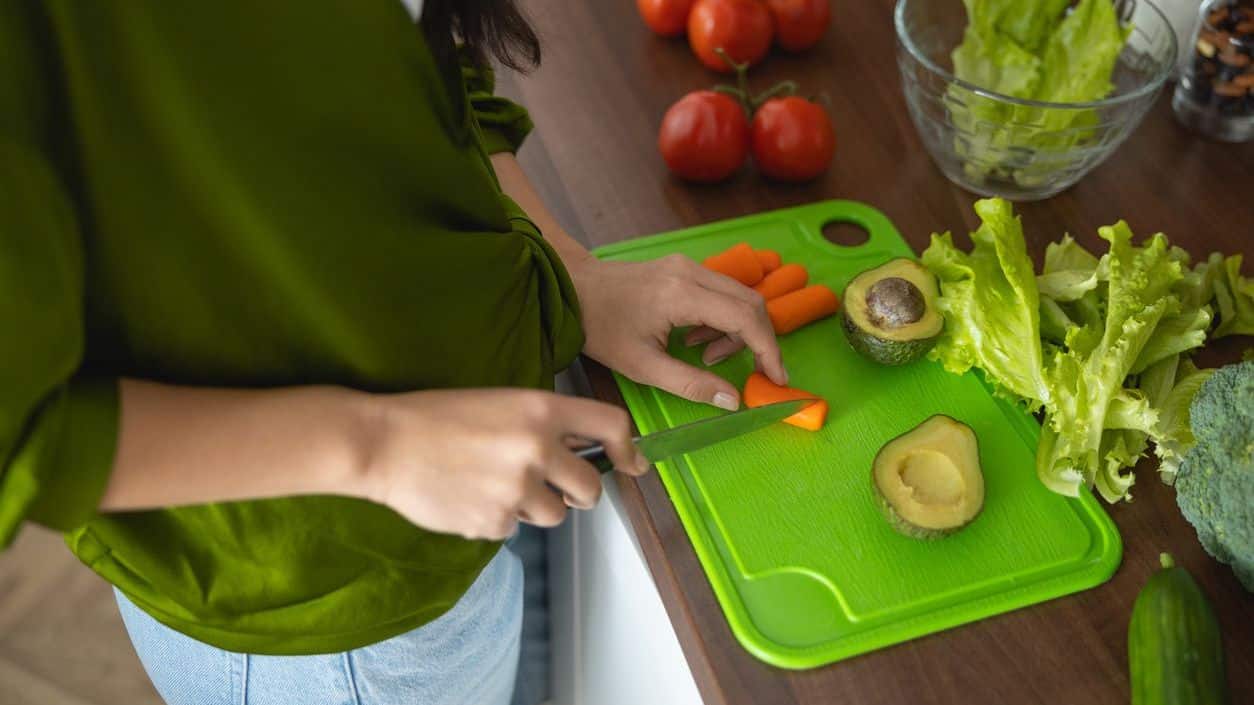
When researchers at North Dakota State University tested plastic surfaces, they sliced carrots on polyethylene and polypropylene boards to measure particle generation. For polypropylene, food preparation can yield roughly 79 million plastic particles annually, according to calculations from the study. The total weight for polyethylene debris ranged between 7.4 and 50.7 grams per person each year.
“There are really a lot of microplastics released when you chop your vegetables on a plastic cutting board, and we humans are far from realizing all of that,” Himani Yadav, researcher at North Dakota State University, told Duurzaamnieuws.
Particle release depends heavily on chopping force, vegetable hardness, and knife dullness. Hard vegetables leave deeper traces, and new surfaces acquire scratches over time that increase particle shedding. The European Food Safety Authority notes that data remains insufficient to determine exact dietary intake levels and subsequent health outcomes for humans.
Testing on mouse cells showed no significant impact on cell survival for either polyethylene or wood particles. A separate study published in 2025 in Environmental Health Perspectives found that mice consuming food prepared on plastic boards developed intestinal inflammation alongside shifts in gut bacteria and liver metabolism. Mice fed food prepared on wooden boards did not exhibit those biological effects.
Switching to timber does not eliminate cutting debris entirely. Wooden boards released 4 to 22 times more microdeeltjes than plastic variants during testing, though those fragments comprised wood fibers and cellulose rather than synthetic plastic.
Researchers advise replacing any board showing deep surface grooves, regardless of whether it is made of plastic or wood. Regular oiling helps wooden boards resist splintering and extends their usability, while plastic boards require routine inspection around high-wear chopping zones.
North Dakota State University, located in Fargo, was founded in 1890 as the North Dakota Agricultural College. Today, the institution is classified among R1-Doctoral Universities for its very high research activity and maintains agricultural research extension centers across 18,488 acres.
Over the decades, the university has evolved from its agricultural roots to become a major regional employer and a hub for diverse academic programs, with its main campus currently encompassing over 100 buildings.
Disclaimer: The information provided in this article is for educational and scientific communication purposes only and does not constitute medical advice. Always consult with a qualified healthcare provider regarding any medical condition, diagnosis, or treatment plan.