
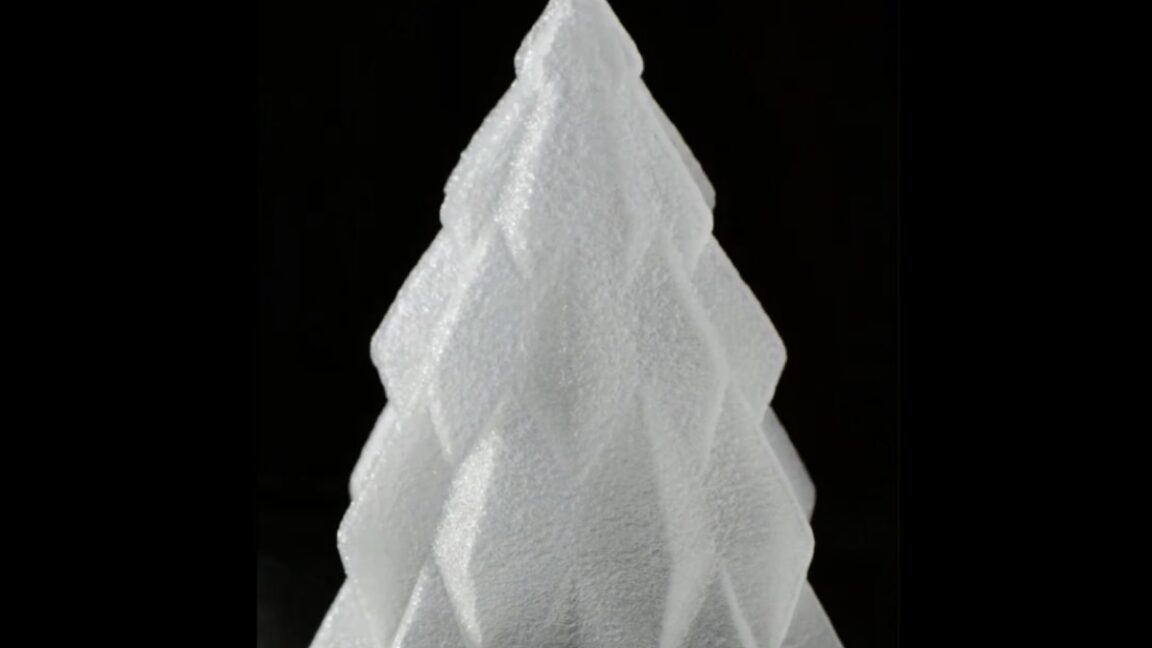
University of AmsterdamS ice‑printing research is now at the center of a structural shift involving low‑energy additive manufacturing. The immediate implication is a potential re‑configuration of niche‑market supply chains that rely on cryogenic processes.
The Strategic Context
Historically, additive manufacturing has been driven by high‑energy processes-laser sintering, fused deposition, and cryogenic substrate cooling-requiring significant capital and energy inputs. The broader industrial landscape is increasingly constrained by energy price volatility, sustainability mandates, and the push for decentralized production. Within this context, a technology that can solidify material using only evaporative cooling aligns with emerging trends toward low‑carbon, low‑cost fabrication methods, especially for applications where ice or other phase‑change materials are functional (e.g., temporary structures, cold‑chain components, or biomedical scaffolds).
Core Analysis: Incentives & Constraints
Source Signals: Researchers at the University of Amsterdam demonstrated an 8 cm ice Christmas tree printed layer‑by‑layer inside a vacuum chamber using a water jet. The process relies on evaporative cooling rather than conventional refrigeration or cryogenic substrates. The team discovered the method while attempting to reduce air drag in a vacuum environment. They describe the printer’s motion control as guiding the water jet to build geometry on demand.
WTN Interpretation: The academic team’s incentive is to showcase a proof‑of‑concept that challenges the energy‑intensive status quo of ice‑based manufacturing, positioning the university as a hub for low‑energy material science. Their leverage stems from access to advanced vacuum facilities and expertise in fluid dynamics, which can attract public research funding and industry partnerships. Constraints include scalability-maintaining vacuum conditions and precise jet control at larger volumes is technically demanding-and market acceptance, as most downstream users currently rely on established cryogenic processes with proven reliability.Moreover, the novelty of evaporative cooling in additive manufacturing may encounter regulatory scrutiny in sectors such as food safety or medical devices, where material purity and process validation are critical.
WTN Strategic Insight
“When a manufacturing process can turn ambient heat into a solid product without external cooling,the energy calculus of niche‑scale production is fundamentally rewritten.”
Future Outlook: Scenario Paths & Key Indicators
Baseline Path: If research funding continues and the team refines vacuum‑jet control, we can expect incremental adoption in specialized markets (e.g., temporary ice sculptures, low‑temperature logistics testing). Partnerships with niche manufacturers would validate the process at modest scales, leading to modest venture investment and a modest pipeline of patents.
Risk Path: If technical hurdles-such as maintaining uniform layer quality at larger sizes or ensuring process reliability under variable ambient conditions-prove insurmountable, the technology may remain confined to laboratory demos. In that case,commercial interest could wane,and funding may shift toward more conventional low‑energy printing approaches.
- Indicator 1: Filing of patents or provisional applications related to vacuum‑based evaporative 3D printing within the next 3‑6 months.
- Indicator 2: Announcement of pilot collaborations between the university team and industrial partners (e.g., cold‑chain logistics firms or specialty sculpture companies) during upcoming technology conferences.
