
Regulators Clamp Down on Under-Capitalized Lenders
OJK Identifies Shortfalls in Finance and P2P Lending Sectors
Indonesia’s Financial Services Authority (OJK) has flagged several finance and peer-to-peer (P2P) lending companies for failing to meet minimum capital requirements, signaling a push for greater stability in the financial sector.
Capital Deficiencies Uncovered
The OJK revealed that four out of 145 finance companies do not meet the mandated Rp 100 billion minimum capital. Additionally, eleven of the 96 P2P lending platforms, also known as “pinjol,” are short of the Rp 12.5 billion minimum equity threshold.
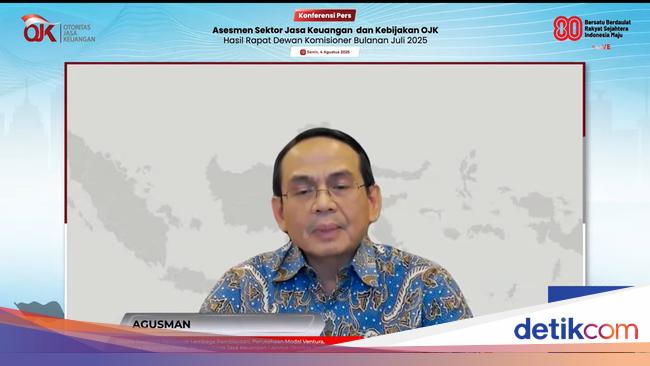
The Head of the Supervisory Executive for Financing Institutions and other Financial Services, **Agusman**, shared these findings during a press conference following the July 2025 Board of Commissioners Meeting.
“Regarding the fulfillment of the minimum equity obligations in the PVML sector, there are currently 4 out of 145 finance companies that have not met the minimum equity obligations of Rp 100 billion,”
—Agusman, Head of the Supervisory Executive of Financing Institutions, Venture Capital Companies, Micro Financial Institutions and other Financial Services Institutions (PVML) OJK
Of the eleven P2P lending operators identified, five are actively seeking to increase their paid-up capital, according to **Agusman**. The OJK is actively engaging with these companies to ensure compliance, exploring options such as capital injections from shareholders or new investors, and even the potential surrender of business licenses.
Enforcement Actions Taken
In June 2025 alone, the OJK issued administrative sanctions to 19 finance companies, three venture capital firms, and 30 P2P lending platforms for violating OJK regulations and supervisory findings.
The OJK reported that loan financing experienced a 25.06% growth in June 2025, with outstanding values reaching Rp 83.52 trillion and a Non-Performing Loan (NPL) ratio of 2.85%. Overall, the multifinance industry saw financing distribution of Rp 501.83 trillion, marking a 1.96% increase, a slight deceleration from earlier double-digit growth in 2025.
This regulatory scrutiny comes as the digital lending sector in Southeast Asia continues to expand. For instance, in the Philippines, the Bangko Sentral ng Pilipinas has also been strengthening regulations for digital banks and lending platforms to safeguard consumer interests and financial stability, as reported by their official statement in January 2024.
