Paenibacillus Sialidase Could Offer Tool for Trypanosome Control
Tsetse flies carry microbial communities in their midguts that influence vector competence and shape how parasites establish infection.
Trypanosome survival in the tsetse midgut depends directly on surface sialylation, prompting researchers to investigate whether bacterial sialidases could interfere with disease transmission by counteracting trypanosomal trans-sialidase activity.
During trapping surveys conducted during dry seasons between March 2014 and March 2017, investigators collected tsetse flies across five African countries, including Cameroon, Chad, Ethiopia, Ghana, and Nigeria. According to PMC reporting, detectable sialidase activity appeared only in samples originating from Cameroon. Bacterial isolates recovered from those specific samples represented several genera, including Bacillus, Stenotrophomonas, Pseudomonas, Paenibacillus, and Enterobacter.
Whole-genome sequencing subsequently identified a functional sialidase gene within a Paenibacillus species. Researchers cloned this gene, expressed it in Escherichia coli, and purified the recombinant enzyme for biochemical characterization as noted by Europe PMC.
Biochemical analysis showed that the purified bacterial sialidase has a molecular weight of approximately 120 kilodaltons and exhibits dual pH optima at pH 5 and 7. Additional kinetic evaluations demonstrated that copper ions enhance its enzymatic activity, revealing a maximum velocity of 2.514 nanomoles per milligram per minute alongside a Michaelis constant of 332.7 micromolar when tested against the synthetic substrate 4-methylumbelliferyl-N-acetylneuraminic acid.
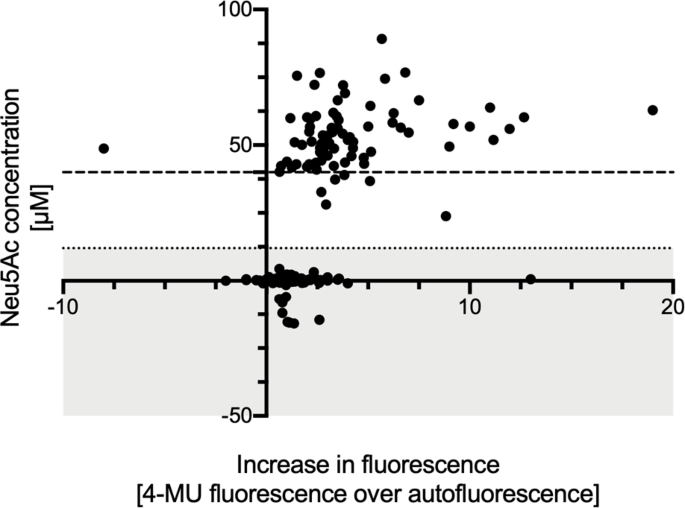
Researchers developed a field-compatible sialidase assay to screen tsetse flies collected from five African countries. Each fly’s gut homogenate was divided into five parts: one for DNA/RNA extraction, two for sialidase activity testing with and without substrates, and one to monitor free sialic acid stability. The remaining portion was used to cultivate gut bacteria.
The assay initially involved incubating gut samples with sialic acid donors fetuin and MU-NANA, alongside controls without substrate and with free sialic acid. After optimizing the process for field conditions, lyophilized assay components were transported, and samples were incubated at ambient temperatures. Detectable sialidase activity appeared only in samples from Cameroon, as reported by the study published in Nature.
These microbial communities can directly affect pathogenic microbes or modulate host immune responses, potentially clearing harmful organisms like Kosakonia cowanii Zambiae, as noted in the study.
Whole-genome sequencing identified a functional sialidase gene in a Paenibacillus species, which was cloned and expressed in E. coli for biochemical characterization. The enzyme showed dual pH optima and enhanced activity with copper ions, as detailed in the Europe PMC report.
These findings suggest that sialidase-producing Paenibacillus strains and their isolated enzymes could serve as promising biological tools for paratransgenic strategies. Such interventions aim to limit trypanosome colonization in tsetse vectors, offering potential new avenues for controlling human African trypanosomiasis and African animal trypanosomosis.