
RIVERSIDE, Calif. — Researchers at the University of California, Riverside, have developed a battery-powered gel designed to deliver oxygen directly to chronic wounds, a development that could significantly reduce the number of amputations linked to diabetes and aging-related health issues. The gel, described in a recent paper in Nature Communications Materials, addresses a critical factor in delayed wound healing: oxygen deprivation in damaged tissue.
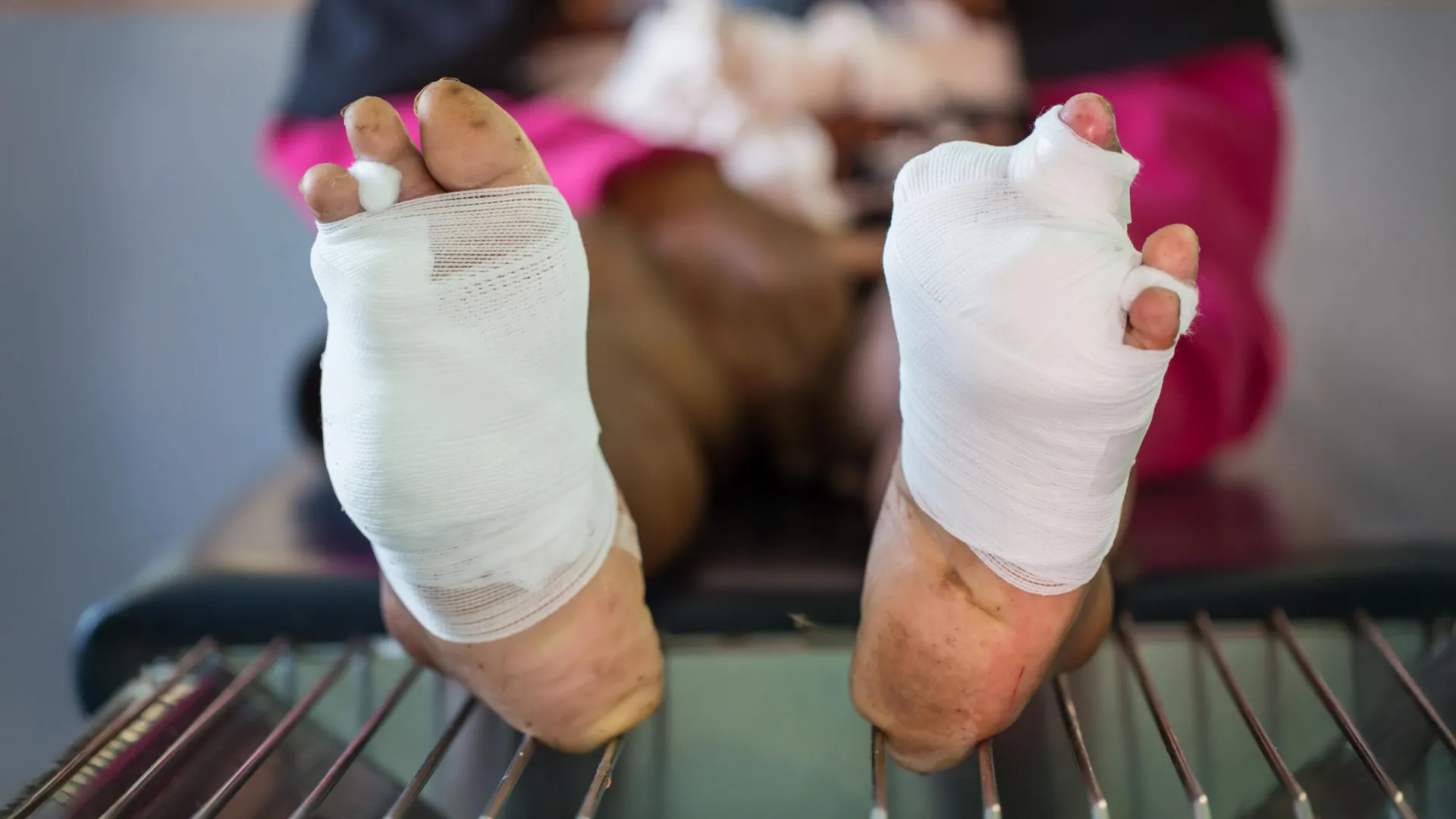
Chronic wounds, defined as those that fail to heal within a month, affect approximately 12 million people globally each year, with around 4.5 million cases occurring in the United States. Roughly one in five patients with chronic wounds ultimately require amputation, according to researchers.
The research team, led by Iman Noshadi, an associate professor of bioengineering at UCR, focused on hypoxia – a condition where insufficient oxygen reaches the deepest layers of injured tissue. “Chronic wounds don’t heal by themselves,” Noshadi said. “There are four stages to healing chronic wounds: inflammation, vascularization where tissue starts making blood vessels, remodeling and regeneration or healing. In any of these stages, lack of a stable, consistent oxygen supply is a big problem.” Without adequate oxygen, wounds remain stuck in a prolonged inflammatory state, creating an environment conducive to bacterial growth and tissue deterioration.
The newly developed gel is composed of water and a choline-based liquid, rendering it antibacterial, nontoxic, and biocompatible. When connected to a small battery – comparable in size to those used in hearing aids – the gel functions as a miniature electrochemical device, splitting water molecules to release a continuous stream of oxygen. This targeted oxygen delivery differs from existing wound care treatments that primarily focus on surface-level oxygenation.
“We could build this patch as a product where the gel may require to be renewed periodically,” said Prince David Okoro, a doctoral candidate in Noshadi’s lab and co-author of the research paper. The gel’s flexibility allows it to conform to the unique contours of a wound, filling gaps and uneven areas where oxygen levels are typically lowest and infection risk is highest.
Researchers tested the gel on diabetic and older mice, whose wounds closely mimic those seen in human patients. Untreated animals experienced persistent wounds that often proved fatal. However, when treated with the oxygen-producing gel, which was replaced weekly, the wounds healed within approximately 23 days, and the animals survived.
Beyond simply providing oxygen, the gel’s choline component may as well help regulate the immune response and reduce excessive inflammation, a common characteristic of chronic wounds. These wounds often exhibit high levels of reactive oxygen species, unstable molecules that contribute to cell damage and prolonged inflammation. By delivering a stable oxygen supply while simultaneously calming the inflammatory response, the gel aims to create a more favorable environment for tissue repair.
“There are bandages that absorb fluid, and some that release antimicrobial agents,” said Okoro. “But none of them really address hypoxia, which is the fundamental problem. We’re tackling that directly.”
The researchers suggest the technology could have applications beyond chronic wound care, potentially aiding in the development of lab-grown organs and tissues, where oxygen and nutrient delivery are significant challenges. “When the thickness of a tissue increases, it’s hard to diffuse that tissue with what it needs, so cells start dying,” Noshadi explained. “This project can be seen as a bridge to creating and sustaining larger organs for people in need of them.”
Baishali Kanjilal, a UCR bioengineer and co-author of the study, noted that addressing the underlying causes of chronic wounds requires a broader approach. “Our sedentary lifestyles are causing our immune responses to decrease,” she said. “It’s hard to get to societal roots of our problems. But this innovation represents a chance to reduce amputations, improve quality of life, and give the body what it needs to heal itself.”
