
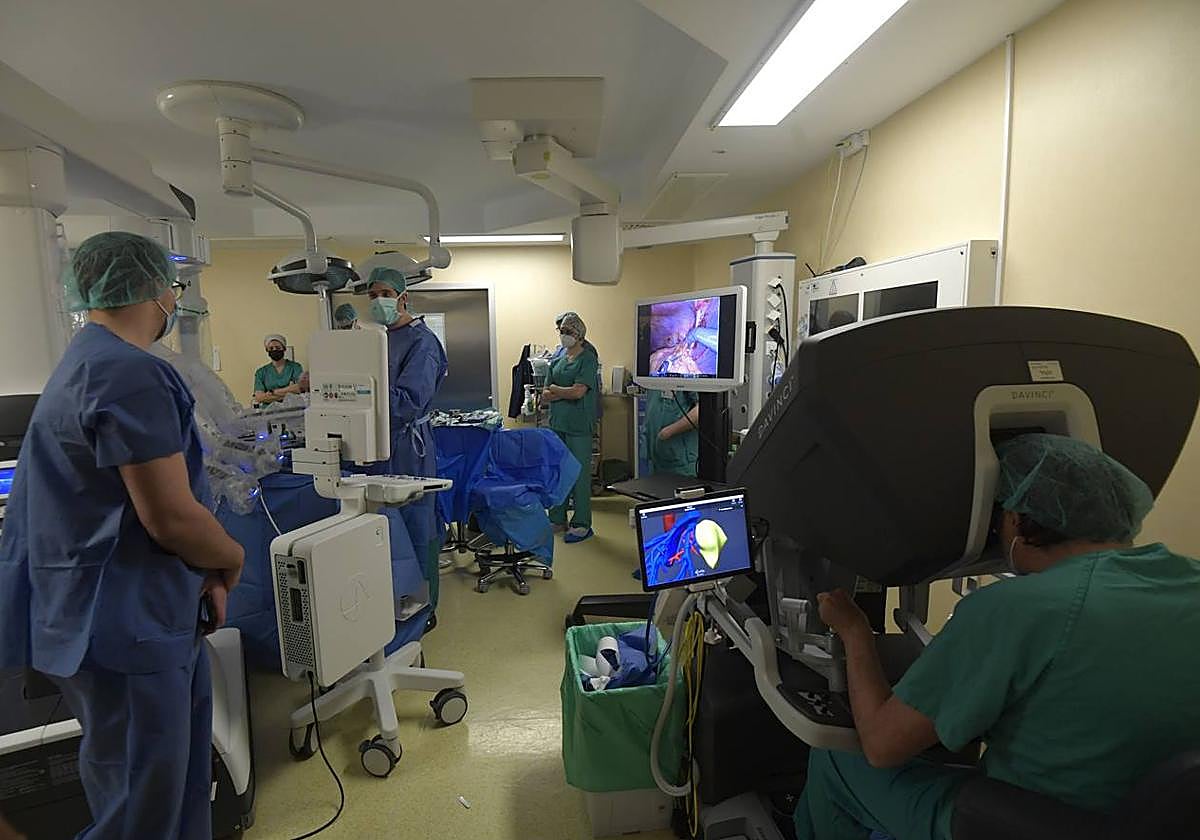
Over 5,200 Da Vinci Robotic Surgeries Performed in Murcia
The Da Vinci surgical robot has performed over 5,200 procedures in the Murcia region since its introduction by the Murcian Health Service, yet growing demand has exposed critical bottlenecks in access to robotic-assisted surgery, prompting regional health officials to advocate for a second system to alleviate surgical backlogs and improve patient outcomes.
Key Clinical Takeaways:
- Robotic-assisted surgery with the Da Vinci system has demonstrated reduced blood loss, shorter hospital stays, and faster recovery times compared to traditional laparoscopy in urologic and gynecologic oncology procedures.
- Expanding access to robotic surgery in Murcia could address rising surgical wait times, particularly for prostatectomy and hysterectomy cases, which have increased by 22% since 2022 according to regional health audits.
- Investment in additional robotic platforms requires transparent funding mechanisms and clinician training protocols to ensure equitable distribution and sustained clinical efficacy.
The surge in robotic-assisted procedures reflects a broader national trend in Spain, where minimally invasive techniques now account for over 60% of eligible oncologic surgeries, driven by evidence showing improved precision and reduced postoperative morbidity. However, the concentration of Da Vinci systems in tertiary hospitals creates geographic disparities, forcing patients in Murcia to travel long distances or endure delayed interventions. This bottleneck not only impacts quality of life but may similarly influence oncologic outcomes in time-sensitive cancers, where delays exceeding six weeks are associated with increased risk of disease progression.
Clinical Efficacy and Mechanisms of Robotic Assistance
The Da Vinci Surgical System enhances surgeon dexterity through wristed instruments that mimic human movement with greater range of motion, filtered tremor reduction, and stereoscopic 3D visualization. These technical advantages translate into measurable clinical benefits: a 2023 meta-analysis in Surgical Endoscopy found that robotic-assisted radical prostatectomy was associated with a 31% reduction in positive surgical margins and a 25% decrease in transfusion rates compared to open surgery, based on pooled data from 12,400 patients across 18 randomized trials. Similarly, in endometrial cancer staging, robotic approaches have shown lower rates of intraoperative complications and shorter median hospital stays (1.8 vs. 3.2 days) in a multicenter study published in Gynecologic Oncology.
Funding for the initial Da Vinci deployment in Murcia was provided through a combination of regional health budget allocations and European Union FEDER funds, specifically under the Operational Programme for Sustainable Growth 2014–2020, which prioritized innovation in healthcare infrastructure. The push for a second system is being championed by the Murcian Society of Minimally Invasive Surgery, which cites rising referral volumes and equipment utilization rates exceeding 85% during peak hours as justification for expansion.
“We are not asking for luxury technology — we are asking for equitable access to a standard of care that has been proven to reduce complications and speed recovery. When one robot serves over 5,000 patients annually, scheduling conflicts inevitably delay time-sensitive cancer surgeries.”
Addressing Access Gaps Through Strategic Investment
Expanding robotic capacity requires more than hardware procurement; it demands investment in surgeon training, maintenance infrastructure, and interdisciplinary team coordination. The American College of Surgeons recommends a minimum of 20 supervised cases for proficiency in robotic urologic procedures, with ongoing simulation-based assessment to maintain skill retention. Without structured proctoring programs, increased volume alone risks inconsistent outcomes.
Regional health planners are now evaluating a phased rollout model, where a second Da Vinci system would be allocated based on procedural volume forecasts and surgeon readiness metrics. This approach aligns with guidance from the European Society of Gynaecological Oncology, which emphasizes that equitable access to innovation must be paired with rigorous outcome monitoring to prevent disparities in care quality.
“The goal isn’t just to buy another robot — it’s to build a sustainable program where training, maintenance, and quality assurance are funded alongside the technology. Otherwise, we risk creating a two-tier system where only those who can navigate the waitlist benefit.”
For patients navigating complex surgical decisions, timely access to specialized care is critical. Individuals considering prostatectomy, hysterectomy, or other minimally invasive options should consult with board-certified urologists or gynecologic oncologists who have demonstrated expertise in robotic-assisted techniques. Healthcare administrators seeking to optimize surgical throughput and comply with evolving EU medical device regulations may benefit from engaging healthcare compliance attorneys to ensure that technology adoption meets both clinical and operational standards.
As Murcia moves toward scaling its robotic surgery infrastructure, the focus must remain on evidence-based expansion — prioritizing not just technological acquisition, but the systems that support safe, equitable, and measurable improvements in patient care. The next phase will depend on transparent funding, rigorous training protocols, and continuous outcome tracking to ensure that innovation serves the entire population, not just those closest to the center.
*Disclaimer: The information provided in this article is for educational and scientific communication purposes only and does not constitute medical advice. Always consult with a qualified healthcare provider regarding any medical condition, diagnosis, or treatment plan.*