
Ancient Viruses Reveal Deep Roots of Human-Pathogen Interactions: HPV16 Detected in 5,300-Year-Old Iceman and 45,000-Year-Old Siberian
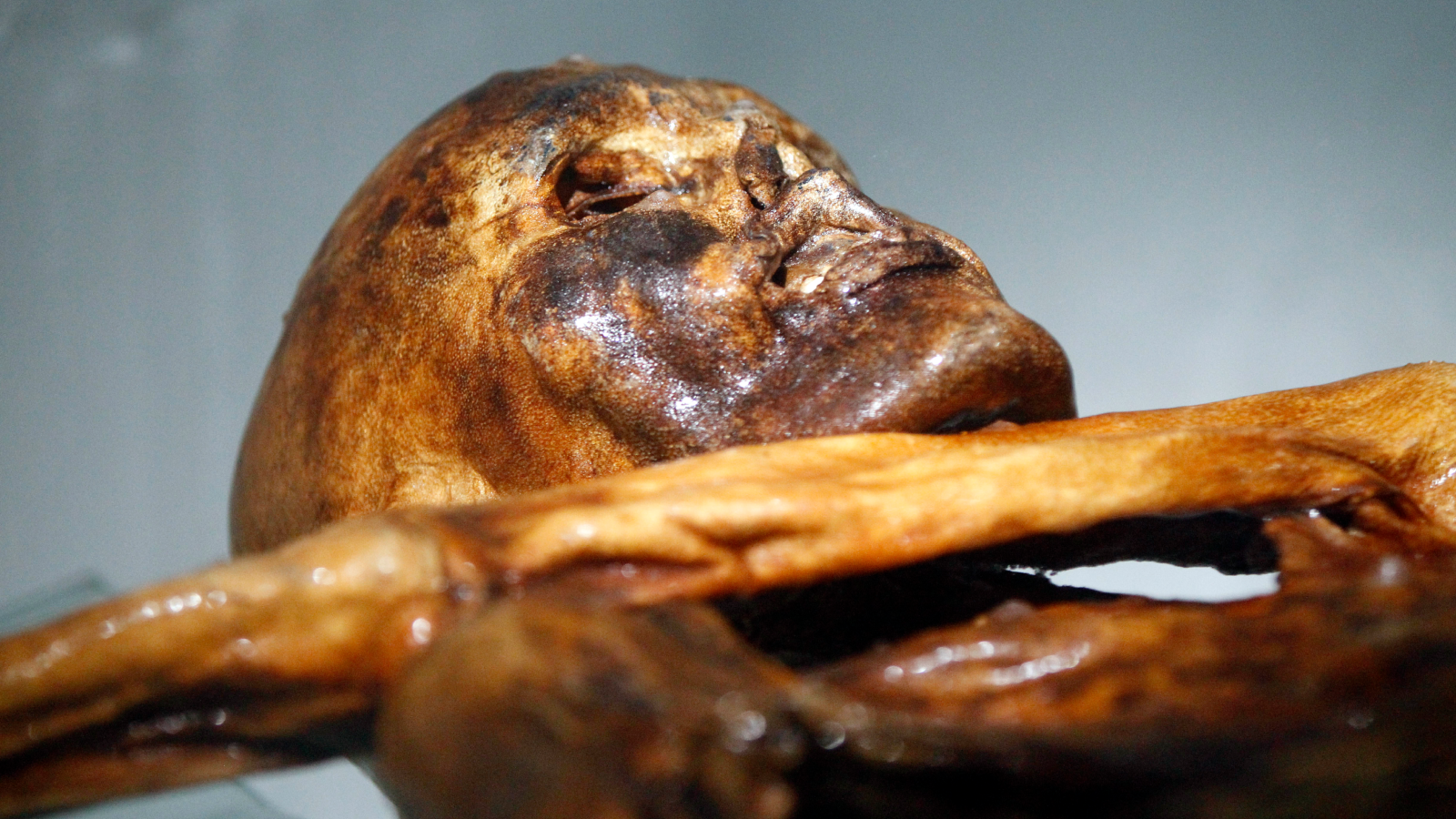
January 16, 2026 – A groundbreaking new study reveals that the cancer-causing human papillomavirus 16 (HPV16) has been circulating in human populations for tens of thousands of years, far earlier than previously thought. Researchers analyzing ancient genetic material from Ötzi the Iceman, a mummy dating back 5,300 years, and a prehistoric Siberian man who lived approximately 45,000 years ago, both found evidence of infection with this high-risk HPV strain. This discovery, published as a preprint on bioRxiv, challenges existing theories about the origins and transmission of this widespread virus and offers a new perspective on the long-term relationship between humans and pathogens.
A Deep Dive into the Past: HPV in Ancient Genomes
The study, led by researchers who re-analyzed publicly available genome sequencing data, focused on identifying traces of HPV16 within the ancient DNA of two remarkably well-preserved individuals. Ötzi, discovered in the Alps in 1991, provides an unparalleled snapshot of life during the Copper Age, with his body, clothing, and tools offering invaluable insights into prehistoric culture. The Siberian man, known as Ust’-Ishim, is represented by a single leg bone that yielded one of the oldest complete modern human genomes ever sequenced.
The team’s analysis revealed the presence of multiple DNA fragments matching HPV16 (specifically the HPV16A lineage) in both individuals, strongly suggesting they were infected with the virus. This finding is important because HPV16 is a high-risk strain known to cause a variety of cancers, including cervical, anal, and oropharyngeal cancers.
Challenging Conventional Wisdom: The Neanderthal Connection
For years, a leading hypothesis suggested that Neanderthals may have been the original source of HPV16 transmission to Homo sapiens. As our ancestors migrated out of Africa and encountered Neanderthals in Eurasia between 60,000 and 34,000 years ago, interbreeding occurred. It was proposed that HPV16 could have been passed from Neanderthals to humans during these encounters.
Though, the detection of HPV16 in individuals dating back as far as 45,000 years ago – before significant interbreeding events – casts doubt on this theory. “The results indicate that HPV16 has been associated with anatomically modern humans for a very long time, likely well before major population splits outside Africa,” explains study co-author Marcelo briones, a professor at the Centre for Medical Bioinformatics at the Medical School of the Federal University of São Paulo, Brazil.“This supports the idea that oncogenic human papillomaviruses are not recent pathogens but long-term companions of their hosts, evolving alongside primates and humans over extended evolutionary timescales.”
It’s critically important to note, as the researchers themselves acknowledge, that the sample size of two is small, and further inquiry is needed to definitively determine the origins of HPV16.
Understanding HPV: A Modern perspective
Human papillomaviruses (HPVs) are a diverse group of viruses primarily transmitted through direct skin-to-skin contact,including sexual contact. While most HPV infections are asymptomatic and resolve on their own, certain high-risk types, like HPV16, can lead to the development of cancer.
According to the National Cancer institute, HPV is responsible for an estimated 36,000 cancers in the United States each year. Fortunately, effective vaccines are available to protect against the most common cancer-causing HPV types, including HPV16.
The Evolutionary History of HPV: A Long-Standing Partnership
the discovery of HPV16 in ancient genomes adds to a growing body of evidence suggesting that this virus has co-evolved with humans for a very long time. Computer models have long predicted an ancient origin for papillomaviruses, suggesting they may have been present in vertebrate hosts for hundreds of millions of years. This new research provides the first direct molecular evidence supporting this hypothesis.
Koenraad Van Doorslaer, interim co-chair of the immunobiology department at the University of Arizona, who was not involved in the study, agrees with the findings. “I am genuinely excited about the implications of this study because it supports some critical assumptions about the history of this family of important viruses,” he stated. Though, he cautions that the link to Neanderthal transmission isn’t entirely ruled out, as the Ust’-Ishim individual did carry some neanderthal DNA.
Implications and Future Research
This research highlights the importance of studying ancient genomes to understand the evolutionary history of pathogens and their interactions with human populations. Further research,with larger sample sizes and more thorough genomic data,will be crucial to unraveling the complex origins and transmission pathways of HPV and other viruses.
Understanding the deep history of these viruses can inform public health strategies and help us better prepare for emerging infectious diseases. The discovery that HPV16 has been a long-term companion of humans underscores the need for continued research into viral evolution and the development of effective prevention and treatment strategies.
Key Takeaways:
* Ancient HPV: Researchers have detected HPV16 in both Ötzi the Iceman (5,300 years old) and a Siberian man (45,000 years old).
* Challenging Theories: This discovery challenges the idea that Neanderthals were the primary source of HPV16 transmission to humans.
* Long-Term co-evolution: The findings suggest HPV16 has co-evolved with humans for tens of thousands of years,potentially even predating significant human migration out of Africa.
* Public Health Relevance: Understanding the evolutionary history of HPV can inform prevention and treatment strategies for HPV-related cancers.
* Need for Further Research: Larger studies are needed to confirm these findings and fully understand the origins and transmission of HPV.
