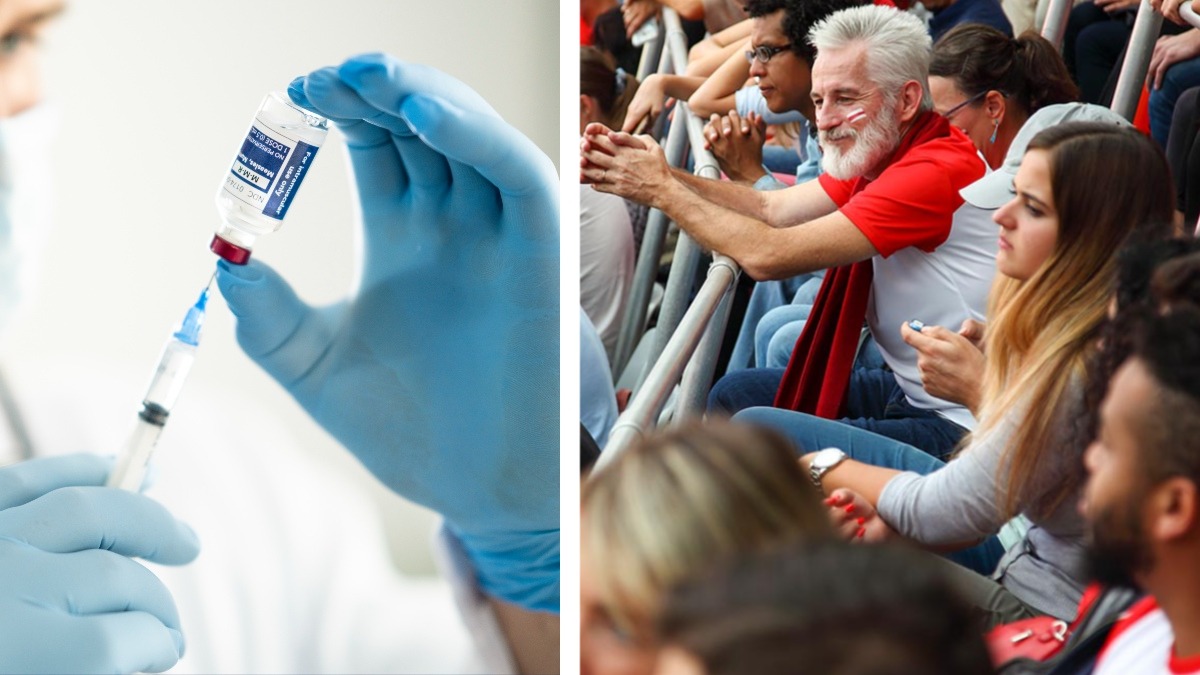
OPS Urges Vaccination Against Measles Ahead of World Cup Amid Rising Cases in the Americas
As of April 2026, Mexico remains among the countries with the highest measles case burden in the Americas, prompting urgent calls from the Pan American Health Organization (PAHO) for heightened vaccination efforts ahead of the FIFA Men’s World Cup hosted across multiple cities in the United States, Canada, and Mexico. With international travel expected to surge, public health officials warn that pockets of underimmunization could facilitate viral spread, particularly among unvaccinated or incompletely vaccinated individuals attending mass gatherings. This resurgence underscores persistent gaps in immunization coverage despite the availability of a safe, highly effective vaccine, and highlights the critical role of timely vaccination in preventing outbreaks in globally connected populations.
Key Clinical Takeaways:
- Measles remains a significant public health threat in the Americas, with Mexico reporting elevated case counts due to suboptimal MMR vaccine coverage in certain regions.
- PAHO recommends receiving the measles, mumps, and rubella (MMR) vaccine at least two weeks prior to international travel to ensure adequate immune protection.
- Unvaccinated individuals face up to a 90% risk of infection following close contact with an infected person, underscoring the vaccine’s critical role in outbreak prevention.
The current epidemiological trend reflects a post-pandemic rebound in vaccine-preventable diseases, driven by disruptions to routine immunization services during 2020–2022 and persistent vaccine hesitancy in some communities. According to PAHO’s 2025 epidemiological update, Mexico reported over 1,200 confirmed measles cases in the first quarter of 2026, ranking second only to Brazil in regional incidence. This marks a sharp increase from the 340 cases reported nationwide in all of 2023, signaling a concerning reversal of progress toward measles elimination goals set under the Global Vaccine Action Plan. The measles virus, a highly contagious paramyxovirus transmitted via respiratory droplets, has a basic reproduction number (R0) of 12–18, meaning one infected individual can spread the virus to dozens of susceptible contacts in unvaccinated settings. Complications such as pneumonia, encephalitis, and subacute sclerosing panencephalitis (SSPE) remain significant risks, particularly in children under five and immunocompromised individuals.
“The measles vaccine is one of the most effective tools we have in preventive medicine,” states Dr. Elena Rodríguez, lead epidemiologist at the National Institute of Public Health (INSP) in Mexico City. “Two doses of the MMR vaccine confer approximately 97% protection against measles, and maintaining population immunity above 95% is essential to interrupt transmission chains.” Her remarks align with findings from a 2024 meta-analysis published in The Lancet Global Health, which analyzed data from 28 low- and middle-income countries and confirmed that two-dose MMR coverage below 80% correlates strongly with sustained outbreaks. The study, funded by the Bill & Melinda Gates Foundation, emphasized that targeted supplemental immunization activities (SIAs) are critical in closing immunity gaps, particularly in underserved urban and rural populations.
PAHO’s guidance for World Cup attendees mirrors recommendations from the U.S. Centers for Disease Control and Prevention (CDC) and the World Health Organization (WHO), which advise verifying vaccination status at least two weeks before travel to allow time for immune response maturation. The MMR vaccine, a live attenuated formulation, typically induces detectable neutralizing antibodies within 7–10 days, with peak protection achieved by day 14. Individuals born before 1957 are generally considered immune due to natural exposure, but healthcare workers, students, and international travelers without documented vaccination or serologic proof of immunity should receive one or two doses as appropriate. Contraindications include severe immunodeficiency and pregnancy, though postpartum vaccination is safe and recommended.
For individuals seeking vaccination or immunity verification, consulting with a licensed healthcare provider is essential. Travelers uncertain of their vaccination history can undergo serologic testing for measles-specific IgG antibodies to determine immune status. In clinical settings, primary care physicians and travel medicine specialists play a pivotal role in assessing risk and administering catch-up doses when needed. Those requiring specialized evaluation or documentation for international compliance may benefit from consulting with board-certified infectious disease specialists or visiting accredited travel medicine clinics that offer pre-travel consultations and vaccination services tailored to itinerary and risk profile.
Beyond individual protection, achieving herd immunity remains a collective responsibility. Public health officials stress that even brief lapses in vaccination coverage can erode community defenses, allowing the virus to uncover susceptible hosts. Historical precedent demonstrates that measles resurgence often follows declining confidence in vaccines—a trend observed in parts of Europe and the Americas following misinformation campaigns. To counter this, PAHO has launched a multilingual outreach campaign emphasizing vaccine safety, leveraging data from the Vaccine Safety Datalink (VSD) and the World Health Organization’s Global Advisory Committee on Vaccine Safety (GACVS), which continues to affirm the MMR vaccine’s exceptional safety profile after decades of use and hundreds of millions of doses administered.
Looking ahead, sustaining elimination will require not only maintaining high two-dose MMR coverage but also strengthening surveillance systems to detect and respond to imported cases rapidly. Genomic surveillance, already in use by networks like the Measles Virus Surveillance (MVS) initiative, helps trace transmission pathways and distinguish between endemic and imported strains—a critical tool in verifying elimination status. As global events continue to mobilize large, diverse populations, the integration of vaccination promotion into mass event planning represents an evolving frontier in preventive medicine.
the tools to prevent measles are well-established, safe, and effective. The challenge lies not in scientific capability but in equitable access, timely delivery, and public trust. For those preparing to travel or seeking clarity on their immunization status, engaging with qualified medical professionals ensures informed, personalized protection.
*Disclaimer: The information provided in this article is for educational and scientific communication purposes only and does not constitute medical advice. Always consult with a qualified healthcare provider regarding any medical condition, diagnosis, or treatment plan.*
- World Cancer Research Fund Reports Rise in Early-Onset Cancer
- Belgian Series The Inheritance Wins Sony Pictures Television Award at MIA Market
- 59 Screwworm Cases Now, and the First Wild One Is a Hunter's Elk (daybreakwire.com)
- Gabriel Boric Endorses Lula Da Silva Ahead of Brazil Runoff Election (newsdirectory3.com)