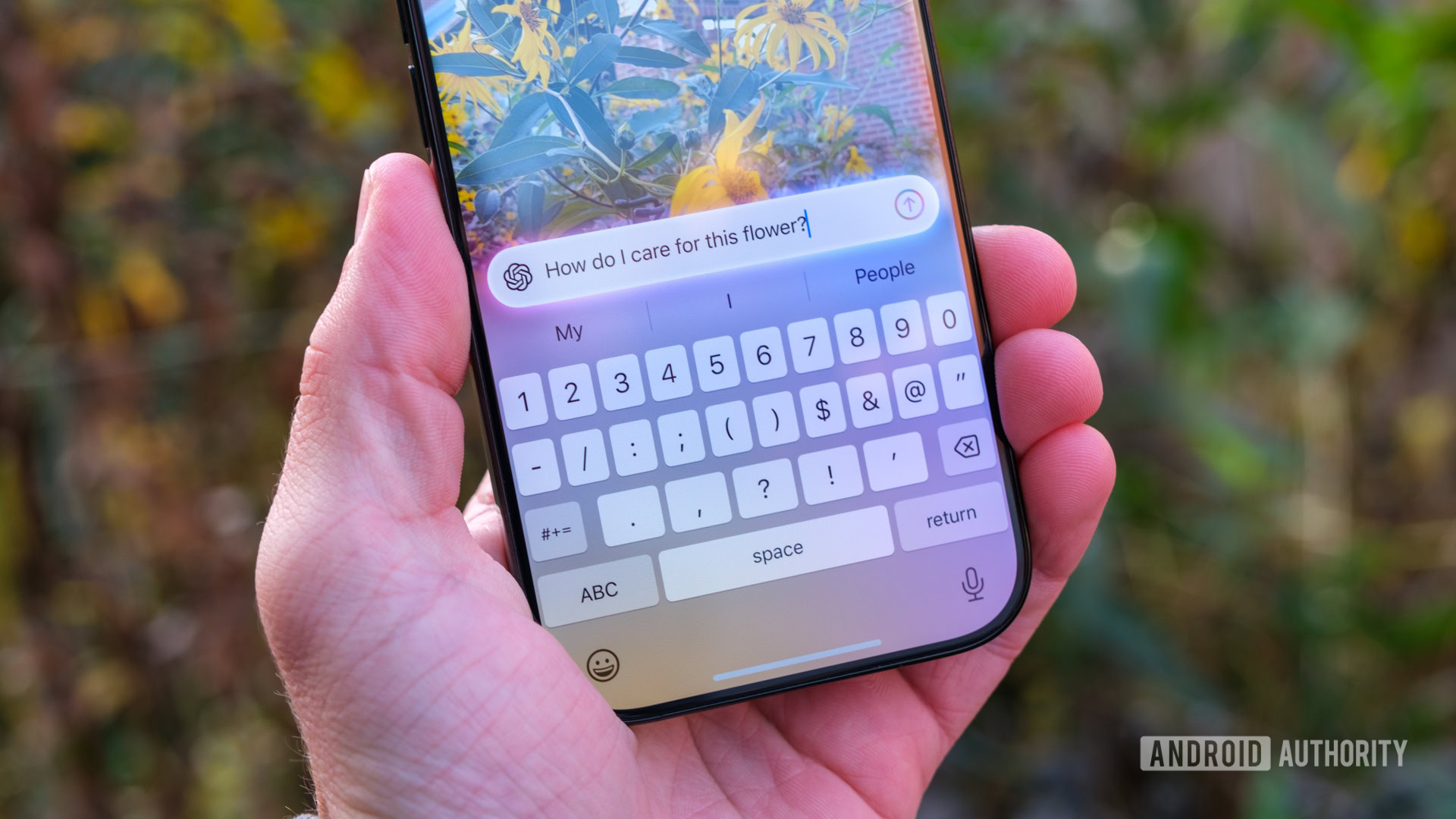
OpenAI Weighing Legal Action Against Apple Over ChatGPT Integration
The Orchestration War: Why OpenAI’s Apple Integration is Hitting a Technical and Legal Wall
The honeymoon phase of the Apple-OpenAI partnership is officially over, replaced by the cold reality of architectural misalignment and contractual friction. What was marketed as a seamless integration of generative intelligence into the iOS ecosystem is currently devolving into a complex dispute over deployment depth and service expectations. As OpenAI weighs legal recourse for potential breach of contract, the underlying technical tension is becoming clear: Apple is no longer looking for a single-provider solution, but is instead building a multi-model orchestration layer that includes Google’s Gemini.
The Tech TL. DR:
- Legal Friction: OpenAI is reportedly consulting outside counsel regarding a potential breach of contract claim against Apple over integration depth.
- Deployment Gap: The integration has failed to meet OpenAI’s internal benchmarks for subscription growth and deep-level Siri implementation.
- Architectural Pivot: Apple is diversifying its LLM stack by integrating Gemini, moving toward a multi-model approach to mitigate vendor lock-in.
For enterprise architects and platform engineers, this isn’t just a corporate spat; it is a case study in the risks of high-dependency vendor integrations. OpenAI reportedly expected a much deeper level of penetration within Siri and a more aggressive push for ChatGPT subscriptions. Instead, they are seeing a shallow implementation that lacks the systemic hooks necessary to drive massive user migration. This gap between projected API utility and actual deployment reality is what has led OpenAI’s legal teams to investigate whether Apple has failed to meet its contractual obligations.
The Shift from Monolithic to Orchestrated AI Architectures
The most significant technical takeaway from this development is Apple’s pivot toward model redundancy. Rather than tethering the entire Siri ecosystem to a single LLM provider, Apple appears to be developing a routing mechanism capable of switching between OpenAI and Google’s Gemini. This move effectively treats LLMs as interchangeable microservices, a strategy designed to optimize for latency, cost-per-token, and task-specific accuracy.

From a systems perspective, this requires a sophisticated orchestration layer. When a user issues a prompt via Siri, the system must decide—likely via a lightweight, on-device classifier—whether the request requires the reasoning capabilities of a large-scale model like GPT-4o or the specific integration strengths of Gemini. This introduces new challenges in context window management and state synchronization across different model providers.
Comparative Intelligence Stack: OpenAI vs. Gemini in the Apple Ecosystem
| Metric/Feature | OpenAI (ChatGPT) Integration | Google (Gemini) Integration | Architectural Implication |
|---|---|---|---|
| Integration Depth | Reportedly shallow/limited | Emerging/Siri-centric | Determines user friction and “stickiness.” |
| Primary Use Case | General reasoning/Creative | Ecosystem/Search integration | Dictates routing logic in the orchestrator. |
| Subscription Driver | Direct ChatGPT upsell | Google One/Workspace synergy | Impacts long-term revenue modeling. |
| Latency Profile | Cloud-dependent (High) | Cloud/Edge hybrid (Variable) | Requires robust NPU/SOC optimization. |
This multi-model strategy is a direct response to the inherent instability of relying on a single third-party API. For developers, this means that “Siri-native” features must now be built to be model-agnostic. If your application logic relies on specific OpenAI-only function calling or unique tokenization patterns, you risk breakage when the orchestrator routes the request to Gemini.
# Conceptual Python implementation of a Multi-Model Orchestration Router import random class AppleAIServiceOrchestrator: def __init__(self, openai_client, gemini_client): self.openai = openai_client self.gemini = gemini_client def route_request(self, user_prompt, complexity_score): """ Routes the prompt based on a simulated complexity metric. Complexity score 0.0 - 1.0 """ if complexity_score > 0.7: # High reasoning tasks routed to OpenAI return self.openai.generate(user_prompt) elif complexity_score > 0.4: # Standard tasks routed to Gemini return self.gemini.generate(user_prompt) else: # Low-latency/Edge tasks handled by on-device NPU (Simulated) return "On-device processing: [Local Inference]" # Example usage orchestrator = AppleAIServiceOrchestrator(openai_client="GPT_API", gemini_client="GEMINI_API") print(orchestrator.route_request("Write a complex Python script for Kubernetes deployment", 0.85)) Security and Compliance in the Multi-Model Era
As Apple moves toward this distributed model, the attack surface for consumer data expands significantly. Every additional LLM provider integrated into the OS represents a new potential egress point for sensitive user data. The “intelligence” layer now requires rigorous SOC 2 compliance audits and end-to-end encryption protocols that extend from the local NPU to the third-party cloud endpoints.
“The move toward multi-model orchestration is a double-edged sword. While it solves the vendor lock-in problem, it exponentially increases the complexity of data governance and privacy auditing across heterogeneous API environments.”
For enterprise-grade deployments, this complexity cannot be ignored. As these AI integrations scale, IT departments must move beyond simple API management and toward comprehensive AI governance. Organizations facing similar integration challenges should consider engaging cybersecurity auditors and penetration testers to evaluate the data leakage risks inherent in third-party LLM routing. Companies looking to build custom, resilient AI middleware should consult with specialized software development agencies to ensure their orchestration layers are both performant and secure.
The legal battle between OpenAI and Apple may eventually settle in a courtroom, but the real battle is already happening in the silicon. The winner won’t be the company with the best single model, but the one with the most efficient, secure, and seamless orchestration layer. As Apple continues to hedge its bets with Gemini, the era of the monolithic AI assistant is effectively dead.
Disclaimer: The technical analyses and security protocols detailed in this article are for informational purposes only. Always consult with certified IT and cybersecurity professionals before altering enterprise networks or handling sensitive data.