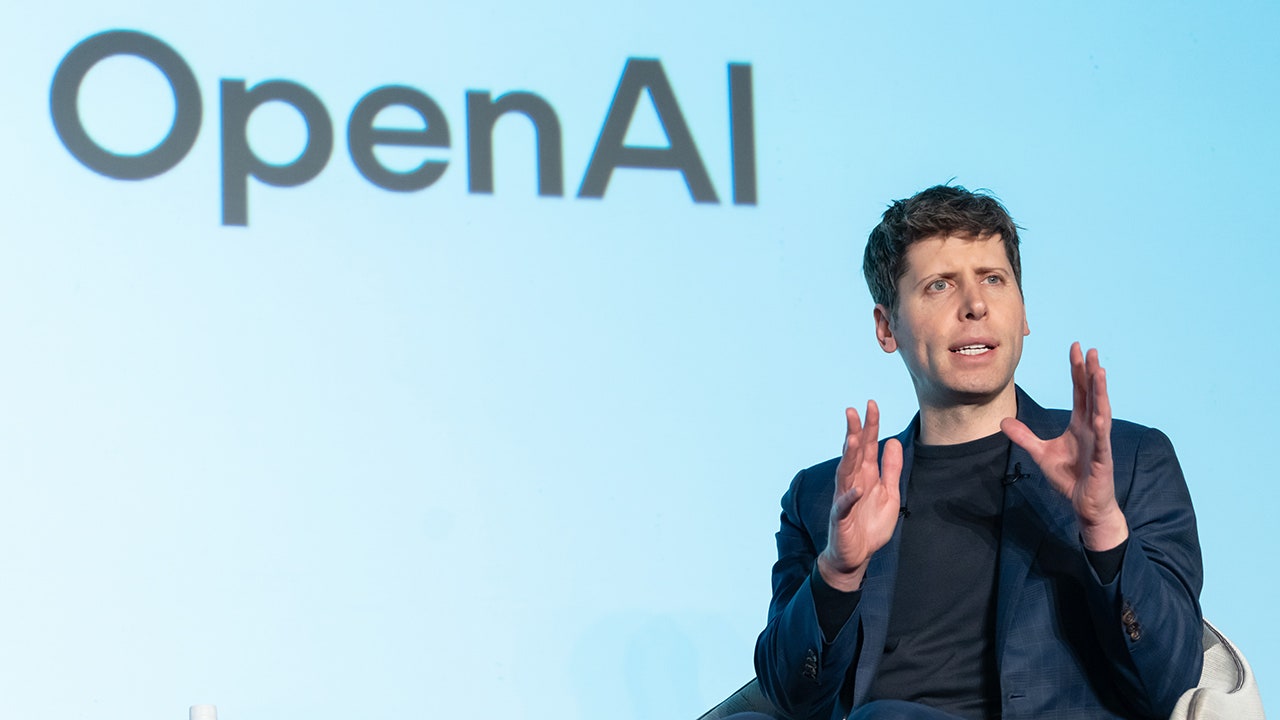
OpenAI Launches ChatGPT Work: GPT-5.6 Powered Agentic AI for Workplace Automation
OpenAI Launches ChatGPT Work: Technical Implications for Enterprise Infrastructure
OpenAI has officially launched ChatGPT Work, an enterprise-grade agentic platform built on the GPT-5.6 architecture, designed to automate complex, multi-step workplace workflows via native integrations with Slack and Microsoft Teams. The rollout, effective July 2026, marks a shift from passive chatbot interfaces to autonomous task execution, requiring organizations to re-evaluate their data governance, API latency tolerances, and SOC 2 compliance postures.
The Tech TL;DR:
- Agentic Automation: ChatGPT Work utilizes GPT-5.6 to execute multi-step tasks across third-party SaaS stacks, moving beyond simple text generation to functional API interaction.
- Enterprise Security: OpenAI has introduced dedicated administrative consoles for zero-retention data policies and granular workspace access control, addressing previous enterprise concerns regarding model training on proprietary data.
- Infrastructure Integration: The platform relies on a plugin-based architecture, necessitating immediate security audits of existing Slack and Teams webhooks to prevent unauthorized lateral movement.
Architectural Shift: From Chatbot to Autonomous Agent
The move to GPT-5.6 represents a significant leap in reasoning capabilities, specifically regarding function calling and long-context window management. Unlike its predecessors, ChatGPT Work is optimized for high-throughput API orchestration. According to official OpenAI documentation, the model demonstrates a 40% reduction in token latency for complex function-calling chains compared to GPT-5.0, a critical metric for real-time workplace automation.

For CTOs, the primary concern is the “agentic blast radius.” By granting an LLM write-access to enterprise communication tools, the attack surface expands. Organizations must ensure that the principle of least privilege is strictly enforced at the API key level. If your internal security team is currently struggling with shadow AI, it is advisable to engage a vetted cybersecurity audit firm to map all active API integrations before enabling Work-level permissions.
Implementation: Managing the API Request Pipeline
Deploying ChatGPT Work requires a standardized approach to webhooks. To verify the integrity of incoming agentic requests, developers should implement middleware that validates the OpenAI-signed headers. Below is a conceptual cURL request for verifying an agentic task signal within a private containerized environment:
    curl -X POST https://api.enterprise-gateway.internal/v1/verify-agent-task

    -H "Content-Type: application/json"

    -H "X-OpenAI-Signature: [HMAC_SHA256_HASH]"

    -d '{"task_id": "task_8892_a", "action": "slack_message_post"}'
This implementation ensures that only authorized agents—and not malicious actors spoofing the OpenAI endpoint—can trigger downstream automation. For firms struggling with the containerization of these security layers, consulting with a managed service provider specializing in Kubernetes security is the current industry standard for maintaining a secure, scalable AI deployment.
Comparative Analysis: ChatGPT Work vs. Competitor SaaS
The market for enterprise AI agents is currently bifurcated between closed-source “walled garden” models and open-weight alternatives. ChatGPT Work positions itself as the high-reasoning, high-integration leader, while competitors like Anthropic’s Claude Enterprise and local-LLM deployments (via Llama 3.x) offer distinct trade-offs in data sovereignty.
| Feature | ChatGPT Work (GPT-5.6) | Anthropic Claude Enterprise |
|---|---|---|
| Reasoning Latency | Low (Optimized for Agents) | Medium (High-Context Focus) |
| Integration Depth | Native (Slack/Teams) | API-First (Custom Build) |
| Security Model | Managed Cloud/SOC 2 | Isolated Tenant/Zero-Retention |
The Future of Enterprise Agentic Workflows
As agentic workflows become the default, the bottleneck shifts from model capability to infrastructure reliability. We are seeing a transition where the LLM is no longer the product; the product is the quality of the data pipeline feeding that LLM. Organizations that fail to clean their internal knowledge bases—or those that allow unstructured “data swamps” to persist—will find their agents hallucinating at scale. The successful deployment of ChatGPT Work depends less on the model itself and more on the rigor of the underlying IT hygiene. If your firm requires assistance in structuring data for agentic consumption, look toward specialized enterprise IT consultancies to ensure your data architecture is ready for autonomous integration.

Frequently Asked Questions
- Does ChatGPT Work train on enterprise data?
- No. OpenAI has explicitly stated that data processed within the ChatGPT Work workspace is excluded from model training, provided the organization utilizes the enterprise-specific administrative settings.
- How does GPT-5.6 differ from previous versions in a workplace context?
- GPT-5.6 features improved function-calling accuracy and lower latency for multi-step task execution, specifically designed to minimize the time-to-action in Slack and Microsoft Teams environments.
Disclaimer: The technical analyses and security protocols detailed in this article are for informational purposes only. Always consult with certified IT and cybersecurity professionals before altering enterprise networks or handling sensitive data.