
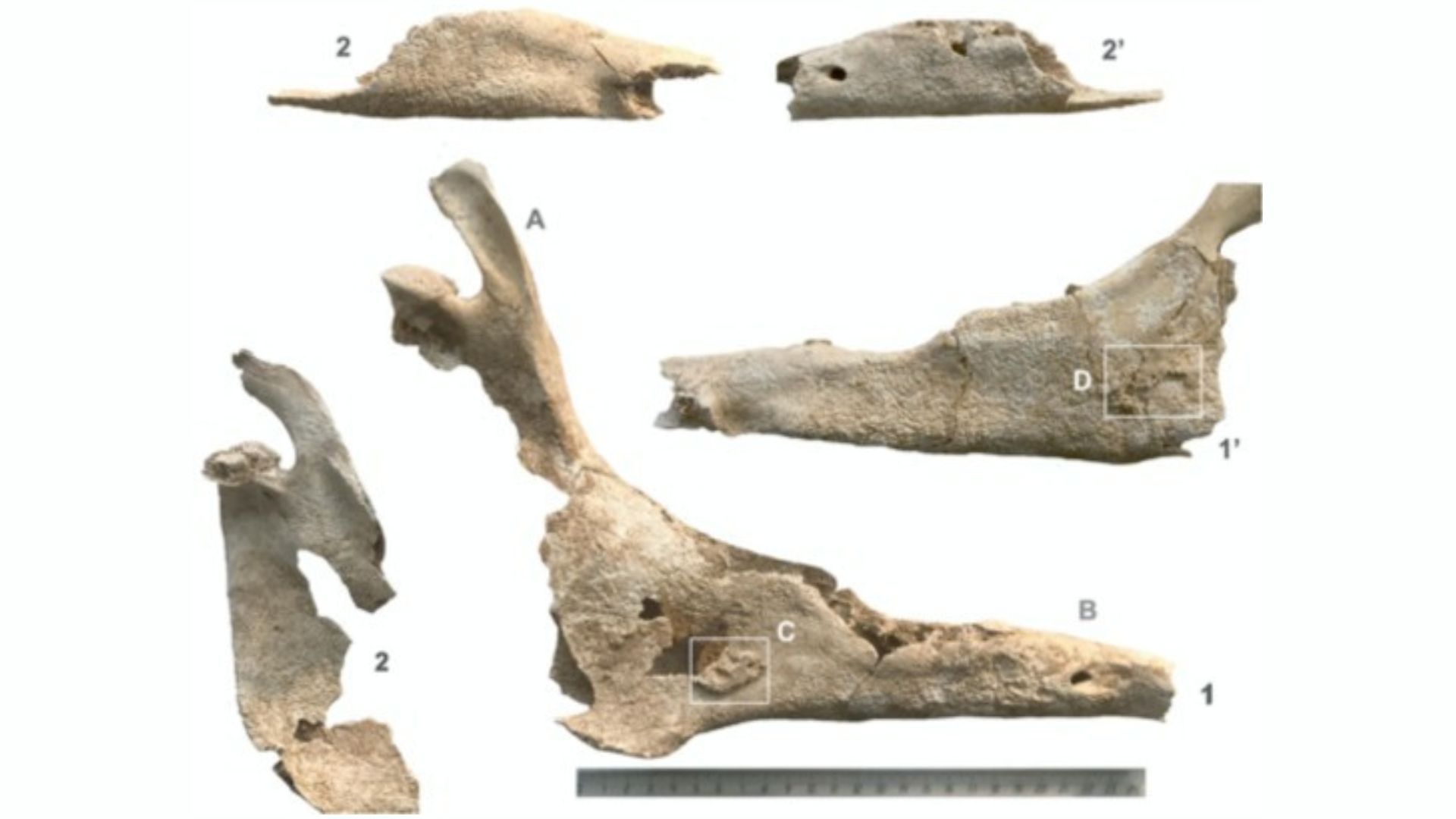
The oldest known remains of a mule in Western Europe have been discovered at an archaeological site in northeastern Spain, revealing new insights into animal husbandry and trade routes during the Early Iron Age. The hybrid animal, a cross between a male donkey and a female horse, was found buried alongside a partially cremated woman at the Hort d’en Grimau site in Barcelona.
While the skeletons were initially unearthed in 1986, recent genetic analysis confirmed the animal’s identity as a mule, according to a study published in the February issue of the Journal of Archaeological Science: Reports. Researchers determined the mule lived approximately 2,700 years ago.
“The mule shows clear evidence of having been ridden and well-fed, suggesting that it held considerable social value,” said F. Javier López Cachero, an archaeologist at the University of Barcelona and co-author of the study, in an email to Live Science.
Mules, typically sterile, were historically valued for their strength, endurance, and ability to thrive in harsh conditions. Breeding them, still, presented challenges, requiring skilled training of donkey stallions to successfully mate with mares. This difficulty likely contributed to their value, according to the research team.
The discovery pushes back the known timeline for mule breeding in Western Europe. Previously, the oldest mule remains were found in the Middle East, dating back more than 4,000 years. The presence of a mule in Spain during this period suggests the potential influence of seafaring Phoenician traders, who originated in the Middle East and were active in the region at the time. The Phoenicians may have brought with them the knowledge and techniques necessary for mule breeding, the study suggests.
Isotopic analysis of the mule’s remains indicates it was fed a diet primarily consisting of cultivated cereals. This, combined with skeletal analysis, suggests the animal was regularly used for riding, indicating a degree of status or purpose beyond simple labor.
The woman buried with the mule was estimated to be between 20 and 25 years old at the time of her death. Her remains were fragmented and had undergone partial cremation before burial, an “unconventional” funerary treatment, according to López Cachero. The reason for this treatment, and the significance of burying a woman with a mule, remains unclear.
“Unfortunately, the condition of the skeletal remains does not permit any assessment of the woman’s health nor determination of her cause of death,” López Cachero stated. He also noted the mule showed no signs of cremation, presenting a continuing puzzle for researchers.
While horses found in ancient burials sometimes signified warrior status, the researchers refrained from drawing similar conclusions regarding the woman and mule burial. The lack of accompanying grave goods further complicates efforts to determine the woman’s social standing or the reason for the unusual pairing in burial.
The research was published as Albizuri, S., Nadal, J., Cuervo, M. M., Grandal-D’Anglade, A., Orlando, L., Fages, A., Mercadal, O., Mestre, J., Farré, J., & Cachero, J. L. (2025). The oldest mule in the western Mediterranean. The case of the Early Iron Age in Hort d’en Grimau (Penedès, Barcelona, Spain). Journal of Archaeological Science Reports, 69, 105506. Https://doi.org/10.1016/j.jasrep.2025.105506
