
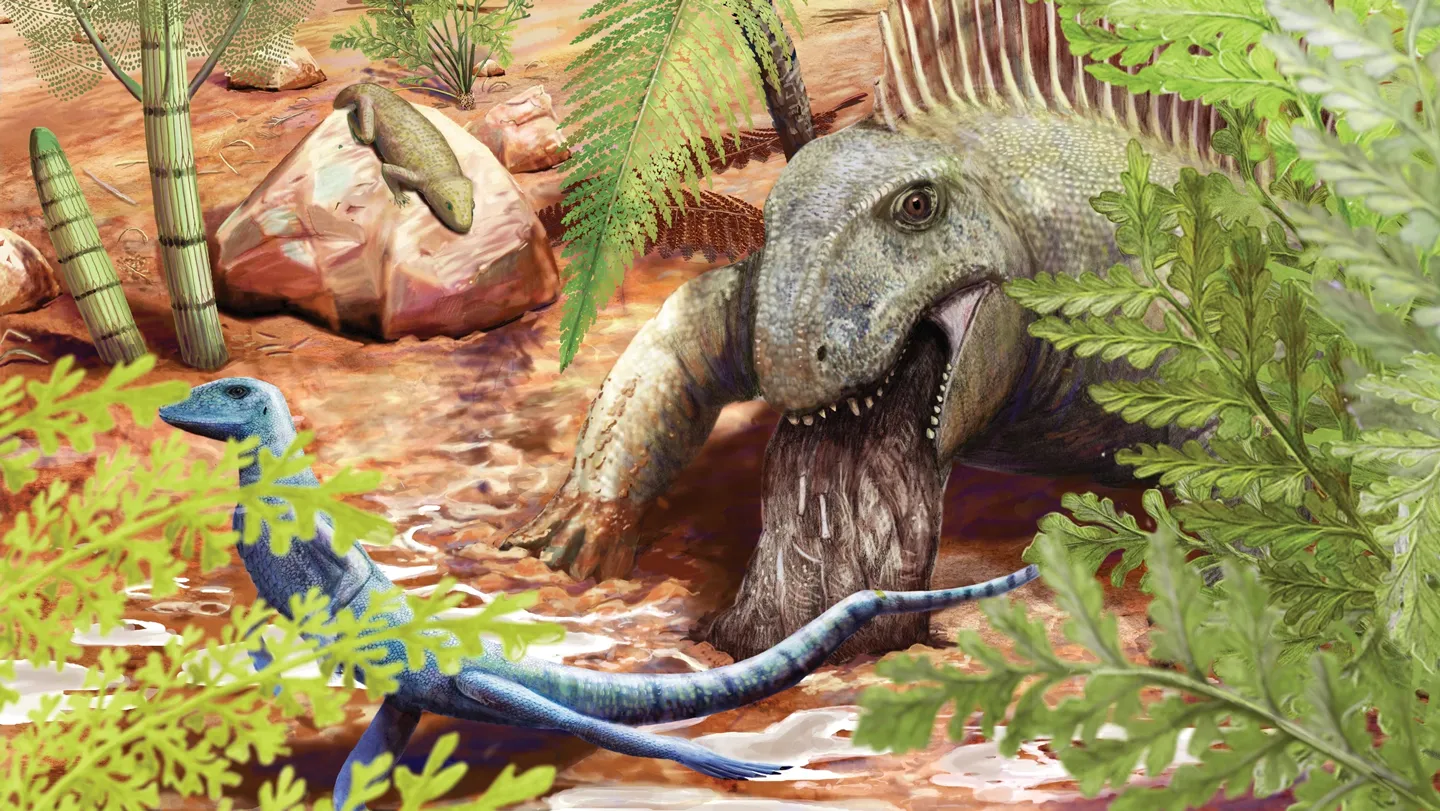
A 290-million-year-old snapshot of a predator’s meal, preserved in fossilized vomit, has been discovered in central Germany. The locate, detailed in a recent publication in Scientific Reports, represents the oldest known example of regurgitation from a land-based ecosystem, offering a rare glimpse into the feeding habits of early terrestrial predators.
The lime-sized specimen, unearthed in 2021 at the Bromacker locality, contains a cluster of bones from at least three different animals. Researchers used 3D scanning to analyze the arrangement of the 41 bones, confirming they originated from within a predator’s digestive system. Chemical analysis revealed low phosphorus levels, ruling out the possibility of the fossil being merely fossilized droppings.
Paleontologist Arnaud Rebillard, of the Museum für Naturkunde in Berlin, described the find as “kind of like a photograph of a moment in the past that is telling us about the animal that was living.” He emphasized the value of any behavioral data gleaned from such discoveries.
While the identity of the predator remains uncertain, scientists suspect it was either Dimetrodon teutonis, recognizable by the large sail on its back, or Tambacarnifex unguifalcatus. Both were synapsids – a group that includes mammals and their extinct relatives – and resembled modern monitor lizards.
The prey identified within the regurgitalite include two small, lizard-like reptiles and a limb bone from a larger, reptile-like herbivore. The presence of multiple prey species suggests the predator was an opportunistic feeder, consuming whatever was available rather than specializing in a particular diet.
According to Rebillard, the discovery provides a precise temporal link between the predator and its prey. “We can literally say, for sure, that these three animals were living at exactly the same place and exactly the same time, maybe to the week or even to the day,” he stated.
The Bromacker locality is known for its exceptional preservation of an early terrestrial ecosystem. A study published in Nature in November 2024 highlighted the importance of fossilized digestive contents – including both vomit and feces – in understanding the rise of dinosaurs and the structure of ancient food webs. The researchers noted that fossilized digestive products increased in size and diversity during the Triassic-Jurassic period, indicating the emergence of larger dinosaur faunas with new feeding patterns.
The process of regurgitation itself is common in modern predators, who often expel indigestible bones and other materials. While the reason for the ancient predator’s regurgitation remains speculative, Rebillard suggests it could have been due to difficulty digesting the bones or simply overeating.
Martin Qvarnström, a paleontologist at Uppsala University in Sweden who was not involved in the study, underscored the significance of such finds. “We need fossils like this to really tie together how the ecosystem functioned and how the food webs were structured,” he said.
The Bromacker site’s inland location is particularly noteworthy, as fossils of partially digested material are more commonly found in aquatic environments. This discovery offers a rare insight into the feeding dynamics of terrestrial ecosystems during the Permian period, a time when large herbivores and their predators were becoming increasingly prominent.
