
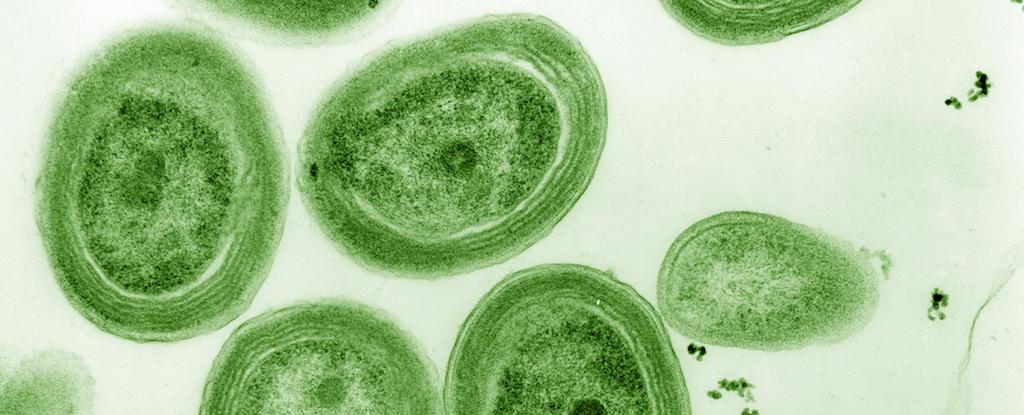
Ocean Warming Puts Vital Marine Microbe at Risk, Study Finds
SEATTLE – A new study published in Nature Microbiology reveals that rising ocean temperatures pose a significant threat to Prochlorococcus, a globally abundant marine microbe responsible for an estimated nearly a third of Earth’s oxygen. Researchers found the microbe’s growth slows dramatically in warmer waters, potentially leading to significant declines in productivity and shifts in ocean ecosystems.
The research team employed a statistical model based on established methods to estimate Prochlorococcus growth with minimal disturbance to the organisms. Their analysis showed cell division rates vary with latitude, correlating strongly with water temperature rather than sunlight or nutrient availability.Prochlorococcus thrives in water between 19 and 28 °C, but experiences considerably reduced growth rates above this range. cell division slows to one-third of its normal rate in water warmer than 30 °C.
“Their burnout temperature is much lower than we thought it was,” said researcher Marie Ribalet of the University of Washington.
Prochlorococcus has adapted to the nutrient-poor conditions of tropical seas through a streamlined genome, but this adaptation may have come at a cost - the potential loss of genes related to stress response. This could limit the microbe’s ability to cope with rapidly rising temperatures.
The study suggests a potential shift in dominance between Prochlorococcus and Synechococcus, another cyanobacteria group prevalent in tropical and subtropical waters.While Synechococcus can tolerate warmer temperatures, it requires more nutrients. Researchers caution that a shift in dominance could have unpredictable consequences for marine food webs.
“If Synechococcus takes over, it’s not a given that other organisms will be able to interact with it the same way they have interacted with Prochlorococcus for millions of years,” Ribalet explained.
Under a moderate warming scenario, the study projects a 17 percent decline in Prochlorococcus productivity in the tropics by the end of the century. A more severe warming scenario could lead to a 51 percent drop. Globally, productivity could fall by 10 percent with moderate warming and 37 percent with extreme warming. Researchers also predict Prochlorococcus’ geographic range will expand towards the poles.
The authors acknowledge limitations in their methodology, including the possibility of overlooking rare heat-resistant strains and gaps in data coverage across key tropical regions.
“This is the simplest explanation for the data that we have now,” Ribalet stated.”If new evidence of heat-tolerant strains emerges, we’d welcome that finding.It would offer hope for these critical organisms.”
