
Japan’s Moonshot Program: pioneering AI-Powered Robotics for an Aging Society
The next technological leap forward may not fit in your pocket,but it promises to profoundly impact daily life – particularly for an aging population. japan’s enterprising Moonshot research program, fueled by NVIDIA’s cutting-edge AI and robotics technologies, is charting a course toward a future where intelligent, autonomous robots are seamlessly integrated into the lives of its citizens by 2050.
This isn’t a single project, but a sweeping initiative encompassing ten ambitious goals, ranging from predicting diseases before they manifest to establishing sustainable resource management systems.A core focus, and the subject of this article, is Goal No. 3: developing AI-powered robots capable of providing essential care for Japan’s growing elderly population. Learn more about Goal No. 3 here.
The Demographic Imperative: Why Robotics in Elder Care?
japan faces a critically important demographic challenge: a rapidly aging population and a declining birth rate. This creates a growing demand for care services that are difficult to meet with the existing workforce.According to data from the Statista,as of 2024,over 29% of Japan’s population is aged 65 or older,a figure projected to rise significantly in the coming decades. robotics offers a potential solution, providing assistance with daily tasks and alleviating the burden on caregivers.
Introducing AIREC: The Robots Leading the Charge
At the heart of this endeavor are the AI-Driven Robot for embrace and Care (AIREC) robots. Developed as part of the Moonshot program, AIREC represents a significant advancement in caregiving robotics. The project features two primary robot models: Dry-AIREC, a larger, more mobile unit, and AIREC-Basic, designed for data collection and foundational model development.
The power behind thes robots comes from NVIDIA’s advanced hardware and software. Dry-AIREC is equipped with two NVIDIA gpus, while AIREC-Basic utilizes three NVIDIA Jetson Orin NX modules for edge AI processing. This allows the robots to perform complex tasks, such as object recognition, motion planning, and force estimation, directly on the device, reducing latency and improving responsiveness.
The Role of Simulation: NVIDIA Isaac Sim
Training robots to perform delicate and complex caregiving tasks requires extensive data and realistic simulations. This is where NVIDIA Isaac Sim comes into play. This open-source robotic simulation framework allows researchers to create virtual environments where the AIREC robots can learn and refine their skills without the risks associated with real-world testing. Isaac sim enables the robots to practice tasks like estimating forces between objects, a crucial skill for safe and effective patient handling.
“The integration of NVIDIA technologies and AI into the robot development process has allowed this project to go from a far-fetched dream to reality faster than imagined,” explains Tetsuya ogata, professor and director of the Institute for AI and Robotics at Waseda University.
beyond Basic Assistance: The Scope of Caregiving Capabilities
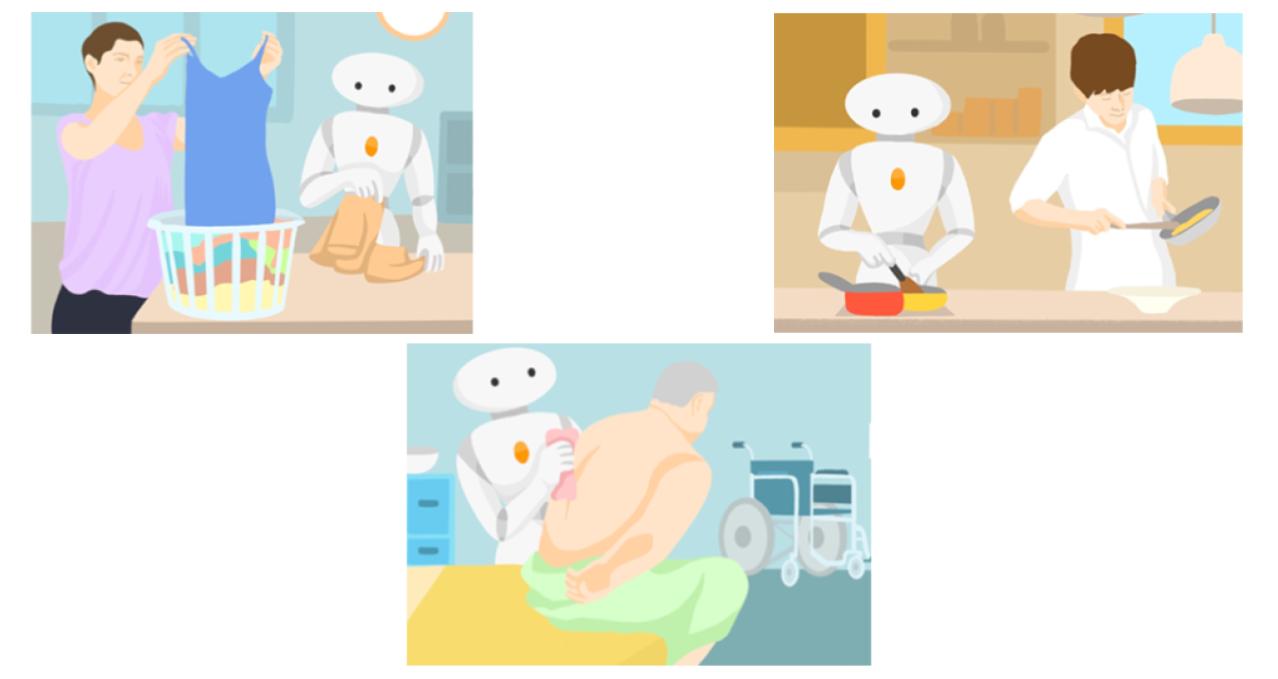
The Moonshot program isn’t simply aiming to create robots that can perform basic chores. Researchers are tackling some of the most challenging aspects of elder care, including:
- Repositioning: Preventing bed sores and facilitating diaper changes requires careful and precise repositioning of patients.
- Hygiene Assistance: Assisting with bathing and maintaining personal hygiene are critical aspects of care.
- Meal Assistance: Helping patients with feeding and ensuring proper nutrition.
- Mobility Support: Providing assistance with walking and other movements.
Misa Matsumura, a bioengineering master’s student at the University of Tokyo, is spearheading research into automating the repositioning process. Her work, presented at the IEEE/RSJ International Conference on Intelligent Robots and Systems, focuses on developing algorithms that allow the Dry-AIREC robot to safely and effectively reposition patients while considering their individual needs and physical limitations.
Matsumura’s team leverages NVIDIA RTX GPUs to process the complex data required for 3D posture estimation, trajectory calculations, and force estimation. The robot utilizes fisheye and depth cameras to assess patient movements and applies the appropriate amount of force to prevent discomfort or injury.
The Human Connection: Balancing Technology and Compassionate Care
While the technological advancements are notable, researchers emphasize the importance of maintaining a human-centered approach to care.Etsuko Kobayashi, professor of bioengineering at the University of Tokyo, highlights the personal motivation behind her involvement in the project. “Although my study focus is on medical robotics, I decided to join this project because my mother is growing older, and that experience has given me an appreciation for the importance of personal care,” she explains. “I found that my experience in medical robotics can be meaningfully extended to care robotics, contributing to the development of safe and reliable robotic systems for human-centered applications.”
The goal isn’t to replace human caregivers, but to augment their abilities, allowing them to focus on providing emotional support and personalized attention to patients.
Looking Ahead: The Future of robotic Care
The Moonshot team will be showcasing their latest progress at the 2026 International Symposium on System Integration in January. This event will provide a valuable opportunity to witness the advancements in robotic care firsthand and to discuss the challenges and opportunities that lie ahead.
The development of AIREC and the broader Moonshot program represent a significant step towards a future where robots play a vital role in supporting aging populations. As technology continues to evolve, we can expect to see even more sophisticated and capable robots that can enhance the quality of life for seniors and alleviate the burden on caregivers.
Learn more about NVIDIA Isaac Sim.
