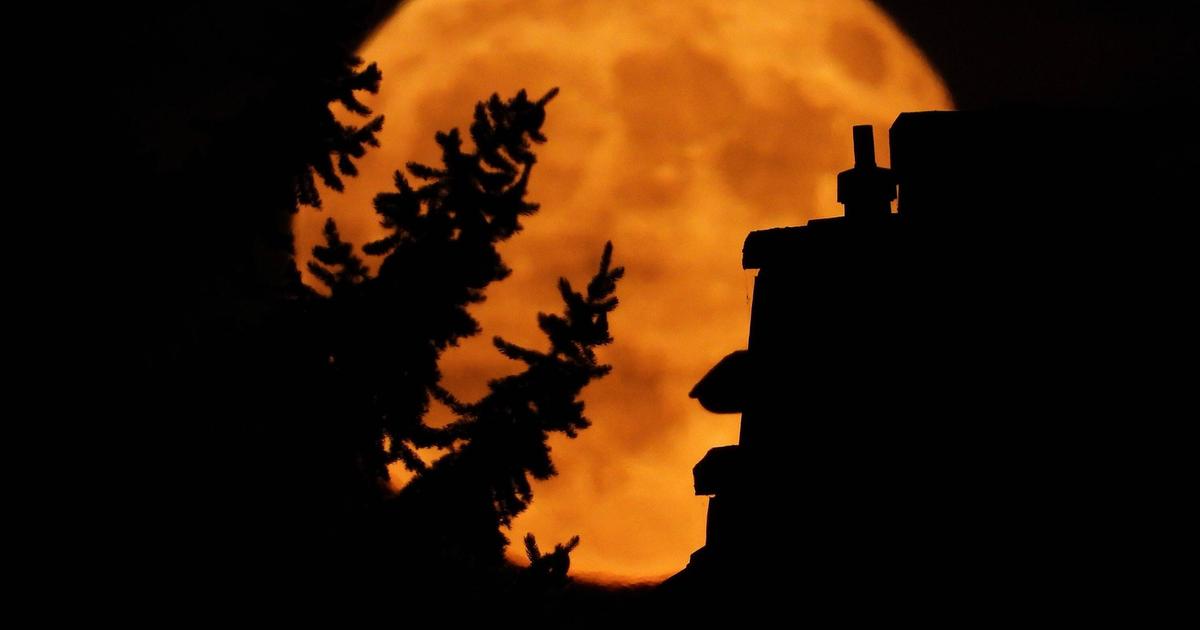
November Beaver Supermoon Reaches Full Phase November 24, 2026
November brings a bright supermoon known as the beaver moon, offering skywatchers a larger and more luminous lunar display than usual.
Full Phase on Tuesday
The moon reaches its exact full phase at 15.53 hours Central European Time on Tuesday, November 24, 2026, as reported by t-online.de. Observers who miss the precise moment can still see a fully rounded disc to the naked eye from Monday, November 23, through Wednesday, November 25, according to GMX News.
In Berlin, the moon rises at 15.15 hours on November 24, though exact rise times vary by city. The best view occurs during moonrise when the satellite sits low on the eastern horizon, shining in yellow and orange hues because its light travels a longer path through the atmosphere.
Moon Reaches Closest Point to Earth in Months
The lunar body approaches earth on its elliptical orbit, reaching a distance of approximately 360,768 kilometers on November 24, according to Star Walk data cited by GMX News. t-online.de places the distance slightly closer at 360,766 kilometers, noting that the moon moves even closer about a day later at roughly 359,347 kilometers.
This proximity makes the celestial body appear about 6.5 percent larger and 13.5 percent brighter than at a mean distance of 384,400 kilometers. This event marks the first supermoon since January 2026 and begins a sequence of three consecutive supermoons.

| Phase Date | Distance From Earth | Visual Difference |
|---|---|---|
| November 24, 2026 | ~360,768 km | 6.5% larger, 13.5% brighter |
| December 24, 2026 | ~356,738 km | Largest supermoon of the year |
Origin of The Name
North American Algonquian peoples gave the November full moon the name beaver moon because hunters set traps for pelts before the harsh winter arrived. A secondary interpretation points to the animals themselves retreating into their lodges after storing food for the cold season. Traditional German names for the November full moon include the fog moon or frost moon.
Algonquian peoples form one of the most populous and widespread Indigenous groups in North America, historically prominent along the Atlantic Coast and around the Great Lakes. Before European contact, their villages operated on a seasonal economy, moving between coastal summer camps for fishing and inland winter hunting grounds, a cycle that included trapping beaver in autumn.
Their basic social unit was the village of a few hundred people led by sachems, with communities breaking into smaller groups or gathering as food supplies required.
The next supermoon follows on Thursday, December 24, 2026, bringing an even closer approach at 356,738 kilometers on Christmas Eve.