
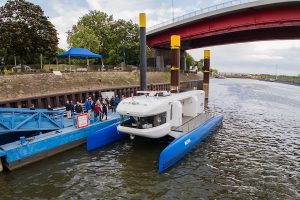
Electric Propulsion System Powers Autonomous Research Vessel ‘NOVA‘ for Sustainable Inland Shipping
Table of Contents
- Electric Propulsion System Powers Autonomous Research Vessel ‘NOVA’ for Sustainable Inland Shipping
- ‘NOVA’ Christened: A Milestone for Green Inland Waterways
- Torqeedo’s Role in Powering Autonomous Navigation
- Research Focus: Autonomous Navigation and Low-Emission Shipping
- the Future of Electric Propulsion in Maritime Transport
- Frequently Asked Questions About Electric Propulsion Systems
- What are the benefits of using electric propulsion in vessels?
- How does the electric propulsion system on the ‘NOVA’ work?
- What is the role of autonomous navigation in sustainable shipping?
- How can inland shipping become more environmentally friendly?
- What are the challenges of implementing electric propulsion in large vessels?
Duisburg, Germany – The “NOVA,” a cutting-edge autonomous research vessel equipped with an electric propulsion system from Torqeedo, has been launched to revolutionize inland shipping. Operated by the University of Duisburg-Essen (UDE) and the Development Center for Ship Technology and Transport Systems (DST), the vessel will navigate the Rhine River, pioneering methods to enhance environmental sustainability and efficiency in the industry. The project aligns with global efforts to reduce carbon emissions in transportation, as highlighted by the Environmental Protection Agency’s focus on maritime shipping emissions.
‘NOVA’ Christened: A Milestone for Green Inland Waterways
The official christening of “NOVA” took place on May 23 at the Port of Duisburg,with Oliver Krischer,the North rhine-Westphalian Minister for the Environment,Nature Conservation and Transport,among the distinguished guests. This event marks a notable advancement towards eco-friendly inland shipping, showcasing the potential of electric propulsion systems in complex applications.
Did You Know? The Rhine River is one of Europe’s busiest waterways, handling a significant portion of the continent’s freight transport.
Heiko Vietmeier, CEO of Torqeedo, emphasized the company’s commitment to supporting forward-looking projects with its advanced technology. Torqeedo’s systems are now powerful and reliable enough to power complex applications such as autonomous research vessels fully electrically or in hybrid mode. The insights gained from operating the ‘NOVA’ are expected to provide valuable momentum for the further development and widespread adoption of choice propulsion systems in inland shipping.
‘NOVA’ Specifications and Technology
The 15-meter-long “NOVA” features a twin-hull design, enabling it to transport both cargo and passengers. Its development spanned approximately two years and is powered by Torqeedo’s electric propulsion system. Four Deep Blue Batteries 80 supply energy to the two 50kW Deep blue motors and all onboard systems. Torqeedo has provided a complete power management system with a dedicated low voltage power circuit for consumers like the autonomous navigation system, instruments and lighting, supplied by the high voltage system for propulsion.In addition two coupled Torqeedo System Management Units in combination with the OEM-Display Interface provide access to all relevant system data for various scientific analyses and monitoring of the power train. this way the scientists of UDE and DST can simply focus on thier research into making the autonomous navigation software work.
Pro Tip: Consider the long-term cost savings of electric propulsion, including reduced fuel expenses and lower maintenance requirements.
The planned research trips will occur in the Port of Duisburg on the Rhine and in canals throughout the Ruhr region. Researchers at the University of Duisburg-Essen anticipate that fully automated inland vessels could be in regular operation within the next eight to ten years. This timeline aligns with the growing adoption of autonomous technology across various transportation sectors, as noted in a McKinsey report on the future of the automotive industry, which highlights the increasing role of automation.
| Metric | Value |
|---|---|
| Length | 15 meters |
| Propulsion | Torqeedo Electric |
| batteries | 4 x Deep Blue Batteries 80 |
| Motors | 2 x 50kW Deep Blue |
the Future of Electric Propulsion in Maritime Transport
The integration of electric propulsion systems in vessels like the ‘NOVA’ represents a pivotal shift towards sustainable maritime transport.As global awareness of environmental issues grows, the demand for cleaner and more efficient shipping solutions is increasing. Electric propulsion offers a viable alternative to traditional fossil fuel-based systems, reducing greenhouse gas emissions and minimizing the environmental impact of inland waterways. The research conducted on the ‘NOVA’ will provide valuable data and insights that can be applied to the broader maritime industry, accelerating the adoption of electric propulsion and contributing to a greener future for shipping.
Frequently Asked Questions About Electric Propulsion Systems
What are the benefits of using electric propulsion in vessels?
Electric propulsion offers several advantages, including reduced emissions, lower noise pollution, and increased energy efficiency. It also allows for greater control and maneuverability, making it ideal for autonomous vessels.
How does the electric propulsion system on the ‘NOVA’ work?
The ‘NOVA’ is powered by four Deep Blue Batteries 80, which supply energy to two 50kW Deep Blue motors. These motors drive the vessel’s propellers,providing propulsion. The system is managed by a complete power management system that ensures efficient and reliable operation.
Autonomous navigation can optimize routes, reduce fuel consumption, and improve safety, contributing to more sustainable shipping practices. It also allows for more efficient use of waterways and reduces the risk of human error.
How can inland shipping become more environmentally friendly?
inland shipping can become more environmentally friendly by adopting electric propulsion systems, using alternative fuels, and implementing autonomous navigation technologies. These measures can considerably reduce emissions and improve the overall sustainability of the industry.
What are the challenges of implementing electric propulsion in large vessels?
Some challenges include the limited range of electric batteries, the high cost of initial investment, and the need for charging infrastructure. Tho, advancements in battery technology and government incentives are helping to overcome these challenges.
What impact do you think the ‘NOVA’ project will have on the future of inland shipping? How can governments and industry stakeholders collaborate to accelerate the adoption of sustainable shipping practices?
Share your thoughts and join the conversation below!
