Nordic Mining threatens Natur og Ungdom with millionsum lawsuit
Nordic Mining has issued a warning threatening Natur og Ungdom with a millionsum lawsuit if ongoing civil disobedience demonstrations continue to disrupt ore processing operations at the site in Vevring, Sunnfjord. The standoff escalated sharply as activists chained themselves to transport belts while police removed protesters from the site, setting up a direct economic conflict between the mining developer and environmental organizations contesting the legality of fjord waste disposal.
The conflict centers on contrasting interpretations of state-issued permits and Supreme Court rulings regarding mineral waste disposal in Førdefjorden. Natur og Ungdom contends that its members are merely enforcing environmental protections that the Norwegian state failed to uphold, while corporate representatives maintain that the demonstrations inflict significant financial damage on an innocent third party.
Legal Warnings and Potential Millions in Damages
According to nrk.no, Nordic Mining and its subsidiary Engebø Rutile and Garnet received notice that their operations face financial losses due to blockades erected by activists. The warning letter, dispatched by the law firm Kvale, asserts that the company will demand complete compensation for all revenue losses from Natur og Ungdom and any individuals participating in the unlawful blockades.
Tone Løtuft, communications chief at Nordic Mining, stated in the nrk.no coverage that individual protesters could face severe financial burdens. Løtuft noted that the claims could easily reach millions of Norwegian kroner, pointing out that the company must protect its employees and its operational infrastructure.
Firda reported that the legal threat was received by Natur og Ungdom leader Sigrid Hoddevik Losnegård earlier in the week. Despite the warning of severe personal and organizational liability, Losnegård maintained that the legal action would not deter their campaign.

“We are here to stop the illegal dumping of mining waste in the fjord, and not to inflict economic losses on Nordic Mining,” Sigrid Hoddevik Losnegård told nrk.no.
Losnegård rejected the characterization of the protests as unlawful, arguing instead that the organization is stepping in where state authorities failed. She suggested that any compensation claims should legitimately target the state rather than the operating company, given that the underlying dispute stems from government-issued permits.
Løtuft dismissed the suggestion that Nordic Mining should pursue the state for damages instead of the activists. In statements covered by nrk.no, Løtuft questioned why environmental groups would direct their actions at the mining company if they truly believed the state bore the sole responsibility.

Supreme Court Rulings Versus Government Permits
The protests follow a complex legal history surrounding the Engebø project. Multiple environmental organizations challenged state authorities in court to halt plans to deposit up to 170 million tons of mining waste into Førdefjorden. The Supreme Court subsequently ruled in June that the initial dumping permits granted to Nordic Mining were invalid.
Despite that judicial setback, the Norwegian government issued a new permit in August following recommendations from the Norwegian Environment Agency. This updated authorization allows Nordic Mining to deposit 4.5 million tons of mining waste over a three-year period. Environmental advocates argue that proceeding with waste deposition under any revised timeline violates the spirit and letter of the Supreme Court decision.
Firdaposten noted conflicting accounts of security measures at the plant after reports emerged that activists had been locked inside the facility. Nordic Mining firmly denied those claims, clarifying that protesters had not been penned in by company personnel.
Police Interventions and On-Site Blockades
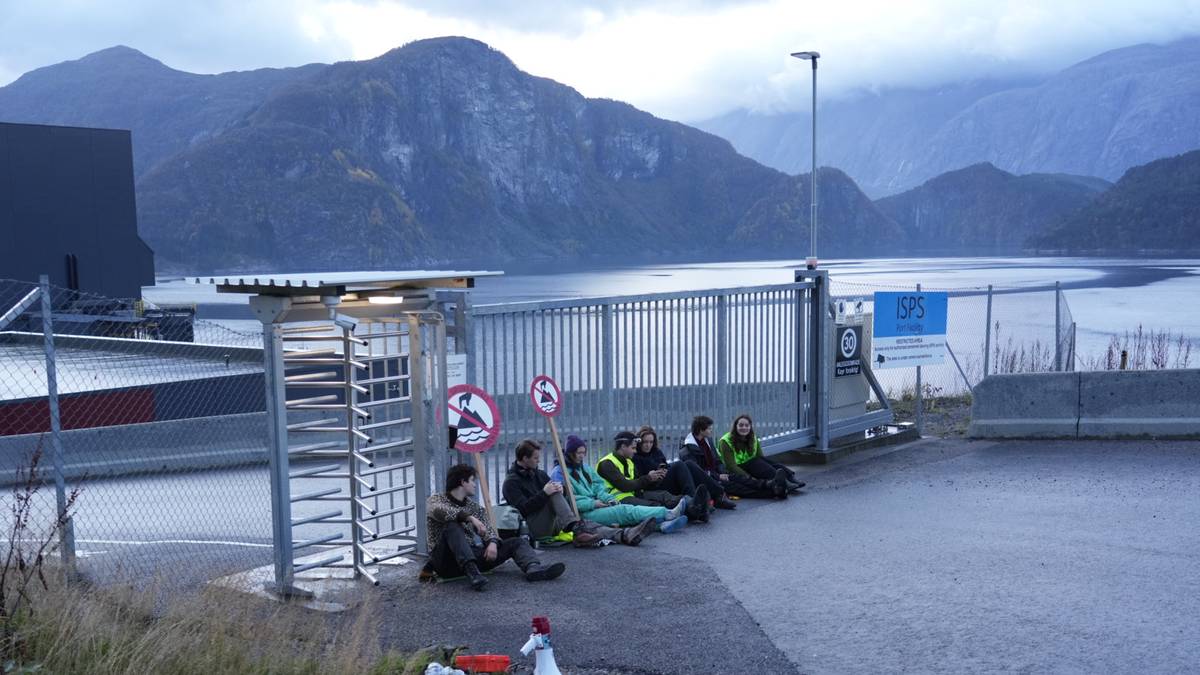
Firdaposten documented the heavy police response to the initial demonstrations, noting that six police vehicles arrived at the Engebø site after receiving information from Nordic Mining. Officers engaged in dialogue with approximately twenty to thirty demonstrators who had chained themselves to gates and access roads.

NTB detailed subsequent weekend actions where police removed activists who had breached safety zones to block the bridge over Nordic Mining’s ore transport system. Erik Sjødahl, operations leader in the Western Police District, confirmed to NTB that officers removed individuals actively obstructing industrial work.
Brage Bøe Ulstein, a central board member of Natur og Ungdom, emphasized in a press release covered by Aftenposten that the blockade serves to cut off the supply of material destined for the fjord. Ulstein stated that activists are prepared to endure harsh weather conditions and maintain their physical presence at the site for an extended period.
Firdaposten observed that physical confrontations and minor operational halts have continued as activists return to the access points immediately following police clearance. The friction between corporate asset protection, state permitting authority, and environmental resistance shows no sign of abating as the three-year dumping window advances.