No Plugs: The Revolutionary Computer Powered by Springs and Ambient Heat
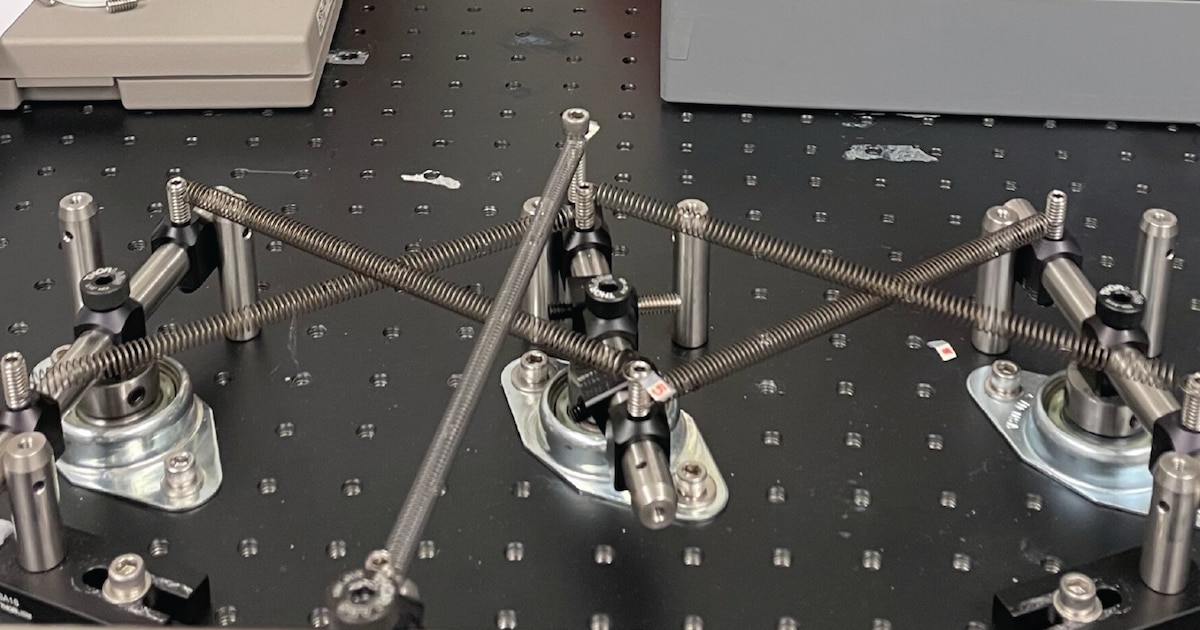
Researchers at St. Olaf College and Syracuse University have developed a mechanical computer that operates entirely without electricity, utilizing a system of steel bars and springs to process and store data.
The development represents a departure from the global technological trend of miniaturization and increased processing speed. Instead of relying on silicon chips and electronic circuits, the research team constructed logic machines that function through the physical tension and movement of mechanical components.
Material Memory and Mechanical Logic
The project originated from an investigation into how common materials retain a form of memory. Joey Paulsen, an associate professor of physics at St. Olaf College, noted that materials such as rubber maintain a record of their previous state after being stretched or compressed.

While conventional computing relies on hard drives or biological memory in the brain, Paulsen and his team explored whether these physical properties of materials could be harnessed for information technology. This led to the creation of a system where information is stored and processed solely through the behavior of physical materials, eliminating the need for batteries or any external power source.
The resulting machine uses the tension of springs and the positioning of steel bars to perform logical operations and conserve information, effectively turning physical displacement into data processing.
Operational Advantages in Extreme Environments
This mechanical approach addresses a critical vulnerability in modern electronic hardware. Standard computers, smartphones, and tablets are designed to operate optimally within a specific temperature range, typically between 10°C and 35°C. When these limits are exceeded, electronic components must work harder to dissipate internal heat, which can lead to system slowdowns, spontaneous shutdowns, and permanent damage to circuits and chips.

High ambient temperatures often result in increased CPU usage for simple tasks and excessive fan noise as systems struggle to maintain stability. In extreme cases, heat can cause irreversible hardware failure or significantly shorten the lifespan of a device’s battery.
Because the mechanical computer developed by the St. Olaf and Syracuse teams does not rely on silicon chips or electrical currents, it is not subject to these electronic failures. The researchers state that these mechanical systems can operate in extreme environments where traditional silicon-based computing fails.