
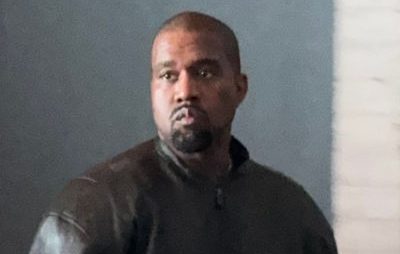
Nigel Farage Warns Against Banning Kanye West From UK Entry
UK Parliament Member Nigel Farage has opposed the UK government’s decision to ban Kanye West from entering the country ahead of his planned headline performances at the Wireless Festival. While condemning West’s antisemitic rhetoric, Farage argues that barring individuals based on their views sets a “dangerous path” for British governance.
The High Cost of Brand Radioactive
In the world of high-stakes entertainment, there is a threshold where artistic provocation transforms into a corporate liability. For Kanye West—now predominantly known as Ye—that threshold was crossed long ago, but the commercial reckoning reached a fever pitch this April. The planned three-day headline set at London’s Wireless Festival in Finsbury Park wasn’t just a concert; it was a logistical leviathan that required massive institutional backing. However, when a talent’s brand equity is eclipsed by a history of antisemitic remarks and the celebration of Nazism, the corporate flight response is instantaneous.

The exodus began with the money. Before the government officially stepped in to ban West’s entry, major sponsors including Pepsi and Diageo pulled their support. This wasn’t a mere gesture of moral alignment; it was a calculated move to protect their own global market positioning. When a performer is linked to the sale of Swastika T-shirts and the release of tracks like “Heil Hitler,” the association becomes toxic. For the corporate giants involved, the risk to their brand equity far outweighed the potential ticket revenue of a headline act.
When a brand deals with this level of public fallout, standard press releases are insufficient. The immediate instinct for any global entity is to deploy elite crisis communication firms and reputation managers to stop the bleeding and distance the corporate identity from the controversy.
The Political Friction: Farage vs. Starmer
The situation quickly evolved from a PR disaster into a geopolitical debate over the limits of free expression and national security. UK Prime Minister Keir Starmer wasted no time in framing the booking of West as a failure of judgment. Starmer described the situation as “deeply concerning,” emphasizing that antisemitism in any form is abhorrent and must be confronted firmly to ensure Jewish people feel safe in Britain.
“It is deeply concerning Kanye West has been booked to perform at Wireless despite his previous antisemitic remarks and celebration of Nazism,” Starmer stated, asserting that the responsibility to confront such hate is absolute.
Enter Nigel Farage. The Clacton MP and leader of the Reform party found himself in the uncomfortable position of defending the right of a man he describes as “vile” to enter the country. During a recent press conference, Farage made a sharp distinction between his personal disgust and his political philosophy. While he explicitly stated he would not buy a ticket and would not recommend anyone else do so, he viewed the government’s ban as a precedent that could be weaponized.
Farage’s argument centers on the “slippery slope” of state-mandated censorship. He posited that if the government begins barring individuals simply because their views are disliked, the criteria for entry could become arbitrarily restrictive. In a pointed critique of the current administration, Farage suggested that if Keir Starmer were to ban everyone whose views he disagreed with, “almost nobody would be allowed in.”
Live Nation and the Logistics of Cancellation
Behind the political sparring lies the operational wreckage of the Wireless Festival. Owned and managed by Live Nation, the festival faced a cascading failure of planning. Booking a performer with West’s current volatility is a gamble that ignores the basic tenets of risk management. The subsequent ban didn’t just remove a headliner; it threatened the viability of the entire event.
The fallout highlights a critical gap in how large-scale events are curated in the modern era. A tour or festival of this magnitude is not just a cultural moment; it is a complex web of contracts, and obligations. When a primary act is legally barred from entry, the ripple effect hits everything from venue staffing to local vendors. To navigate such a collapse, promoters typically rely on professional event management and logistics firms capable of rapid pivoting and contract renegotiation to avoid total financial insolvency.
Farage argued that the “free market” would have solved the problem without government intervention. His logic was simple: the withdrawal of sponsors and the likely dip in ticket sales would have made the performance commercially unviable, forcing the festival’s hand through financial pressure rather than legislative decree.
The Legal Precedent of the “Dangerous Path”
The ban on West’s entry raises significant questions about the intersection of immigration law and freedom of speech. While the UK government has the authority to refuse entry to individuals deemed “not conducive to the public decent,” the application of this power to a global celebrity creates a high-profile case study in state control. For the artist, this isn’t just a missed gig; it’s a legal barrier that requires specialized entertainment and immigration attorneys to navigate the complexities of visa denials and entry bans.
West’s trajectory—from the pinnacle of music production to a figure banned from sovereign nations—serves as a cautionary tale regarding the fragility of intellectual property and personal brand when decoupled from social responsibility. The “rabbit hole of antisemitism stroke nazism,” as Farage termed it, has effectively neutralized West’s ability to operate in traditional Western entertainment markets.
As the dust settles on the Wireless Festival debacle, the industry is left to ponder whether the “free market” is truly a sufficient deterrent for hate speech, or if the state must act as the ultimate curator of who is allowed on the stage. For the brands and promoters still operating in this volatile climate, the lesson is clear: the cost of ignoring a talent’s toxicity is far higher than the cost of a vacant headline slot. To find the vetted professionals necessary to manage these high-stakes intersections of law, PR, and event logistics, the World Today News Directory remains the gold standard for industry connections.
Disclaimer: The views and cultural analyses presented in this article are for informational and entertainment purposes only. Information regarding legal disputes or financial data is based on available public records.