New Secrets of Human Evolution Unlocked in Ancient DNA Study of Europe and the Near East
Scientists have decoded 22,000 ancient genomes from Europe and the Near East, revealing hundreds of genetic adaptations shaped by natural selection over the past 10,000 years—including variants tied to celiac disease, multiple sclerosis, and lactose tolerance—offering unprecedented insight into how agriculture, migration, and disease reshaped human biology long before recorded history.
This isn’t just about stones and bones anymore. The real revolution is in the blood. By comparing DNA from Neolithic farmers who first domesticated wheat in the Fertile Crescent to Bronze Age pastoralists who herded cattle across the Eurasian steppes, researchers have mapped how environmental pressures—famine, plague, dietary shifts—left permanent marks on our genome. These aren’t abstract mutations; they’re the biological fingerprints of survival, etched into populations that still live today in villages from Anatolia to the Alps.
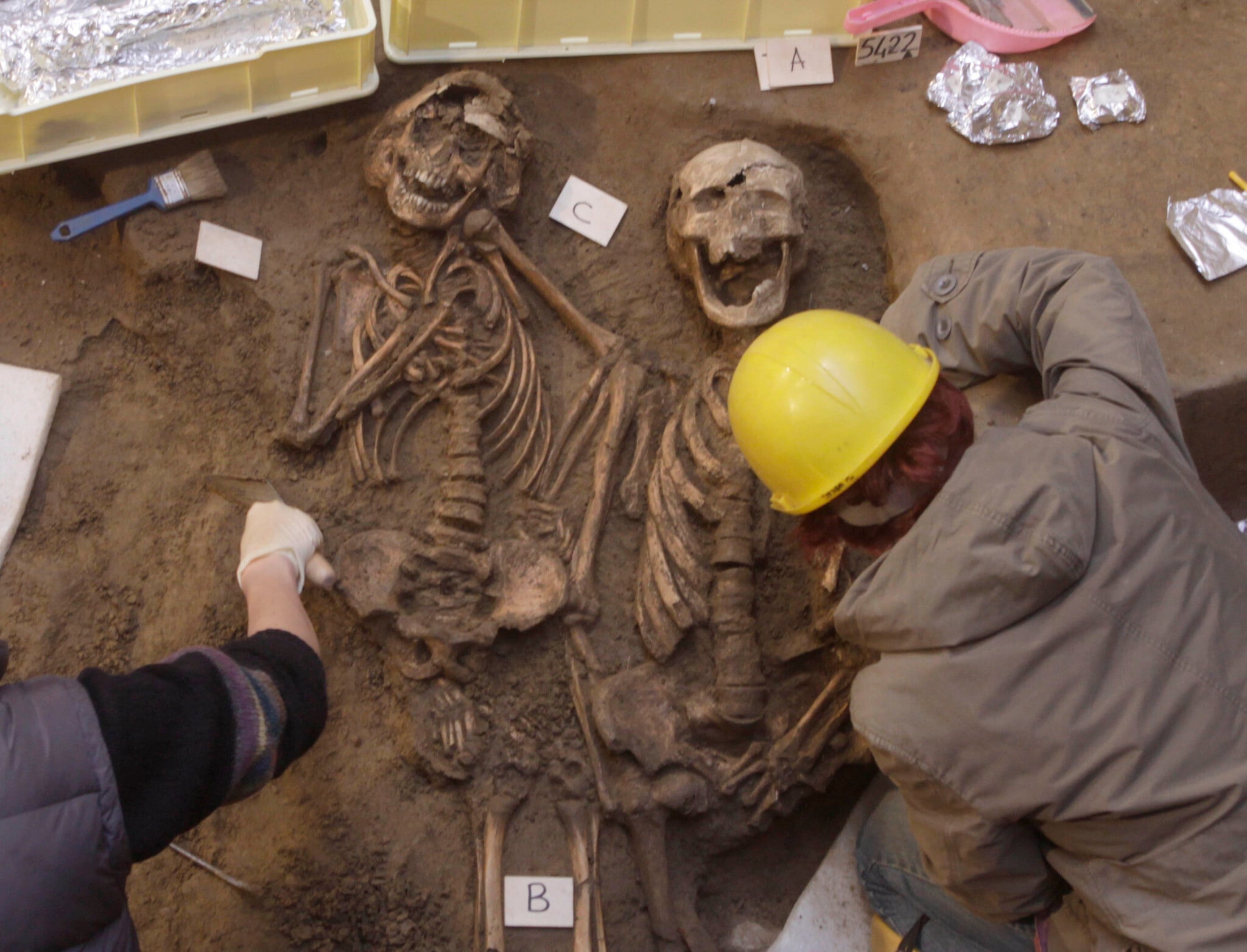
The study, led by an international consortium including Harvard’s David Reich Lab and the Max Planck Institute for Evolutionary Anthropology, analyzed skeletal remains from 120 archaeological sites spanning modern-day Israel, Turkey, Germany, and Ukraine. What emerged was a pattern: genetic variants associated with immune response spiked dramatically after 6,000 BCE, coinciding with the rise of dense settlements and zoonotic disease transmission from domesticated animals.
“We’re seeing the genetic scars of humanity’s first major public health crises,”
Dr. Leila Hassan, Director of Ancient Genomics at Tel Aviv University’s Sackler Faculty of Medicine, explained in a recent interview. “The same variants that increased resistance to tuberculosis or salmonella in Neolithic farmers now predispose descendants to autoimmune disorders like Crohn’s and multiple sclerosis. Evolution doesn’t optimize for longevity—it optimizes for surviving long enough to reproduce.”
This evolutionary trade-off has direct, modern consequences. In regions like the Levant and Eastern Europe—where these ancient adaptations are most prevalent—healthcare systems are grappling with rising rates of autoimmune diseases linked to genetic legacies of prehistoric survival strategies. Municipal health departments in cities such as Haifa, Lviv, and Krakow are reporting increased demand for specialized immunology services, straining public health budgets and highlighting gaps in preventive care infrastructure.
Communities facing these inherited health challenges are turning to specialized services for support. Families navigating chronic autoimmune conditions often consult autoimmune disease specialists to manage complex treatment regimens, while local genetic counseling services help individuals understand their risk profiles based on ancestry and regional population history. Meanwhile, municipal public health departments are increasingly partnering with research institutions to design targeted screening programs for populations with known genetic predispositions.
The implications extend beyond medicine. Understanding how ancient migrations shaped genetic diversity is informing debates about identity, indigeneity, and repatriation. In Israel, the discovery of genetic continuity between Neolithic Levantine populations and modern Arab and Jewish communities has fueled academic discussions about deep historical roots in the region—though experts caution against oversimplifying complex histories into biological determinism.
“Genetics reveals shared ancestry, not political destiny,”
Professor Avigdor Shinan, emeritus scholar of Jewish history at the Hebrew University of Jerusalem, warned during a panel at the Israel Academy of Sciences. “We must resist the temptation to use ancient DNA to justify modern borders. What it shows is that human populations have always mixed, migrated, and adapted—often in ways that defy the neat categories we impose today.”
This research as well underscores the fragility of genetic isolation. Populations that remained relatively isolated—such as certain mountain communities in the Caucasus—retain distinct genetic profiles that offer clues to ancient refuges but also face higher risks of recessive disorders. Conversely, groups with historically high mobility, like Mediterranean traders or Danubian farmers, show greater genetic resilience—a pattern with lessons for modern urban planning and pandemic preparedness.
As climate change accelerates and global migration intensifies, the lessons of ancient adaptation grow more urgent. The genetic variants that once helped humans survive droughts or epidemics may now interact unpredictably with novel environmental stressors—from synthetic chemicals to unprecedented heatwaves. Policymakers and urban planners would do well to consider biological heritage when designing resilient cities, particularly in regions where ancient adaptations remain prevalent.
The directory bridge is clear: when evolutionary history manifests as present-day health challenges, communities necessitate access to verified expertise. Whether it’s a family in Nazareth seeking an immunology clinic familiar with regional genetic profiles, a public health officer in Tbilisi launching a disease surveillance initiative, or a legal advocate in Bucharest addressing disability accommodation claims rooted in inherited conditions—solutions initiate with local, trusted professionals who understand both the science and the soil.
this study reminds us that we are not merely the authors of our future—we are the living archive of our past. Every immune response, every dietary tolerance, every susceptibility to disease carries a whisper from a Neolithic hearth, a Bronze Age burial mound, or a river valley where humans first chose to settle, suffer, and endure. In decoding those whispers, we don’t just learn where we came from—we gain a deeper understanding of how to endure what comes next.