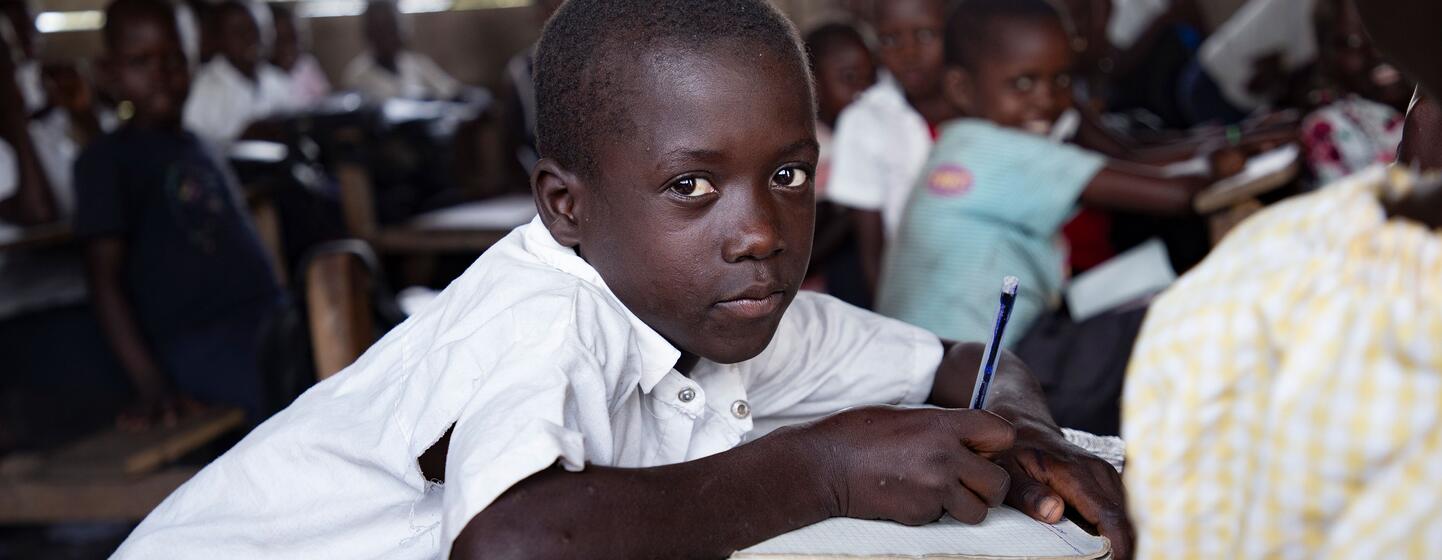
New Schools Offer Hope to Children in War-Torn DR Congo
In eastern Democratic Republic of the Congo (DRC), where persistent conflict and mass displacement threaten to derail a generation, the establishment of new schools is providing a vital lifeline for children. These educational sanctuaries offer displaced youth a critical path toward stability and future leadership amidst ongoing regional volatility.
The Ambition of a Generation Under Pressure
In the heart of eastern Democratic Republic of the Congo, the sound of a school bell is more than a signal for lessons; it is a defiant act of normalcy in a landscape often defined by instability. For ten-year-old Shadrac Anyazaka, the classroom represents the first step toward a profound destiny. When asked about his aspirations, Shadrac does not offer the hesitant answers often expected from children living in conflict zones.
“After finishing my studies, I would like to become President of the Republic one day,” Shadrac says, his voice steady despite the surrounding uncertainty.
Shadrac’s ambition is a striking contrast to the reality of his environment. In regions where displacement is a frequent and traumatic occurrence, the ability to envision a future—let alone a role in national leadership—is a rare luxury. Yet, his sentiment is echoed by many who see education as the only viable exit strategy from the cycle of violence that has gripped the DRC for decades.
For these children, the classroom is not just a place for literacy and numeracy; it is a sanctuary. It provides a predictable structure in a life characterized by the unpredictable movements of war and the sudden loss of home. By securing a space for learning, these communities are attempting to reclaim the future from the hands of chaos.
The Structural Crisis of Displacement
The challenge facing the DRC is not merely one of individual resilience but of massive, systemic breakdown. As millions of people are forced to flee their homes due to localized violence, the social infrastructure that supports a functioning society—specifically schools and healthcare facilities—is often the first to crumble. When a population is in motion, the continuity of education is frequently severed, leading to what sociologists call a “lost generation.”
The disruption of schooling has cascading effects on regional stability. Without access to formal education, youth in displacement camps or temporary settlements become increasingly vulnerable to exploitation and recruitment by armed groups. This creates a self-perpetuating loop: conflict destroys schools, the lack of schools fuels further conflict, and the resulting instability makes rebuilding even more tough.
Addressing this requires more than just temporary aid; it requires a massive mobilization of resources to rebuild the physical and social foundations of these provinces. What we have is where the intersection of humanitarian aid and long-term development becomes critical. Organizations like UNICEF and various international non-governmental organizations are working to bridge this gap, but the scale of the need remains immense.
Building Resilience Through Infrastructure
The transition from emergency relief to sustainable recovery is a logistical and engineering nightmare. Building permanent, safe, and accessible schools in remote or volatile regions requires specialized expertise. It is not enough to simply erect a structure; the facilities must be designed to withstand both the elements and the socio-political realities of the region.
As these areas move toward stabilization, the role of technical professionals becomes increasingly vital. The demand for civil engineering and reconstruction firms is rising, as they are tasked with creating durable infrastructure in some of the most challenging environments on earth. The movement of essential supplies—from textbooks to building materials—necessitates highly efficient international logistics and supply chain providers to ensure that aid actually reaches the intended destinations.
A regional humanitarian coordinator recently noted the importance of this long-term perspective:
“Education is not merely a service; it is the foundational architecture of a functioning state. When we build a classroom in a conflict zone, we are not just providing a roof; we are providing a reason for a community to remain rooted and invested in a peaceful future. We are building the scaffolding for the next generation of leaders.”
To support this massive undertaking, several key sectors must work in concert:

- Educational Policy Experts: To design curricula that are resilient to displacement and culturally relevant.
- Humanitarian Law Specialists: To navigate the complex legal landscapes of refugee rights and land use in conflict zones.
- Development Finance Institutions: To provide the long-term capital necessary for large-scale infrastructure projects.
The efforts currently underway in the DRC are a testament to the fact that even in the most fractured environments, the drive for progress remains. However, the success of these initiatives depends on a sustained, multi-sectoral approach that moves beyond the immediate crisis toward a vision of permanent stability.
The story of Shadrac Anyazaka is a reminder that the most powerful tool for peace is often found in a pencil and a notebook. As the international community continues to respond to the crises within the United Nations mandate, the focus must remain on the long-term: ensuring that the children of today have the tools to become the leaders of tomorrow. For those looking to support or engage with these critical recovery efforts, the World Today News Directory provides access to verified humanitarian consultants and infrastructure development specialists equipped to handle the complexities of rebuilding in volatile regions.