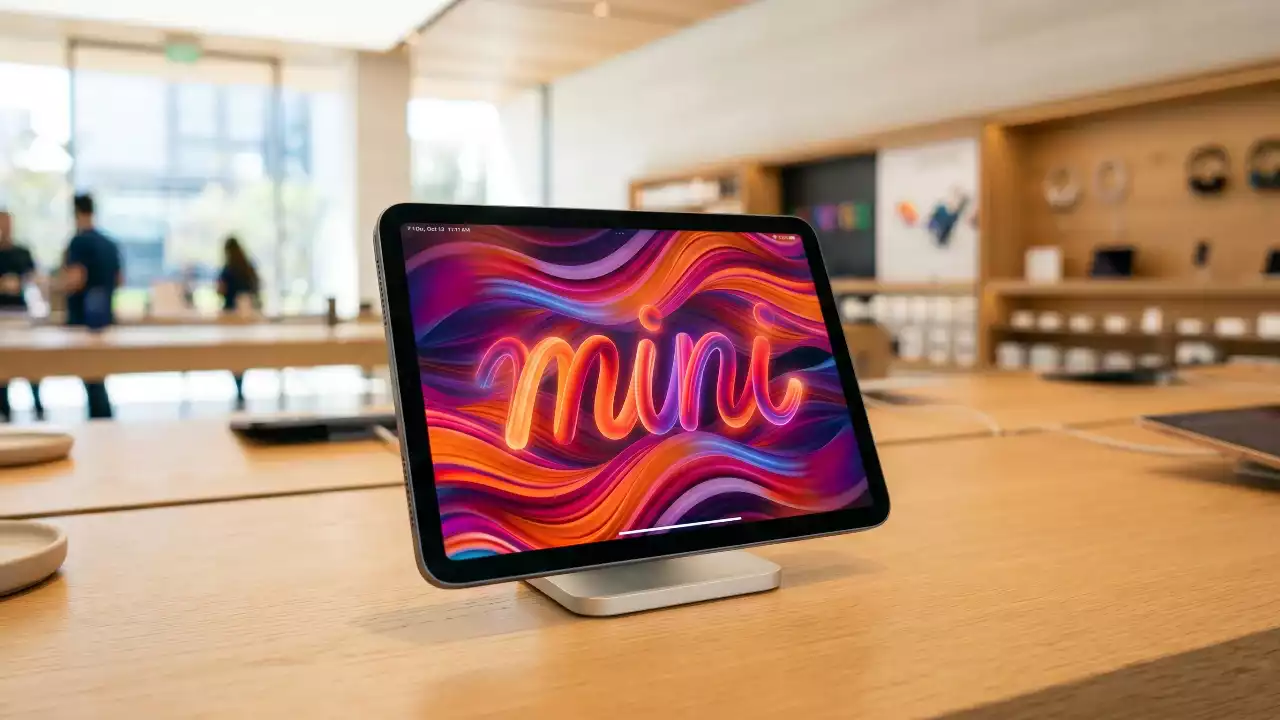
New iPad Mini Spotted in Apple Internal Code
Apple’s internal codebase rarely lies. The discovery of references to the J510 and J511 identifiers suggests that the iPad mini is finally exiting its era of iterative stagnation. By integrating an OLED panel and the A19 Pro silicon, Apple isn’t just refreshing a niche tablet; it is collapsing the hardware gap between the iPhone Pro line and the smallest iPad.
The Tech TL;DR:
- Hardware Pivot: Transition to OLED displays for superior contrast and power efficiency, eliminating the backlight bottlenecks of previous LCD iterations.
- Silicon Upgrade: Adoption of the A19 Pro chip, signaling a massive leap in NPU (Neural Processing Unit) capabilities for local LLM execution.
- Enterprise Impact: New internal identifiers (J510/J511) indicate a distinct hardware revision that will require updated MDM (Mobile Device Management) profiles for fleet deployment.
For the senior developer or CTO, the “mini” form factor has always been a paradox: high-performance silicon trapped in a chassis with limited thermal headroom. The shift to the A19 Pro—silicon typically reserved for the iPhone Pro series—introduces a critical architectural question regarding thermal throttling. When you push a Pro-grade SoC into a compact frame, the bottleneck isn’t the clock speed; it’s the heat dissipation. If Apple hasn’t redesigned the internal thermal spreaders, the A19 Pro will simply downclock during sustained workloads, rendering the “Pro” moniker a marketing facade.
The OLED Transition: Beyond the Marketing Gloss
The move to OLED is less about “prettier colors” and more about the power envelope. Unlike traditional LCDs that require a global backlight, OLED allows for pixel-level dimming. For developers building dark-mode interfaces or high-contrast dashboards, this reduces the parasitic power draw significantly. However, the introduction of OLED into the iPad mini ecosystem introduces the risk of permanent image retention (burn-in), particularly for enterprise users who keep static monitoring tools open for 12+ hours a day.

From a deployment perspective, this hardware shift means that organizations relying on legacy managed service providers must audit their current device lifecycles. The jump in display technology and processing power makes the previous mini generations obsolete for any workflow involving on-device AI or high-fidelity rendering.
Architectural Breakdown: A19 Pro vs. Legacy Mini Silicon
The integration of the A19 Pro suggests a focus on the Neural Engine. We are seeing a broader industry trend toward “Edge AI,” where the goal is to minimize latency by moving inference from the cloud to the local SoC. The A19 Pro is designed to handle these weights more efficiently, potentially allowing for more complex on-device automation without hitting API rate limits or incurring cloud egress costs.

| Metric | Previous Gen (Typical) | Rumored J510/J511 (A19 Pro) | Enterprise Impact |
|---|---|---|---|
| Display Tech | Liquid Retina (LCD) | OLED | Lower power floor, higher contrast |
| SoC Architecture | Standard A-Series | A19 Pro (iPhone Pro Grade) | Increased NPU throughput |
| Thermal Profile | Passive / Low-TDP | High-Performance / Thermal Limited | Potential for throttling under load |
| Internal Code | Legacy Identifiers | J510 / J511 | New MDM profile requirements |
The real-world utility of this upgrade will be felt in the NPU’s ability to handle continuous integration tasks or local data parsing. For those managing large fleets of devices, the transition to this new hardware often exposes gaps in existing security frameworks. Corporations are increasingly deploying cybersecurity auditors and penetration testers to ensure that the increased local processing power doesn’t inadvertently create new attack vectors for side-channel exploits.
The Implementation Mandate: Device Inventory Logic
When these devices hit the production environment, IT administrators will need to programmatically identify them to apply the correct security policies. Below is a conceptual Python snippet that demonstrates how a device management system might filter for these specific internal identifiers via a hypothetical MDM API to trigger a “Pro-tier” security profile.
import requests # Hypothetical MDM API endpoint for device inventory MDM_API_URL = "https://api.enterprise-mdm.com/v1/devices" AUTH_TOKEN = "your_secure_token_here" def upgrade_security_profile(device_id): print(f"Applying High-Performance Security Profile to {device_id}...") # API call to update policy to 'Pro-Tier' requests.post(f"{MDM_API_URL}/{device_id}/policy", json={"profile": "A19_Pro_Secure"}, headers={"Authorization": f"Bearer {AUTH_TOKEN}"}) def scan_for_new_hardware(): response = requests.get(MDM_API_URL, headers={"Authorization": f"Bearer {AUTH_TOKEN}"}) devices = response.json() # Filter for the leaked internal codenames J510 and J511 target_hardware = ["J510", "J511"] for device in devices: if any(code in device['model_identifier'] for code in target_hardware): upgrade_security_profile(device['id']) if __name__ == "__main__": scan_for_new_hardware() The “Edge AI” Bottleneck and Alternatives
While the A19 Pro is a powerhouse, it exists in a crowded landscape. For developers, the choice isn’t just between different iPads, but between different compute philosophies. The iPad mini’s new specs position it as a formidable “field device,” but it still lacks the containerization capabilities of a full Linux environment. If your workflow requires Kubernetes clusters or heavy Docker usage, no amount of A-series silicon will bridge that gap.

Compared to the high-end Android tablets that utilize Snapdragon 8-series chips, the A19 Pro likely maintains a lead in single-core performance and NPU integration. However, the closed nature of iPadOS remains the primary friction point for power users. For those who find the iPadOS sandbox too restrictive, the alternative is often a specialized laptop managed by custom software development agencies that can build cross-platform tools that actually leverage the hardware without the “walled garden” constraints.
The J510/J511 leak confirms that Apple is treating the mini not as a budget option, but as a high-density compute node. The integration of OLED and Pro-grade silicon removes the hardware excuses, leaving only the software limitations of iPadOS as the final frontier. As we move toward a future of ubiquitous, local AI, the iPad mini may become the primary interface for “on-the-go” engineering, provided the thermal architecture can keep up with the silicon’s ambitions.
*Disclaimer: The technical analyses and security protocols detailed in this article are for informational purposes only. Always consult with certified IT and cybersecurity professionals before altering enterprise networks or handling sensitive data.*