New Exoplanet Candidate HD 156295 b Found in Habitable Zone of Massive A-Type Star
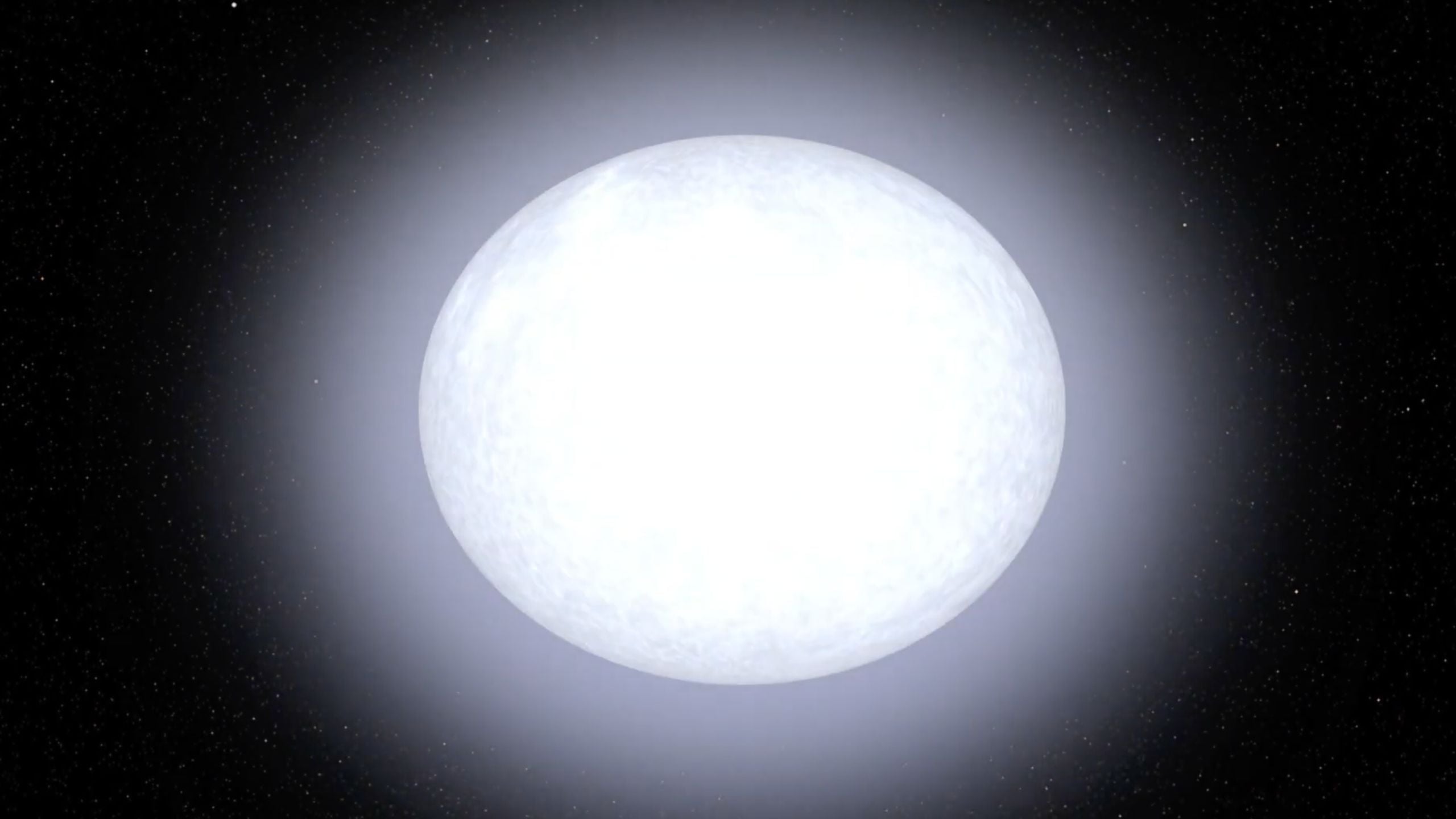
Astronomers analyzing data from NASA’s Transiting Exoplanet Survey Satellite have identified a potential exoplanet, designated HD 156295 b, orbiting within the habitable zone of a massive, scorching A-type star located approximately 140 light-years away. If confirmed, this candidate would represent the first known exoplanet discovered within the habitable zone of an A-type star, which typically shines with a bluish-white brilliance and burns thousands of degrees hotter than the Sun.
Key System Metrics: HD 156295 b
- Stellar Classification: A-type star, approximately nine times brighter than the Sun, reaching temperatures near 7,500 degrees Celsius (13,500 degrees Fahrenheit).
- Candidate Planet Specs: Estimated at roughly six times the mass of Jupiter, orbiting at a distance of nearly 4 astronomical units with an orbital period of approximately 2,200 days.
- Detection Methodology: Discovered through pulsation timing analysis across nearly 16,500 Delta Scuti variable stars monitored by TESS.
Pulsation Timing and the Search for Massive Stellar Companions
Detecting planets around luminous A-type stars has historically presented a severe observational bottleneck. Measuring minute changes in starlight is complicated by the extreme brightness of these stellar bodies, which dwarf typical G-type stars like our Sun. To overcome this obstacle, researchers turned to a stellar sleuthing strategy known as pulsation timing. Because the host star HD 156295 functions as a Delta Scuti variable—pulsating in brightness at a remarkably regular rhythm—it acts as a cosmic clock. Researchers identified the candidate planet by tracking tiny variations in the time it takes the star’s light to reach instrumentation, revealing the gravitational tug of an orbiting body that would otherwise remain invisible using other observational techniques.
As noted in findings published in The Astrophysical Journal, the research team sifted through massive datasets from TESS before narrowing their focus to nine promising systems. While eight of these systems host candidate brown dwarfs ranging from 25 to 59 Jupiter masses with orbital periods between 1,100 and 2,800 days, HD 156295 stands out for harboring a potential gas giant. This candidate object receives roughly 60 percent of the solar irradiation that Earth receives from the Sun, positioning it nominally within the stellar system’s habitable zone despite its massive scale.

Evaluating Detection Limits and Future Observatory Deployments
The statistical probability that the exoplanet candidate HD 156295 b is a genuine detection sits at approximately 50 percent, creating a coin-flip scenario that highlights the limits of current photometric precision. According to the study’s authors, the pulsation timing variations observed in this system push against the absolute boundary of what can be resolved using existing TESS data. Even false positives in this regime provide crucial constraints for modeling the occurrence rates of intermediate-orbiting giant planets around massive stars.
Future validation efforts will rely on higher-precision instruments designed to monitor stellar variations across hundreds of thousands of targets. The European Space Agency’s PLATO observatory is slated to expand on these capabilities, offering improved photometric precision in its mission to view over 200,000 stars. At only 700 million years old, the HD 156295 system continues to provide an unusual laboratory for testing planetary formation models around stars far more massive and luminous than our own.