Scientists Warn Deep-Sea Mining Threatens Unique Nodule Ecosystems
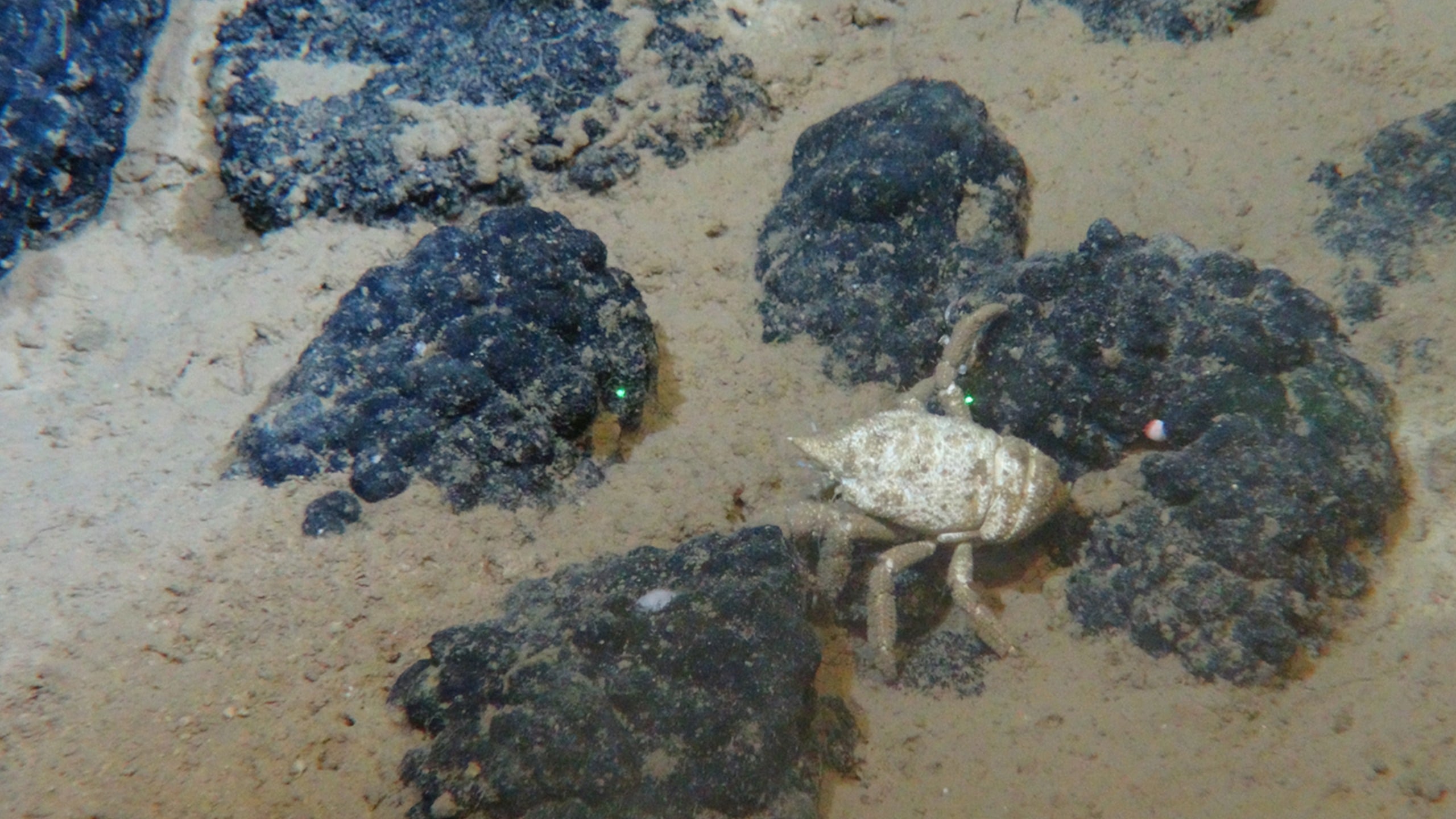
Polymetallic nodules resting across the floor of the Clarion-Clipperton Zone contain entire communities of microscopic life unique to their dark, extreme habitat, ScienceAlert reported on November 15.
The Tech TL;DR:
- Researchers analyzed 244 individual polymetallic nodules gathered from depths of 4 to 6 kilometers in the Pacific Ocean.
- Cracking the metal deposits open revealed bustling miniature ecosystems dominated by roundworms, crustaceans, and armored amoebas.
- Scientists warn that large-scale commercial mining could cause an irreversible loss of this newly discovered deep-sea biodiversity.
Human reliance on critical minerals like nickel, cobalt, copper, iron, and manganese is surging. These metal-rich deposits, often called polymetallic nodules, have drawn intense interest from industry developers. While plucking a single nodule from the seabed takes only minutes, the structures themselves require millions of years to form.
Scientists caution that speculative mining ventures could devastate a specialized ecosystem before researchers can document it. Commercial extraction risks an irreversible loss of unique biodiversity tied directly to the nodules, according to findings published in Scientific Reports.
A crew of marine scientists gathered the samples in 2019 aboard the German research vessel RV Sonne during the JPI Oceans Mining Impact II project. Researchers used a box corer to capture chunks of seafloor sediment along with embedded nodules at depths between 2.5 and 3.7 miles.
The study examined 244 individual nodules for biological activity within internal cracks and pores after freezing the specimens for laboratory analysis. Germany’s Federal Institute for Geosciences and Natural Resources holds an exploration contract for the region where 153 of the nodules originated. Belgian company Global Sea Mineral Resources, a subsidiary of DEME, holds the exploration contract for the remaining 91 specimens.
Previous deep-sea biodiversity assessments focused primarily on organisms living within surrounding sediments or clinging to exterior nodule surfaces. Cracking open the samples exposed complex interior ecosystems populated largely by roundworms, crustaceans, and an armored amoeba species named Thurammina.
“What surprised us most was how different the communities living inside nodules were from those in nearby sediments,” marine genomicist Coral Diaz-Recio Lorenzo told ScienceAlert.
Microscopic analysis also uncovered fossilized diatoms, radiolarians, and sea sponges embedded deep within ancient mineral layers. Sponge spicules visible in scanning electron microscope images suggest that nodules have provided stable seabed habitats for millions of years.
Approvals from the International Seabed Authority could soon clear deep-sea mining companies to harvest these metal deposits en masse. Protecting surrounding sediment habitats alone will not preserve this specific biodiversity because the interior communities are distinct, researchers emphasized.
“Because their communities differ from those in the surrounding sediments, protecting sediment habitats alone would not preserve this biodiversity,” Diaz-Recio Lorenzo added. “Large-scale nodule removal could therefore result in irreversible losses of unique species and ecological communities that we are only beginning to understand.”
“Our findings point out that commercial mining may result in an irreversible loss of undescribed and unique biodiversity associated to nodules,” said Sabine Gollner of the Royal Netherlands Institute for Sea Research.
Always consult with certified IT and cybersecurity professionals before altering enterprise networks or handling sensitive data.