
New Dinosaur Species Discovered in South Korea: Meet Doolysaurus huhmini
A new species of plant-eating dinosaur has been identified in South Korea, marking the first formal dinosaur species description from the Korean Peninsula in fifteen years. Named Doolysaurus huhmini, the discovery offers new insight into the mid-Cretaceous ecosystems of East Asia.
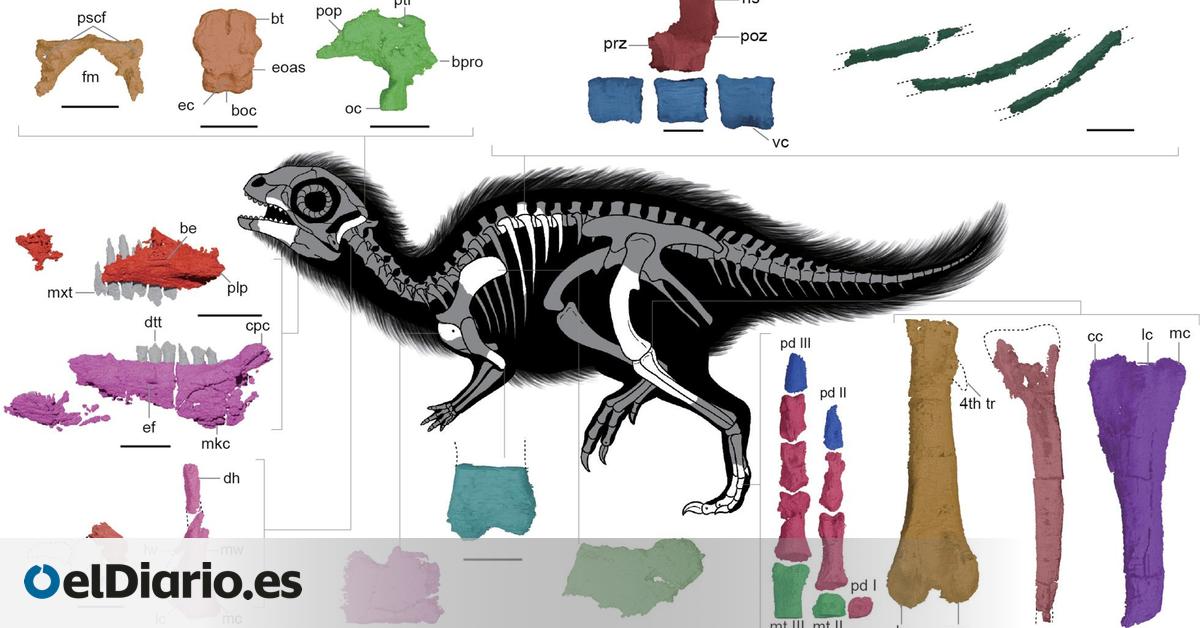
The fossilized remains, including portions of the skull and skeleton, were unearthed in 2023 on Aphae Island, within the Ilseongsan Formation, according to researchers at the Korea Dinosaur Research Center of Chonnam National University and the University of Texas at Austin. The specimen, cataloged as KDRC-SA-V001, represents a juvenile individual approximately two years old.
Doolysaurus huhmini is classified as a thescelosaurid, a group of small, bipedal ornithischian dinosaurs that lived during the Cretaceous period. Researchers estimate the dinosaur would have been roughly the size of a turkey as a juvenile, potentially growing to twice that size as an adult. The partial skeleton includes vertebrae, limb elements, and crucial portions of the skull, providing diagnostic cranial material previously lacking in South Korean dinosaur discoveries.
The preservation of cranial remains is particularly significant, allowing scientists to more accurately identify and classify the species. Prior to this find, Korean dinosaur discoveries were largely limited to footprints, eggs, or incomplete postcranial skeletons, hindering detailed anatomical analysis. “The dinosaur skeletal fossil record in Korea has long been limited in both abundance and completeness,” stated Dr. Jongyun Jung, a paleontologist involved in the research.
To study the fossil without damaging it, the team employed advanced micro-CT scanning technology. This technique allowed for detailed reconstruction of internal anatomical features hidden within the rock matrix, revealing bones not visible to the naked eye. “When we first found the specimen, we saw some leg bones and vertebrae,” Jung explained. “We didn’t expect parts of the skull or so many bones. There was quite a bit of excitement when we saw what was hidden in the block.”
Analysis indicates Doolysaurus huhmini lived between 113 and 97 million years ago, during the Albian to Cenomanian ages of the mid-Cretaceous. The dinosaur likely had a plant-based diet, supplemented by insects and potentially small animals, as evidenced by the presence of numerous gastroliths – stones swallowed to aid digestion – found within the fossil.
The genus name, Doolysaurus, is a nod to “Dooly the Little Dinosaur,” a popular Korean animated character, acknowledging a cultural connection to the discovery. The species name, huhmini, honors Min Huh, a prominent Korean paleontologist and founder of the Korea Dinosaur Research Center.
Researchers hope that continued application of advanced imaging technologies will lead to the discovery of additional fossils in the region. “We hope that new dinosaurs or other fossils will emerge in Aphae and other small islands,” Jung stated, indicating plans for future expeditions.