
New 2D Materials Could Revolutionize Sustainable Ammonia Production
Scientists are exploring ultra-thin, two-dimensional (2D) materials to boost the efficiency of renewable energy technologies and create cleaner methods for producing essential chemicals. A key focus is ammonia, a vital component of fertilizer, with the potential to move away from conventional, less sustainable production processes.
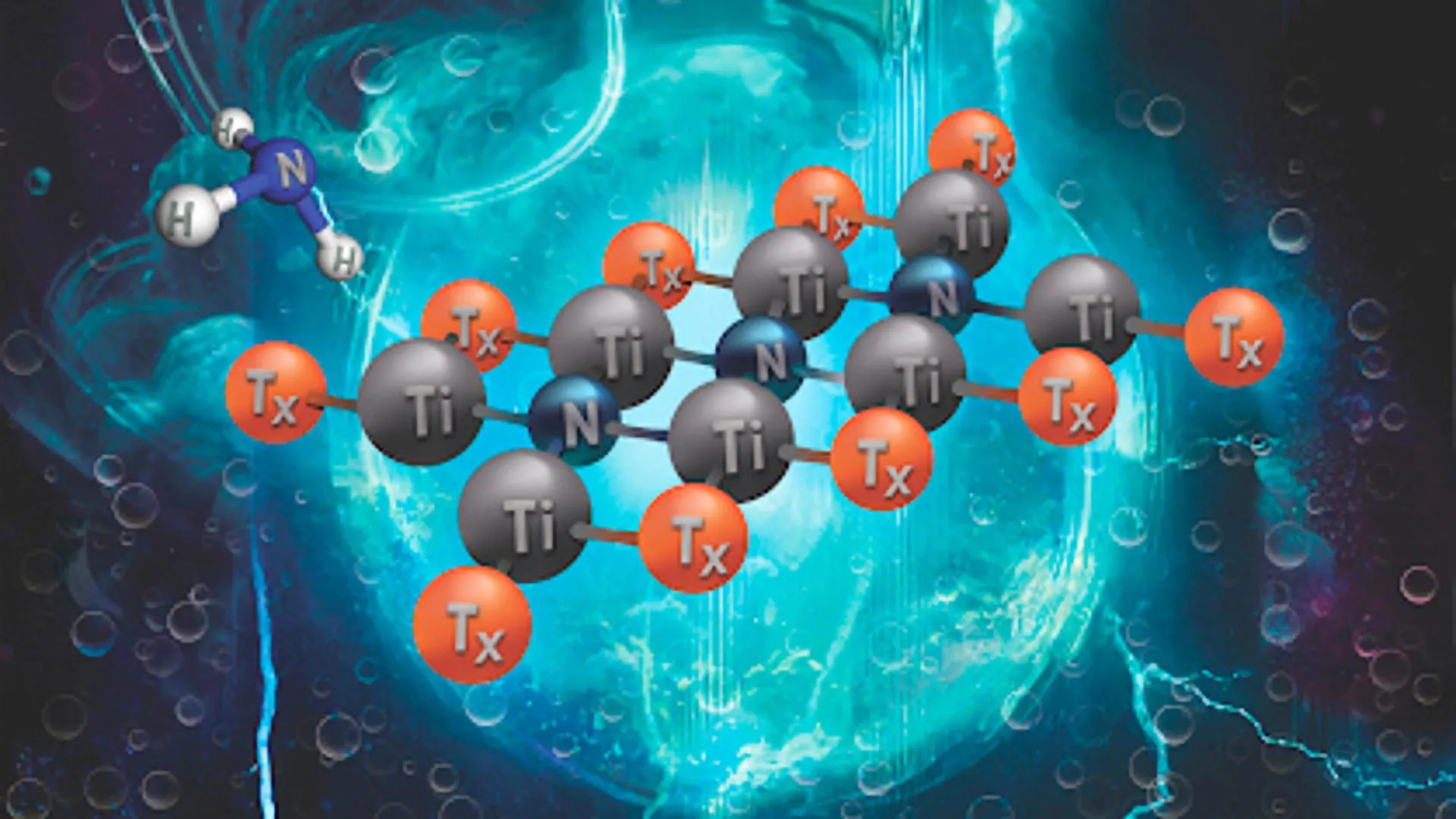
A especially promising family of these materials is MXenes.These low-dimensional compounds can convert atmospheric components directly into ammonia, offering a pathway for both fertilizer production and sustainable transportation fuels.What sets MXenes apart is their tunable composition, allowing researchers to precisely control their properties and optimize performance.
Recent research, published in the Journal of the American Chemical Society by Drs. Abdoulaye Djire and Perla Balbuena, along with Ph.D. candidate Ray Yoo, is challenging conventional understanding of catalyst design. Traditionally, a catalyst’s effectiveness was thought to depend solely on the metal it contained. This team is investigating a more nuanced relationship, aiming to identify the key components needed to create chemicals and fuels from readily available resources.
Fine-Tuning for Enhanced Catalysis
The team’s work centers on manipulating the interaction of nitrogen atoms within the MXene structure – a property called lattice nitrogen reactivity. This adjustment impacts how molecules vibrate, a crucial factor in determining catalytic effectiveness. Because MXenes are so easily tuned, they offer a cost-effective alternative to existing, expensive electrocatalyst materials.
“MXenes are ideal candidates as transition metal-based alternatives,” explains Yoo. “Nitride MXenes, in particular, show notable performance improvements compared to their carbide counterparts.”
To gain deeper insights, Ph.D. student Hao-En Lai used computational modeling to simulate MXene behavior at the molecular level, revealing how solvents interact with the material’s surface during ammonia synthesis. The researchers also employed Raman spectroscopy – a non-destructive technique – to analyze the vibrational behavior of titanium nitride, uncovering the impact of lattice nitrogen reactivity.
“Raman spectroscopy allows us to reveal this reactivity, reshaping our understanding of the electrocatalytic system involving MXenes,” says Yoo. Further exploration of nitride MXenes and their solvent interactions using Raman spectroscopy could lead to significant advancements in green chemistry.
Ultimately, this research aims for “atom-by-atom control” of energy conversion, demonstrating that ammonia synthesis can be achieved through managing nitrogen within the material’s structure. Djire explains, ”The ultimate goal is to gain an atomistic-level understanding of the role played by the atoms that constitute a material’s structure.”
This work was supported by the U.S. Army DEVCOM ARL Army Research Office (award # W911NF-24-1-0208).
