Nevada Sues Trump Administration Over Colorado River Water Cuts
The state of Nevada filed a federal lawsuit against the Trump administration and Interior Secretary Doug Burgum to block a newly finalized Colorado River management plan. The disputed record of decision would strip away 71 percent of the 300,000 acre-feet of water Nevada receives annually from the river, threatening municipal supplies for the Las Vegas Valley.
The Legal Challenge Against Lower Basin Water Cuts
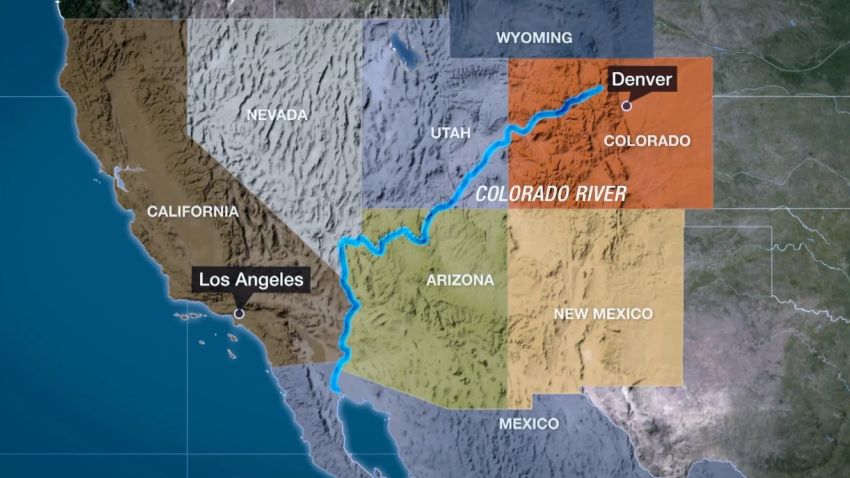
The litigation, announced by Nevada Governor Joe Lombardo and filed in federal district court, targets operating guidelines released late last week by the Department of the Interior. The record of decision outlines 2027-2028 operating guidelines alongside a 10-year decision framework for managing Lake Powell and Lake Mead. Under the federal directive, the Lower Basin states—Arizona, California, and Nevada—face a combined reduction of 1.25 million acre-feet of water annually for two years. Arizona absorbs 760,000 acre-feet in cuts, California loses 440,000 acre-feet, and Nevada loses 50,000 acre-feet from its direct allocation.

Yet, the core grievance driving Nevada’s legal action centers on the disparity between the Lower Basin and the Upper Basin states of Colorado, New Mexico, Utah, and Wyoming. While downstream jurisdictions face severe mandates, the Upper Basin states are not required to make parallel cuts under the current federal framework. Governor Lombardo characterized the plan as an existential threat to two-thirds of the state’s citizens and its primary economic engine. Plaintiffs—including the state of Nevada, the Colorado River Commission of Nevada, and the Southern Nevada Water Authority—argue that the Interior Department violated the Administrative Procedure Act, the National Environmental Policy Act, and the foundational 1922 Colorado River Compact.
Regional Strains and Divergent State Responses
The legal friction exposes deep fractures among the seven basin states as historic drought strains the West’s most vital waterway. An acre-foot represents roughly 362,000 gallons—enough to cover one acre of land to a depth of one foot. With reservoir levels hovering near historic lows, the water supply for 40 million people, 5.5 million acres of irrigated farmland, and regional hydropower grids remains highly vulnerable. Current rules governing the river expire at the end of September, leaving the federal overarching plan and the contested two-year operating schedule in a precarious legal balance.

Reactions from neighboring states highlight the delicate negotiations preceding the federal decision. Colorado Commissioner Becky Mitchell noted that Upper Basin states already enforce strict internal regulations based on available supply. Meanwhile, JB Hamby, who chairs the Colorado River Board of California, described the federal record of decision and two-year guidelines as a necessary bridge providing near-term certainty during a period of extraordinary risk. California committed to significant voluntary contributions alongside its mandatory reductions, though regional leaders emphasize that downstream states cannot permanently shoulder the entire burden of basin-wide shortages alone.
Managing Infrastructure Risk and Resource Constraints
As the litigation proceeds through the federal district court, municipal agencies, agricultural producers, and commercial entities across the American Southwest face mounting regulatory uncertainty.
The outcome of Nevada’s lawsuit could reshape the legal interpretation of the 1922 compact and dictate how federal authorities manage future droughts. Whether the judiciary issues a pause on the overarching plan or forces a rewrite of basin-wide allocations, the looming expiration of current river rules guarantees that water governance will remain a defining test for the Western United States.
- Keegan Allen Mugged and Robbed in West Hollywood, Sheriff’s Dept Says
- Pakistan hosts Sri Lanka for T20I series in Rawalpindi, cricinfo.com reported
- The Trump administration imposed sweeping sanctions against the International Criminal Court on Oct (newsy-today.com)
- Houthi Strikes on Riyadh Airport Kill Three as Trump Rules Out Pre-Midterm Action (archyde.com)