Netflix’s Little House on the Prairie Reboot: A Modern Take on Frontier History
Netflix has released a heavily promoted reboot of Little House on the Prairie, now streaming.
The original 1974 series leaned into sentimentality.
The Narrative Pivot from Minnesota to the Osage Reserve
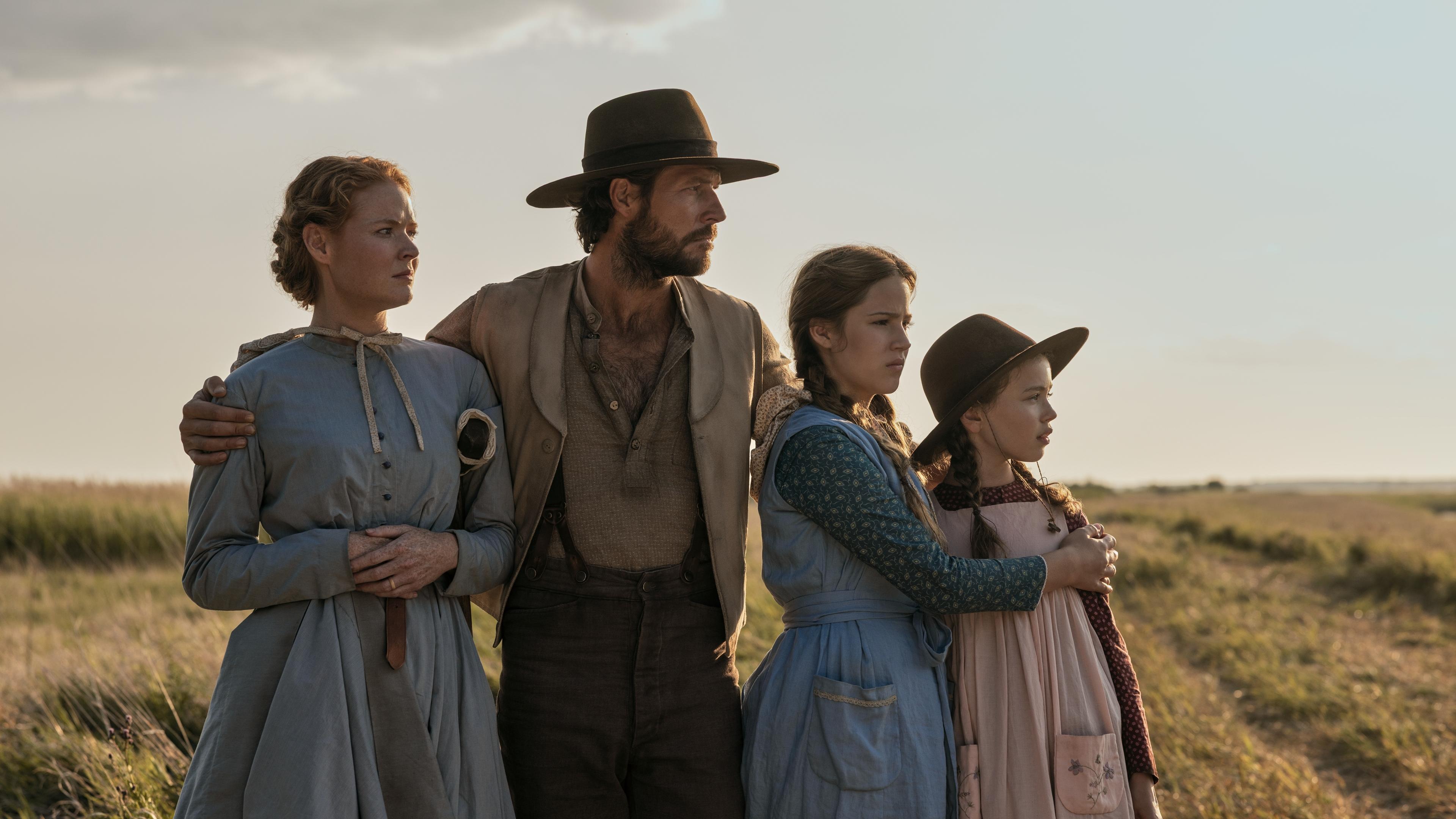
While the original series quickly moved the Ingalls family to Minnesota, the Netflix reboot devotes its entire first season to the earlier Kansas period. The story follows Charles “Pa” Ingalls (Luke Bracey) and Caroline (Crosby Fitzgerald) as they settle on tribal land known as the Osage Diminished Reserve. The production focuses on the inherent contradiction of the “pioneer spirit” occurring while the U.S. government had yet to finalize the purchase of the territory from the Osage.

The show integrates characters like Dr. Tann (Jocko Sims), a Black physician, and the Mitchell family, an Osage household led by William Mitchell (Meegwun Fairbrother). The tension is personified in the characters of Jemma James (Mary Holland) and Eli (Michael Hough), who represent the rigid, xenophobic Victorian values the Ingalls family attempts to avoid.
From a production standpoint, the series utilizes high-end cinematography, featuring sun-dappled meadows and campfire lighting that elevates it above standard SVOD fare.
The Financial and Cultural Stakes of Revisionist IP
The original Laura Ingalls Wilder books have faced enduring criticism for depicting "ghastly attitudes" toward Native Americans, including lines claiming "the only good Indian is a dead Indian." For a modern streaming giant, ignoring these elements would be a liability.
Despite the noble intentions, the execution feels uneven. The series retains "fiddle-led family sing-alongs," a clear concession to the traditionalist audience. The show fluctuates between beatifying the Ingalls in moralizing monologues and depicting the harsh realities of malaria and home invasions. The result is a series that feels "flat," lacking the bratty energy of original characters like Nellie Oleson, replaced instead by a cast of "generic nice people."
The Legacy of the Wilder Estate
The Wilder family's own history is explicitly political; Rose Wilder Lane, Laura's daughter, collaborated heavily on the books, and the estate eventually passed to Roger MacBride, a Libertarian Party presidential candidate.
By highlighting the friendship between Laura (Alice Halsey) and her Osage neighbor Good Eagle (Wren Zhawenim Gotts), the show tries to build a bridge of multiculturalism. But the question of complicity remains unavoidable.