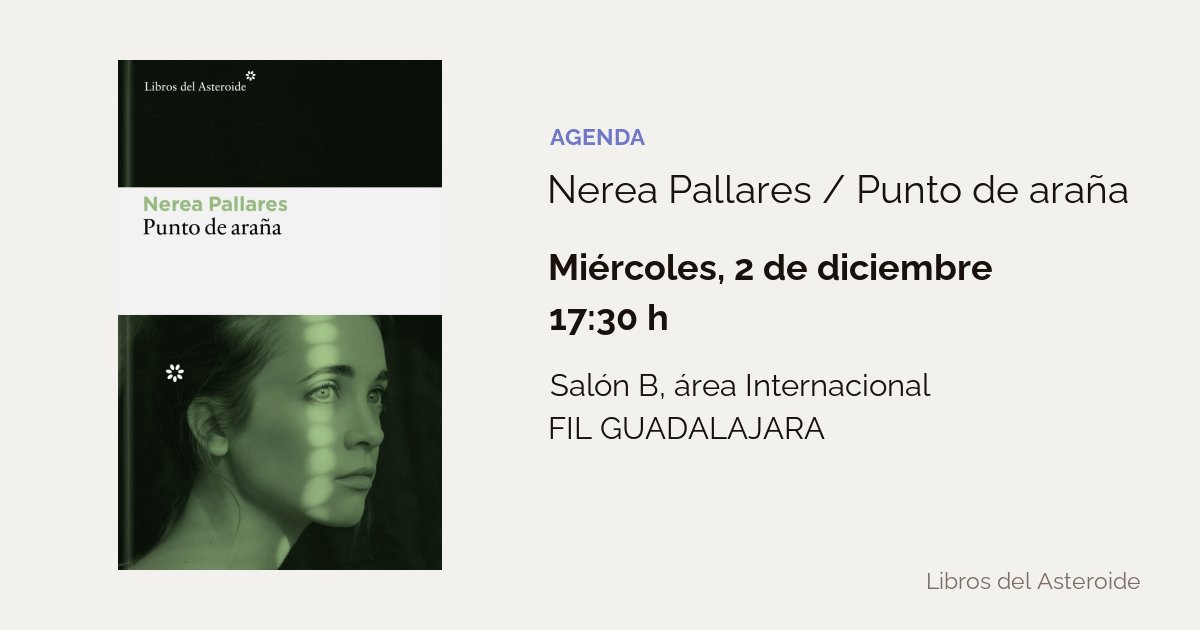
Nerea Pallares Wins Premio San Clemente for Feminist Novel Punto de Araña
Nerea Pallares stated this week that the San Clemente is a very special prize for her because of the kind of jury.
The writer has won the Premio San Clemente with Punto de Araña, according to Nosdiario.
Pallares spoke about the win in an interview published Thursday by nosdiario.gal, which reported the award. The prize matters to her, she said, because of who judges it: young readers.
Opening the work so that young people can read it and recognize themselves in it seemed great to Pallares, who told nosdiario.gal that it is a very genuine kind of public and a very genuine kind of jury, and that makes the prize special.
The award lands on a book that is already well traveled. Punto de Araña has reached ten editions and collected several prizes, nosdiario.gal noted.

At the center of the novel sit three generations of women of the sea. Pallares, in her own words, set out to draw a clear portrait of Camariñas, the fishing town that anchors the story. The picture is not a comfortable one.
Pallares told nosdiario.gal that the work examines the informality of women’s work, its precariousness, and the need to juggle several complementary activities to earn a wage, often inside the submerged economy. All of it, she said, is feminized, precarious labor that must also fit around care work.
She framed the social and political portrait as serving something larger. The novel, she said, travels from the local to the universal without staying inside the fishing town.
“Pallares affirmed that, yes, without doubt, it is a feminist novel, because the whole question of gender runs through the reality it portrays.”
That answer came when nosdiario.gal asked directly whether the three-generation thread made Punto de Araña a feminist book. Pallares tied it to a wider argument: the invisible tasks that sustain life go unvalued, and putting life at the center means reordering what a society refuses to do without.
Asked what she wanted the novel to transmit, Pallares rejected the idea of answers. For her, literature, more than giving answers, is about exploring questions, she told nosdiario.gal. The question this time: what would happen if we stopped sustaining a system that does not sustain us — and what kind of community might come after a rebellion, after saying enough.
Pallares said she is not yet fully inside a new project. But she has a first instinct about where it is heading.
Pallares told nosdiario.gal that she is at a moment where she is interested in exploring other forms of language, and in that exploration she is quite drawn to sound, adding that she is thinking of a book that takes sound into account as a structural element — somehow, a book you can listen to, though she does not yet know the form.