Negative Funding Rates Hit 46-Day Streak: Potential Crypto Market Bottom
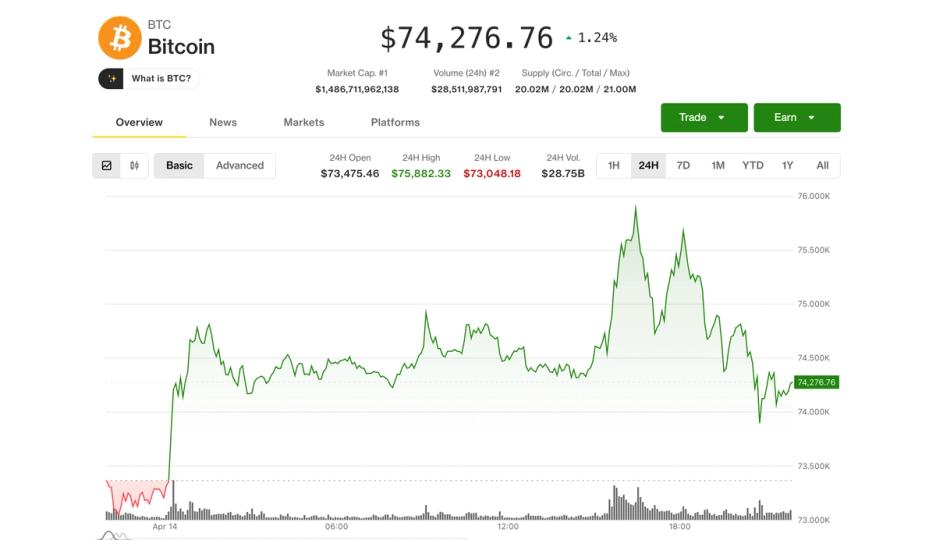
Bitcoin’s failure to sustain a $76,000 breakout is overshadowed by a critical derivatives signal: funding rates have remained negative for 46 consecutive days. This rare streak, mirroring the post-FTX crash of 2022, suggests a potential market bottom as aggressive short-selling reaches a point of exhaustion and deleveraging peaks.
Market volatility of this magnitude creates a precarious environment for institutional balance sheets. When derivatives markets experience “deeply negative funding rates,” as seen in recent Ethereum trends, it signals a market under significant stress. For the C-suite, this isn’t just a trading fluctuation; We see a systemic risk event. Firms are now scrambling to secure enterprise risk management consultants to insulate their portfolios from the contagion of mass liquidations.
The Anatomy of a Market Bottom: Why 46 Days Matters
To the uninitiated, a funding rate is a simple commission. In reality, it is the heartbeat of the perpetual futures market. These periodic payments between traders ensure that the futures contract price stays tethered to the underlying spot price of the asset. When the rate is positive, those holding long positions pay the shorts. When it flips negative, the shorts pay the longs.
A 46-day streak of negative funding is an anomaly. It indicates a persistent, overwhelming conviction among traders that prices will fall, to the point where they are willing to pay a premium just to maintain their short positions.
This is the definition of a crowded trade.
History provides a grim but useful roadmap. The last time we saw a streak of this duration was in the wake of the FTX collapse, which ultimately carved out the bottom of the 2022 crypto winter. When the market becomes this one-sided, the catalyst for a reversal is often a “short squeeze,” where a slight uptick in price forces short-sellers to buy back their positions, cascading into a rapid price surge.
Institutional players are not guessing on this. They are relying on granular, tick-level data to time their entries. According to CoinDesk Data, the necessity for high-quality historical derivatives data—often requiring at least one year of history—is paramount for creating tested models that can identify these capitulation events.
The Arbitrage Opportunity Amidst the Chaos
Whereas the retail crowd panics, sophisticated desks are deploying funding rate arbitrage. This strategy exploits the gap between the perpetual futures price and the spot price. By purchasing the token on a spot exchange and simultaneously opening a short position on perpetual futures, a trader can neutralize price risk while collecting the funding fee.
In a negative funding environment, the payout shifts. The trader receiving the payout is the one holding the long position. For firms with the capital to weather the volatility, this represents a low-risk yield opportunity in a high-risk market.
However, executing this at scale requires more than just a trading account. It requires rigorous legal frameworks to handle cross-border asset movement and tax implications, leading many firms to engage specialized corporate law firms to structure these arbitrage vehicles.
Macro Shift: Three Ways This Trend Redefines the Industry
The current deleveraging event is doing more than just shaking out “weak hands.” It is fundamentally altering how digital assets are integrated into broader financial portfolios.
- The Death of Directional Speculation: The shift toward funding arbitrage suggests that institutional capital is moving away from simple “long or short” bets. The focus is shifting toward market-neutral strategies that extract value from volatility rather than price direction.
- Demand for Standardized Derivatives Data: The opacity of early crypto markets is vanishing. The reliance on platforms like Coinglass to compare funding rates across Binance, OKX and Bybit shows that “sentiment” is being replaced by hard, quantitative metrics.
- Systemic Deleveraging as a Health Metric: Market participants now view “deeply negative funding” not just as a bearish signal, but as a necessary cleansing mechanism. Much like the FTX crisis, these events flush out over-leveraged participants, creating a more stable foundation for the next fiscal quarter.
Price action is a lagging indicator. Funding rates are a leading indicator.
The failure of the $76,000 breakout is a tactical defeat, but the 46-day negative funding streak is a strategic signal. We are seeing a mirror image of the 2022 capitulation. When the shorts are this exhausted, the path of least resistance often shifts upward.
For the B2B sector, the lesson is clear: volatility is a product. Whether it is the need for forensic financial auditing to assess exposure after a flash crash or the implementation of real-time data streams to monitor open interest, the infrastructure surrounding the trade is where the long-term value resides.
As we move into the next quarter, the firms that survive will be those that stopped treating crypto as a casino and started treating it as a complex derivatives market. The bottom is rarely a clean line; it is a messy process of liquidations and exhausted sentiment. Those who can read the funding rates will be the ones positioned to capitalize on the recovery.
Navigating these waters requires more than a chart; it requires a vetted network of professional partners. To find the firms capable of managing this level of institutional complexity, explore the comprehensive listings in the World Today News Directory.
- Canada Seeks Unique EU Alliance Amid US Trade War
- Arklow Bank Offshore Wind Farm Dismantling Plans Lodged Amid Rising Shipping Risks
- US Market Sell-Off and Rising Yields Drive Global Financial Shifts (archyde.com)
- Pokémon TCG: 30th Anniversary Elite Trainer Box Now Available for Under Market Price (time.news)