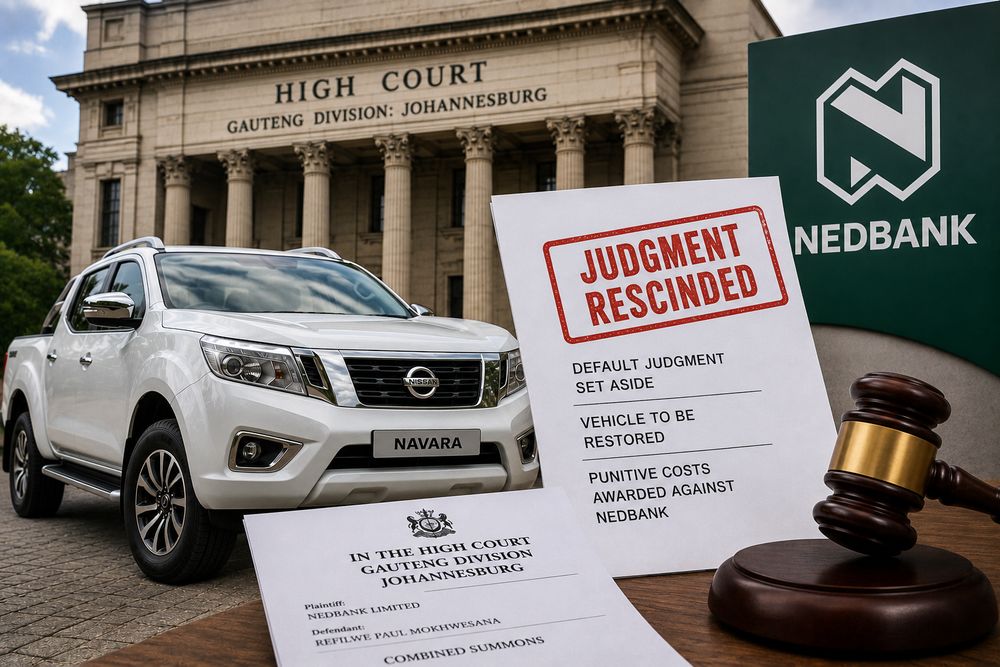
Nedbank Reverses Navara Repossession After Wife’s Death Exposes Flawed Serving Process
Nedbank has reversed the repossession of a vehicle after discovering that legal documents were served in the presence of a woman who had died in 2014, according to a statement released on Thursday. The bank confirmed the action following an internal review of the case, which was first reported by IOL on April 5. The customer, whose identity has not been disclosed, had contested the repossession, alleging procedural errors in the service of court papers.
The dispute centered on the validity of the legal process used to reclaim the vehicle. According to court records reviewed by the bank, a document dated March 2023 listed the service of papers to a “Ms. N. Mkhize,” identified as the spouse of the debtor. However, records from the South African Department of Home Affairs confirm that Ms. Mkhize died in 2014. Nedbank’s internal investigation found no evidence that the bank or its legal representatives were aware of the discrepancy at the time of service.
A spokesperson for Nedbank stated, “We take all legal procedures with the utmost seriousness. Upon discovering this inconsistency, we immediately initiated a review and have taken the necessary steps to rectify the situation.” The bank did not specify whether the customer would be compensated for any associated costs or delays. A representative for the customer declined to comment, citing ongoing legal discussions.
The case has raised questions about the accuracy of service-of-process records in South African financial institutions. Legal experts noted that while errors can occur, the responsibility to verify the identity of individuals receiving court documents typically falls on the entity initiating the legal action. “Banks and their legal teams must ensure that documents are served to the correct person,” said Dr. Linda van Wyk, a constitutional law lecturer at the University of Cape Town. “This case highlights the importance of due diligence in legal procedures.”

The repossession was initially authorized by the High Court of South Africa in Johannesburg. A court clerk confirmed that the original application for repossession was submitted by a law firm representing Nedbank. The firm, Cullinan & Co., has not commented publicly on the matter. The bank’s internal review also examined whether other cases might have involved similar procedural oversights, but no additional findings were disclosed.
The customer’s legal team has submitted a formal complaint to the National Credit Regulator, alleging that the bank failed to adhere to consumer protection laws. The regulator’s guidelines require creditors to verify the identity of debtors and their representatives before proceeding with repossession actions. A spokesperson for the regulator said, “We are aware of the case and are monitoring developments.”