
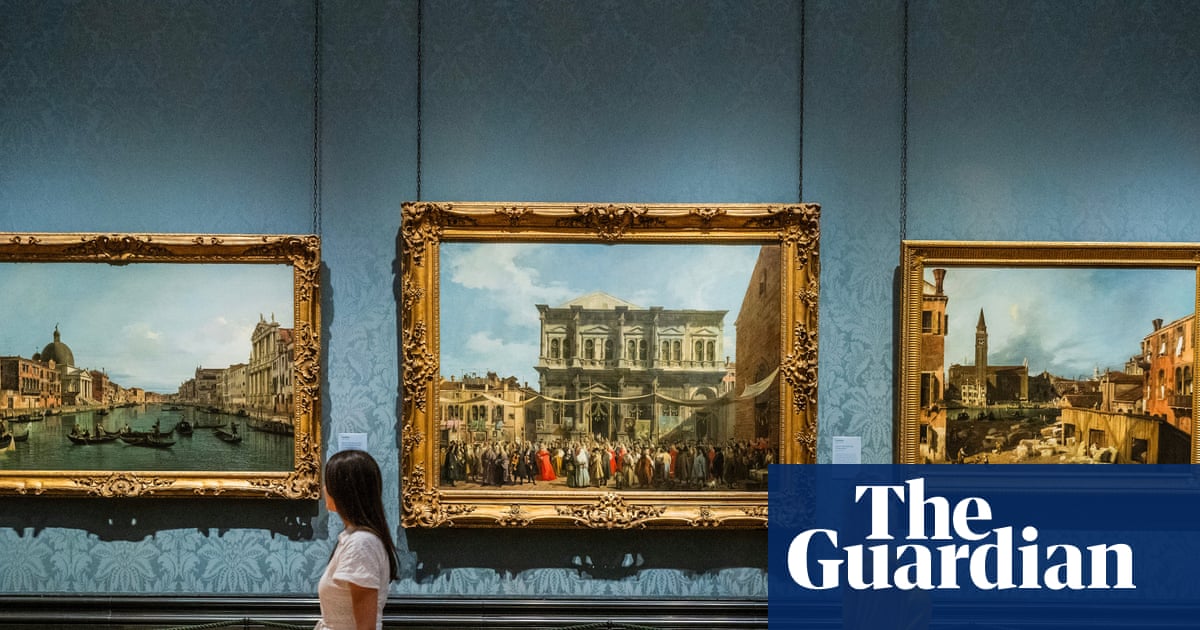
National Gallery Announces £375m Expansion and Shift in Collection Policy
The National Gallery in London will undergo a major expansion with the construction of a new £375 million wing behind the sainsbury building, a project dubbed “Project Domani” – “tomorrow” in Italian. The ambitious project is fueled by considerable donations: £150 million each from Michael Moritz’s Crankstart foundation and the hans and Julia Rausing Trust. an additional £75 million will come from the National Gallery trust and an anonymous group of donors.
An architecture competition will be launched on Wednesday to determine the design of the new space, with an anticipated opening date in the “early 2030s.” The project is being hailed as the largest of its kind at a major British arts institution as the opening of Tate Modern 25 years ago, representing a significant achievement for the National Gallery amidst a challenging fundraising climate for arts organizations.
National Gallery Director gabriele Finaldi emphasized that the new wing will not fundamentally alter the gallery’s character, stating that part of its appeal lies in being “human sized and can be visited in a day,” contrasting it with larger institutions like the Louvre in Paris or the Prado in Madrid.The declaration has garnered positive responses from political leaders. Keir Starmer called the investment “fantastic news for the National Gallery and the arts in general,” while the prime minister stated it “boosts the economy, opens doors for educational experiences for young people and will make great art accessible for generations to come.”
Alongside the physical expansion, the National Gallery is lifting its long-standing ban on collecting works created after 1900. Traditionally, the gallery’s collection has largely ended at the turn of the 20th century due to an agreement with Tate, which focuses on modern and contemporary art. Finaldi, who expressed his frustration with this cutoff point upon becoming director in 2016, noted it was “slightly frustrating to reach 1900 and then not go on.” He believes that “as 1900 gets further and further away it will be natural for us to tell the bigger story.”
While the gallery already holds over 40 works from the 20th century, including paintings by Picasso and Cézanne, the removal of the 1900 barrier is intended to address the significant gender imbalance within the collection. Currently, of the 2,300 paintings in the National Gallery’s holdings, only 27 are by women.Maria Balshaw, Director of Tate, welcomed the announcement and expressed a commitment to collaborate with the National Gallery to “further the national collection as a whole.” However,the shift in collection policy is expected to increase competition for tate,which is currently facing declining visitor numbers and financial difficulties that have led to staff redundancies.
