National Assembly to Review Proposal to Raise Public Sector Youth Hiring Quota to 5%
The National Assembly will review a proposal to raise the public sector youth hiring quota from 3 percent to 5 percent.
Public institutions face a push to raise youth hiring quotas from three percent to five percent as the National Assembly kicks off budget-season labor reviews on November 26.
Labor Subpanel Reviews Quotas
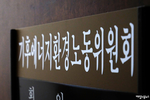
The Climate, Energy, Environment and Labor Committee opens its first employment and labor subcommittee meeting following regular budget deliberations on Wednesday, November 26. Lawmakers agreed on the meeting schedule on November 20 but finalized the agenda for parliamentary offices only on November 24, according to reporting by labortoday.co.kr.
Lawmakers will examine revisions to the Youth Employment Promotion Act alongside regional employment bills and industrial accident insurance rules. Contentious measures such as the basic worker act and labor presumption rules were left off the agenda.
Youth Quota Revision Details
Proposals to lift the mandatory public sector youth hiring ratio from 3 percent to 5 percent are closely tied to ongoing debates over extending the official retirement age. Nine distinct revisions to the Youth Employment Promotion Act sit before the committee.
Lawmaker Yoon Jun-byung’s proposal would push the mandatory hiring ratio as high as 7 percent. Sunset extensions for the statute vary across bills from December 31, 2029, through the end of 2031, according to Labortoday.
Regional Employment and Injury Presumptions
The agenda also covers regional job creation measures that moved straight from an ongoing labor ministry budget public hearing held on November 18. The legislation would establish central-local job councils and municipal employment committees.
Lawmakers will also weigh revisions to the Industrial Accident Compensation Insurance Act requested by the Ministry of Employment and Labor through closed-door party-government consultations. Proposals from Democratic Party lawmakers Kim Tae-sun and Lee Yong-woo would establish a statutory presumption that illnesses contracted after prolonged exposure to hazardous workplace factors qualify as occupational diseases, with specific qualifying conditions delegated to presidential decree.
The National Assembly operates as a unicameral legislature where committee-centric deliberation serves as the primary mechanism for legislative specialization and executive oversight. Within this structure, the National Assembly utilizes floor negotiation groups—formed by parties holding at least 20 seats—to influence the legislative agenda and secure priority in debate allocation during budget-season reviews.
These groups participate in leaders’ summits to coordinate policy, a process that facilitates the committee-level scrutiny of labor law revisions and employment quotas currently under consideration.
To expedite the legislative process, the National Assembly is presided over by a Speaker and two Deputy Speakers elected by its 300 members. These leaders manage the workflow, while the Assembly Secretariat supports the body through research and digital transparency platforms.
The subcommittee expects to review amendments addressing the Basic Employment Policy Act, the Act on Equal Employment and Support For Work-Family Balance, and the Labor Commission Act regarding electronic video hearings. Meanwhile, committee schedules for the retirement age bill before the Democratic Party’s dedicated special committee remain set for November 27.
Worth a look
- Single-Cell Map Links Coronary Artery Disease Variants to Smooth Muscle Cell Genes
- Stanford, Byzantine Research Introduce Praxis Witness Encryption for Bitcoin Bridges
- Trump's Beef Quota Filled About 37% in Month One; Ground Beef Fell 13 Cents (daybreakwire.com)
- National Public Health Center Maps Rising HPV Vaccination Requests (time.news)