NASA’s Nuclear Breakthrough: The Key to Moon & Mars Missions
NASA and the U.S. Department of Energy have formalized a partnership to deploy a nuclear fission reactor on the Moon by 2030—a milestone that marks a decisive shift in America’s strategy for sustainable lunar and eventual Martian exploration. The agreement, announced in January 2026 and solidified through a memorandum of understanding, builds on over five decades of collaboration between the agencies, positioning nuclear power as the backbone of long-term human presence beyond Earth’s orbit. The initiative comes as NASA accelerates its Artemis campaign and prepares to send humans to Mars, where traditional solar or chemical power systems would prove inadequate for extended missions.
Under the terms of the agreement, NASA and the Department of Energy will jointly develop, fuel, and authorize a fission surface power system capable of producing “safe, efficient, and plentiful electrical power” for years without refueling. This system, described in NASA’s January 2026 release, aligns with President Donald J. Trump’s National Space Policy, which prioritizes American leadership in space through technological dominance. The project’s timeline—targeting lunar deployment by 2030—reflects the urgency NASA Administrator Jared Isaacman emphasized in March 2026, when he framed the Moon as a “stepping stone” to Mars and beyond.
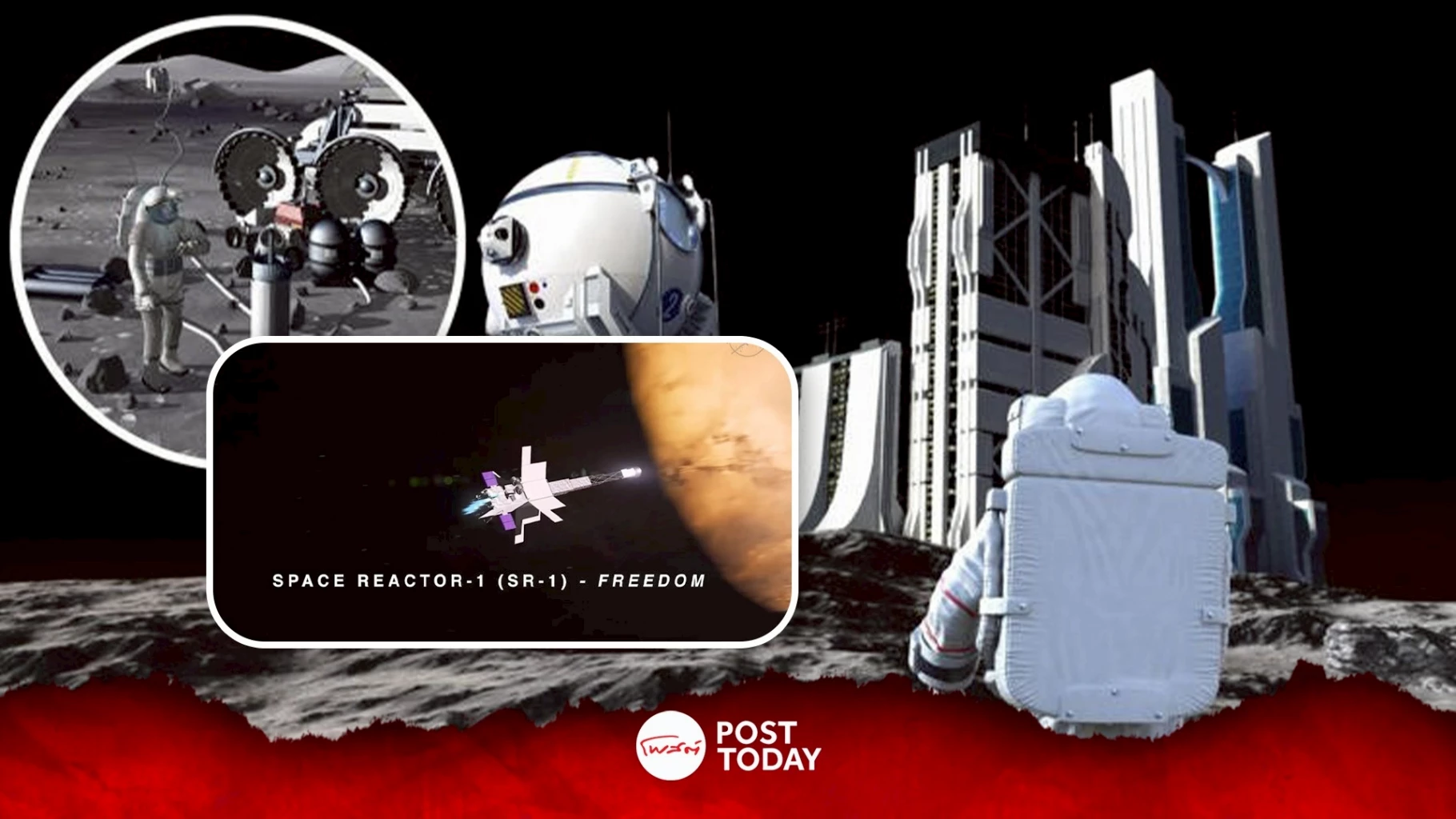
“Achieving this future requires harnessing nuclear power,” Isaacman stated during NASA’s “Ignition” event on March 24, 2026. “This agreement enables closer collaboration between NASA and the Department of Energy to deliver the capabilities necessary to usher in the Golden Age of space exploration and discovery.” The event also unveiled plans for the Space Reactor-1 Freedom, the first nuclear-powered interplanetary spacecraft, slated for launch to Mars before the end of 2028—a project that underscores the dual-track approach of lunar and Martian nuclear infrastructure.
The lunar reactor’s development is part of a broader phased architecture NASA has outlined for Moon exploration, with incremental capabilities built “landing by landing” in alignment with industrial and international partners. While the January 2026 memorandum does not specify the reactor’s exact power output or design, NASA’s Associate Administrator Amit Kshatriya highlighted its role in enabling “enduring presence” on the lunar surface—a prerequisite for crewed missions to Mars. The system’s ability to operate continuously, regardless of lunar night or solar alignment, addresses one of the most critical challenges of sustained off-world habitation.
Parallel to the lunar reactor, NASA’s nuclear ambitions extend to interplanetary travel. The Space Reactor-1 Freedom project, announced in March 2026, aims to demonstrate nuclear thermal propulsion—a technology that could halve the travel time to Mars by enabling faster, more efficient trajectories. Engineers at NASA’s Marshall Space Flight Center have made progress in reactor design, though the agency has not yet disclosed technical specifics beyond the 2028 launch target. The project’s feasibility hinges on overcoming regulatory and safety hurdles, particularly given the political sensitivity of nuclear technologies in space.
International reactions to the initiative have been measured, with no formal responses from competitors like China or Russia in the available records. However, the timing of the announcement—amid a broader U.S. Push to assert dominance in space—suggests a calculated move to preempt foreign advancements in lunar and Martian infrastructure. The Department of Energy’s involvement, led by Secretary Chris Wright, signals a fusion of civilian and national security priorities, a trend observed in recent U.S. Space policy shifts.
The next concrete step in the lunar reactor program remains unclear, though NASA’s phased approach implies incremental testing phases before full deployment. The agency’s focus on “phased architecture” suggests that even as it accelerates timelines, This proves prioritizing reliability over speed—a pragmatic stance given the stakes of human life support systems. For now, the partnership between NASA and the Department of Energy stands as the most visible manifestation of a strategy that treats nuclear power not as an option, but as an inevitability for the next era of space exploration.