
NASA Spacecraft Capture Historic Images of Interstellar Comet 3I/ATLAS
PASADENA, CA - November 24, 2025 – NASA has released a series of images of interstellar comet 3I/ATLAS, captured by its missions currently operating at Mars. The rare possibility to study an object originating outside our solar system has yielded unprecedented data on the cometS composition and behavior.
3I/ATLAS, discovered in 2023, is only the third confirmed interstellar comet to visit our solar system. Its recent close approach to Mars allowed both the MAVEN orbiter and the Perseverance rover to observe and document the comet’s journey. “This is one of those occasions where we get to study a passing space object as well,” said a representative from NASA’s jet Propulsion Laboratory.
Between September 27th and October 7th, MAVEN’s Imaging Ultraviolet Spectrograph (IUVS) captured images of 3I/ATLAS in multiple wavelengths, revealing a radiant, pixelated dot with white at its center, blue edges, and darker purple in the outer coma. The IUVS data provided the most detailed breakdown of the comet’s chemical composition to date, establishing upper limits on the hydrogen-to-deuterium ratio and other chemical data that could offer clues to its origin.
An annotated composite image released by NASA identifies three hydrogen sources detected by MAVEN’s IUVS camera: atmospheric hydrogen,interplanetary hydrogen,and hydrogen released from 3I/ATLAS’s outgassing water. “The images MAVEN captured truly are astonishing,” said Shannon Curry, MAVEN’s principal investigator at the Laboratory for Atmospheric and Space Physics (LASP) at the University of Colorado Boulder. “The detections we are seeing are notable, and we have only scraped the surface of our analysis.”
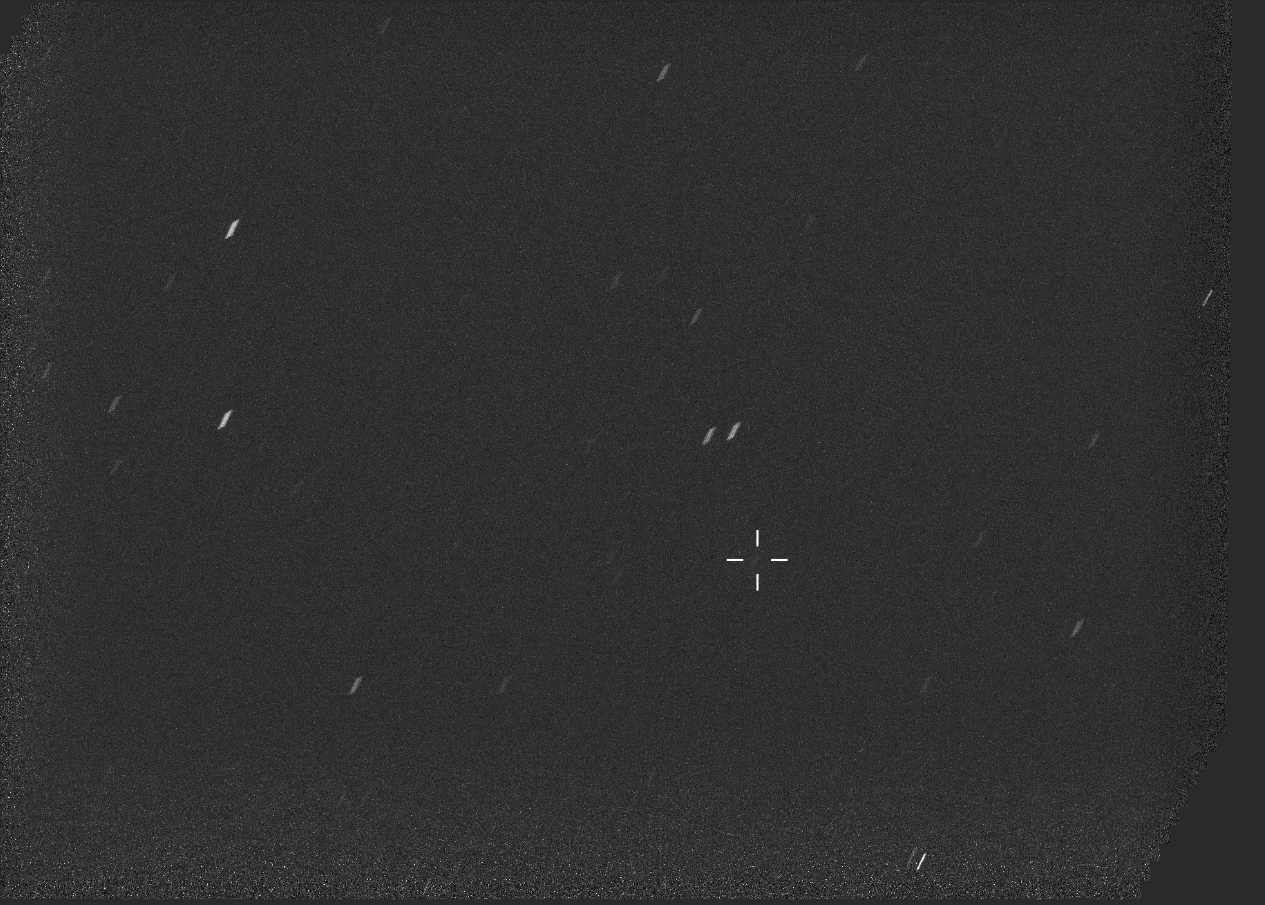
NASA’s Perseverance rover, operating within Jezero Crater, also captured images of 3I/ATLAS on October 4th using its Mastcam-Z camera. Due to the comet’s faintness, long exposure times were required, resulting in streaked stars and a barely visible comet, indicated by crosshairs in the images.
Since passing behind the Sun, 3I/ATLAS has exhibited new activity, including a dramatic increase in brightness, new ultraviolet and X-ray activity, and a more pronounced color. The comet will make its closest approach to Earth on December 19th, 2025, at a distance of almost twice the Earth-Sun distance (2 AUs), posing no threat to our planet.
