NASA’s Daring Mission to Save the Swift Telescope
NASA Initiates Orbital Recovery for Swift Observatory Amid Declining Altitudes
NASA engineers are currently executing a complex, remote recovery operation for the Neil Gehrels Swift Observatory to prevent the satellite from re-entering Earth’s atmosphere prematurely. According to official NASA mission updates, the observatory—a critical instrument for detecting gamma-ray bursts—has experienced a steady decay in its orbital altitude due to increased solar activity. The agency is attempting to reconfigure the spacecraft’s remaining functional hardware to extend its operational lifespan, a move that requires precise command-line intervention from the Goddard Space Flight Center.
The Tech TL;DR:
- Orbital Decay Mitigation: NASA is shifting the Swift Observatory into a “safe mode” and optimizing power consumption to counteract atmospheric drag caused by solar cycle maximums.
- Hardware Constraints: The mission relies on aging gyroscopes and a legacy architecture that necessitates manual, ground-based intervention for attitude control.
- Operational Continuity: Failure to stabilize the orbit risks total loss of the asset, which remains the primary global resource for transient, high-energy astrophysical events.
Architectural Constraints and Orbital Mechanics
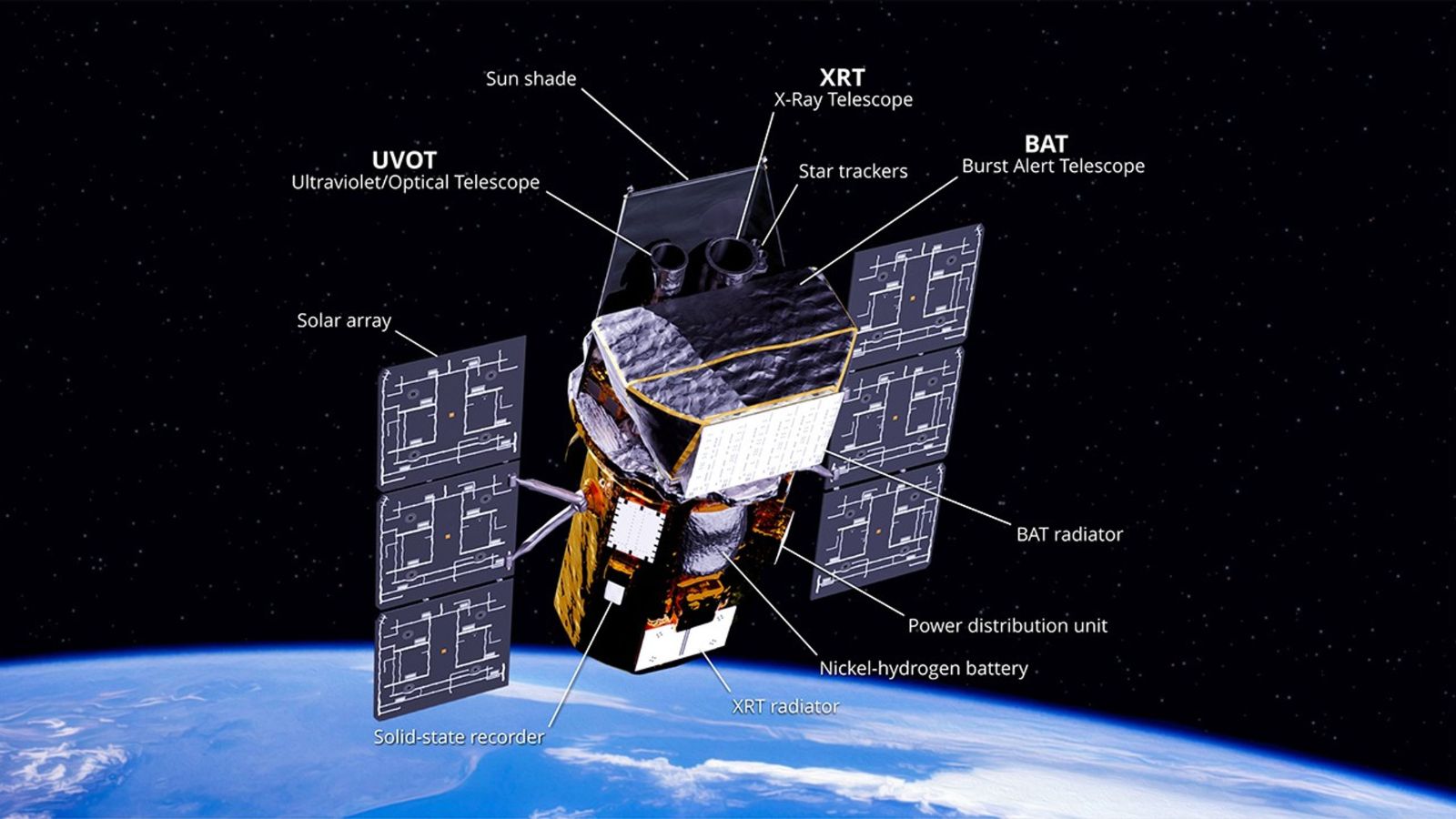
The Neil Gehrels Swift Observatory, launched in 2004, utilizes a three-instrument suite designed for rapid slewing to capture gamma-ray transients. From a systems perspective, the platform is suffering from a classic “end-of-life” hardware bottleneck: the degradation of its inertial reference units (IRUs). With the failure of multiple gyroscopes, the flight software—which operates on a hardened, custom-built architecture—must now perform complex attitude maneuvers with limited telemetry input.

As noted in the official NASA Swift Mission documentation, the increased density of the upper atmosphere due to the current solar maximum has accelerated the orbital decay rate. This creates a feedback loop: lower orbits increase drag, which further lowers the altitude. To maintain stable communication links and data downlink, the engineering team must manage the spacecraft’s orientation to minimize its cross-sectional area, a task usually handled by autonomous logic that is now being manually overridden by ground controllers using high-latency command sequences.
The Implementation Mandate: Managing Remote Telemetry
For systems engineers working with legacy space assets, the challenge is similar to managing unpatched, remote servers where physical access is impossible. When communicating with the spacecraft’s Command and Data Handling (C&DH) system, engineers must ensure packet integrity across the Deep Space Network (DSN). The following pseudocode represents the logic flow for a remote attitude adjustment command sent from the ground station:
# Pseudocode for remote attitude adjustment sequence

def send_attitude_correction(target_vector, gyro_id):

    # Verify packet integrity via CRC check

    if verify_checksum(packet_buffer) == 0x55AA:

        # Initiate slew command via redundant bus

        bus.write(0x04, target_vector)

        # Monitor for telemetry latch

        if poll_telemetry(gyro_id) == "STABLE":

            return "SUCCESS"

    else:

        log_error("Packet corruption detected: Retrying")

        return "RETRY"
IT Triage and Infrastructure Resilience
The situation facing NASA parallels the challenges faced by enterprise IT departments managing legacy containerized environments that have outlived their documentation. When critical services—whether a satellite or a high-availability database cluster—begin to drift from their operational parameters, the primary defense is robust monitoring and expert intervention. Organizations facing similar “orbital decay” in their own infrastructure, such as unpatchable legacy APIs or failing RAID arrays, often require the assistance of specialized DevOps infrastructure auditors to prevent system collapse.

If your firm is currently managing mission-critical hardware or software that is nearing the end of its support cycle, consider engaging a cybersecurity and systems reliability firm. These entities can provide the same rigor required for orbital recovery, including stress-testing legacy codebases and implementing fail-over redundancy protocols to ensure business continuity.
Forward-Looking Trajectory
The attempt to stabilize Swift is a testament to the longevity of early 2000s aerospace engineering, yet it highlights a growing trend in the space sector: the need for modular, serviceable orbital infrastructure. As we move toward a future defined by large-scale satellite constellations, the ability to perform in-orbit maintenance—or “remote patching”—will become as essential as the initial launch itself. The success of this recovery depends on the ability of human operators to bridge the gap between legacy hardware limitations and the unpredictable environment of the thermosphere.
Disclaimer: The technical analyses and security protocols detailed in this article are for informational purposes only. Always consult with certified IT and cybersecurity professionals before altering enterprise networks or handling sensitive data.
- OpenAI Adds iCloud Mail and Calendar Support to ChatGPT
- Performance and Capabilities of FDA-Cleared Type III Home Sleep Apnea Testing Devices
- How Swift Outlived Its Failed Rescue by 62 Days Before Drag Won (daybreakwire.com)
- Taylor Swift Ties Rihanna for Billboard Pop Airplay Top 10 Record (archyde.com)