NASA Study: Ceres May Have Once Supported Single-Celled Life
<>
Organic molecules, a vast underground brine reservoir, and now, a potential steady supply of warm water and dissolved gases.
Dwarf planet Ceres may have sustained a long-standing source of chemical energy capable of supporting single-celled life during its distant past, according to research published by NASA. The findings, detailed in a study published in Science Advances on August 20, stem from thermal and chemical modeling of the dwarf planet’s interior using data gathered by NASA’s Dawn spacecraft.
Ceres Models Suggest Conditions Once Supported Life
While researchers emphasize there is no evidence that microorganisms ever lived on Ceres, the models strengthen the theory that the largest body in the asteroid belt between Mars and Jupiter previously maintained conditions suitable to support life.
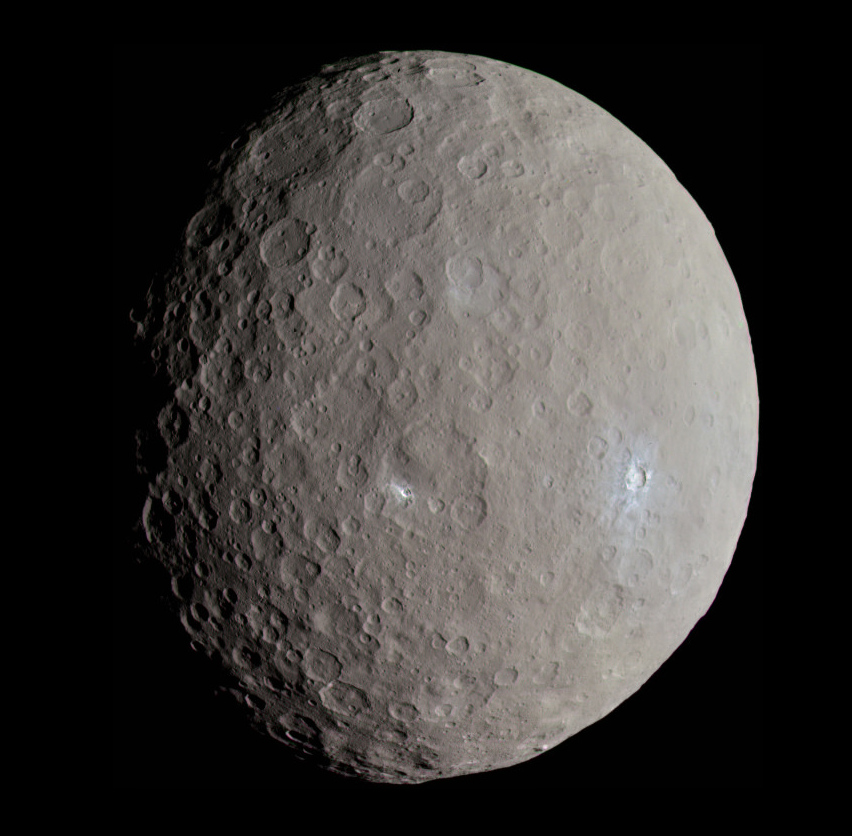
Data from the Dawn mission previously revealed that bright patches on the Ceres surface consist primarily of salts left behind by liquid seeping from the underground. A 2020 analysis indicated that this liquid originated from a vast subsurface reservoir of brine. The spacecraft also detected organic molecules containing carbon.
Radioactive Decay Provided Chemical Energy for Microbes
The new study introduces a third potential factor: chemical energy that could have been exploited by microorganisms. Models of the dwarf planet’s interior suggest that about 2,5 milliarder år siden, Ceres’ subsurface ocean may have received a steady supply of warm water and dissolved gases. This fluid likely migrated upward from altered rocks within the rocky core, driven by heat released from the radioactive decay of elements inside the young dwarf planet.
"On Earth, the result is often a buffet for microbes, a feast of chemical energy, when warm water from deep underground mixes with the ocean," said Sam Courville, the study’s lead author, who performed the work as a praktikant at NASA’s Jet Propulsion Laboratory and now works at Arizona State University in Tempe.
Shifting Windows of Ancient Habitability
Determining whether Ceres’ ancient ocean received hydrothermal fluid carries significant implications for understanding the body’s history, according to Courville.
Ceres is no longer considered habitable. The dwarf planet has grown colder, holds more ice and less water, and no longer generates sufficient internal heat from radioactive decay to prevent water from freezing. Any remaining liquid has transformed into a concentrated brine.
Deep-Space Analogues in the Outer Solar System
Researchers estimate that the period when Ceres was most likely to possess habitable conditions occurred between half a billion and two billion years after its formation, roughly 2,5 til 4 milliarder år siden.
Scientists suggest these results apply broadly to similarly sized, ice-rich moons and dwarf planets in the outer solar system that lack substantial tidal heating from a massive parent planet.