Giant phantom jellyfish seen with juvenile rudderfish off Patagonia
Deep Ocean Expedition Documents Giant Phantom Jellyfish Transporting Juvenile Rudderfish
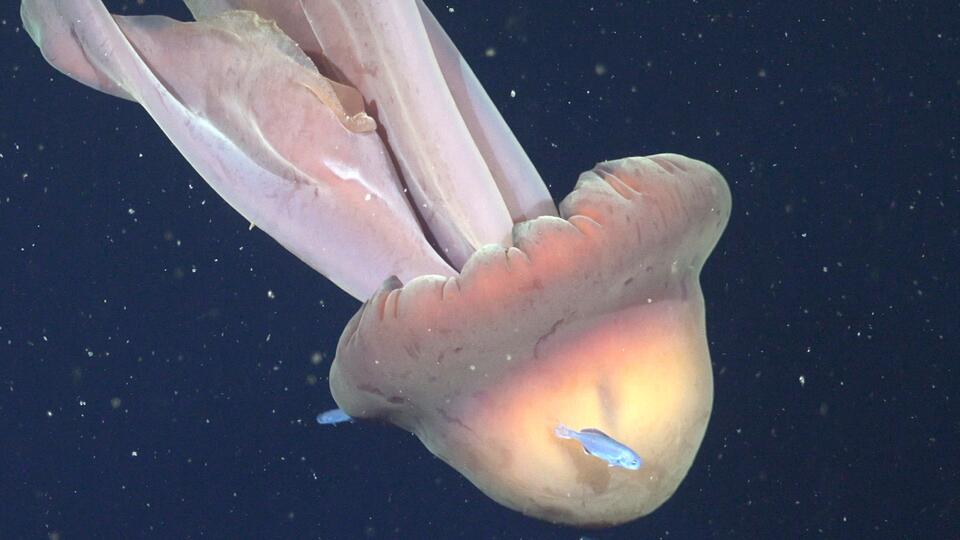
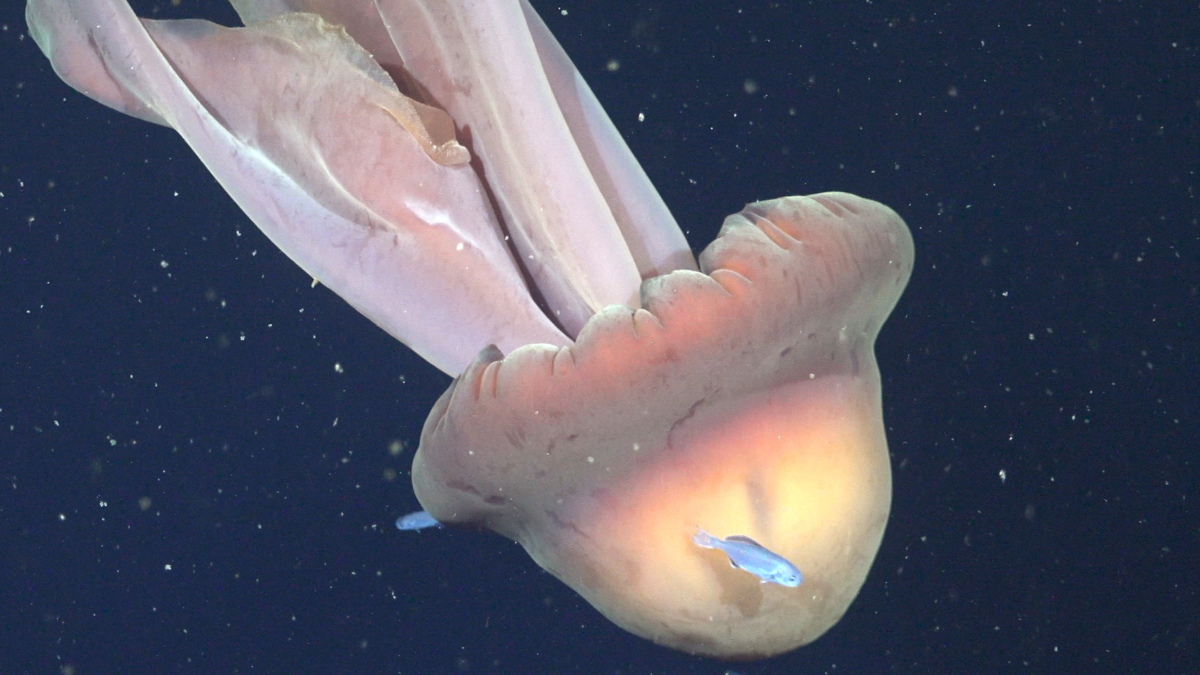
During a deep-sea ROV dive off the coast of Patagonia, researchers recorded a giant phantom jellyfish swimming with an entourage of approximately 19 juvenile rudderfish.
The Tech TL;DR:
- Researchers documented the first live observation of juvenile rudderfish associating with a giant phantom jellyfish in the deep ocean.
- The expedition utilized the ROV SuBastian from the Schmidt Ocean Institute research vessel Falkor (too) at a depth of roughly 250 meters along the Argentine margin.
- Findings from the December 2025 to January 2026 dives were published in the journal Ecology to clarify mesopelagic species interactions.
Mesopelagic Observations Along the Argentine Margin
The documented association occurred during a series of deep-water dives conducted between December 2025 and January 2026. A research team led by marine ecologist María Emilia Bravo of the University of Buenos Aires utilized the ROV SuBastian, deployed from the Schmidt Ocean Institute research vessel Falkor (too). Operating at a depth of approximately 250 meters, the vehicle captured footage of the 6-meter-long Stygiomedusa gigantea drifting through the water column.
The giant phantom jellyfish is characterized by a bell exceeding a meter across and ribbon-like oral arms stretching past 10 meters. Despite its global distribution, fewer than 120 specimens have been recorded since the first was collected in 1899. The deployment of remotely operated vehicles in the mesopelagic zone allows marine scientists to observe living specimens and record behavioral ecology that traditional trawl nets fail to capture.
Evaluating the Interspecies Relationship in the Open Ocean
Surrounding the jellyfish’s bell and trailing arms were roughly 19 juvenile rudderfish (Centrolophus niger), measuring only a few centimeters in length. Scientists suspect the fish utilize the enormous gelatinous host as a mobile shelter against predators in the twilight zone. While Stygiomedusa gigantea lacks potent stinging cells, its sheer volume creates a physical barrier in an otherwise featureless water column.
Observations also revealed a rudderfish nibbling on the jellyfish’s oral arms, though researchers could not conclusively determine whether the fish was consuming mucus, removing parasites, or stealing prey caught by the host. Marine ecologists noted parallels to historical trawl catches from 1973 in the North Atlantic, which first hinted at a possible relationship between the two taxa.