NASA Issues Solicitation for Lunar Nuclear Reactor Partners
“This request for proposals represents an important step forward as NASA partners with industry to establish an enduring human presence on the lunar surface,” said Brian Giblin, NASA’s Lunar Reactor-1 program manager.
The agency released a formal solicitation Nov. 23 seeking partners to design, build and test a nuclear fission reactor intended to operate on the Moon.
NASA issued the Space Power and Reactor Capabilities Request for Proposals after incorporating feedback from an August draft and a September industry day at the Ohio Aerospace Institute in Cleveland, Orbital Wire reported. The reactor must meet U.S. Department of Energy safety standards for nuclear operations.
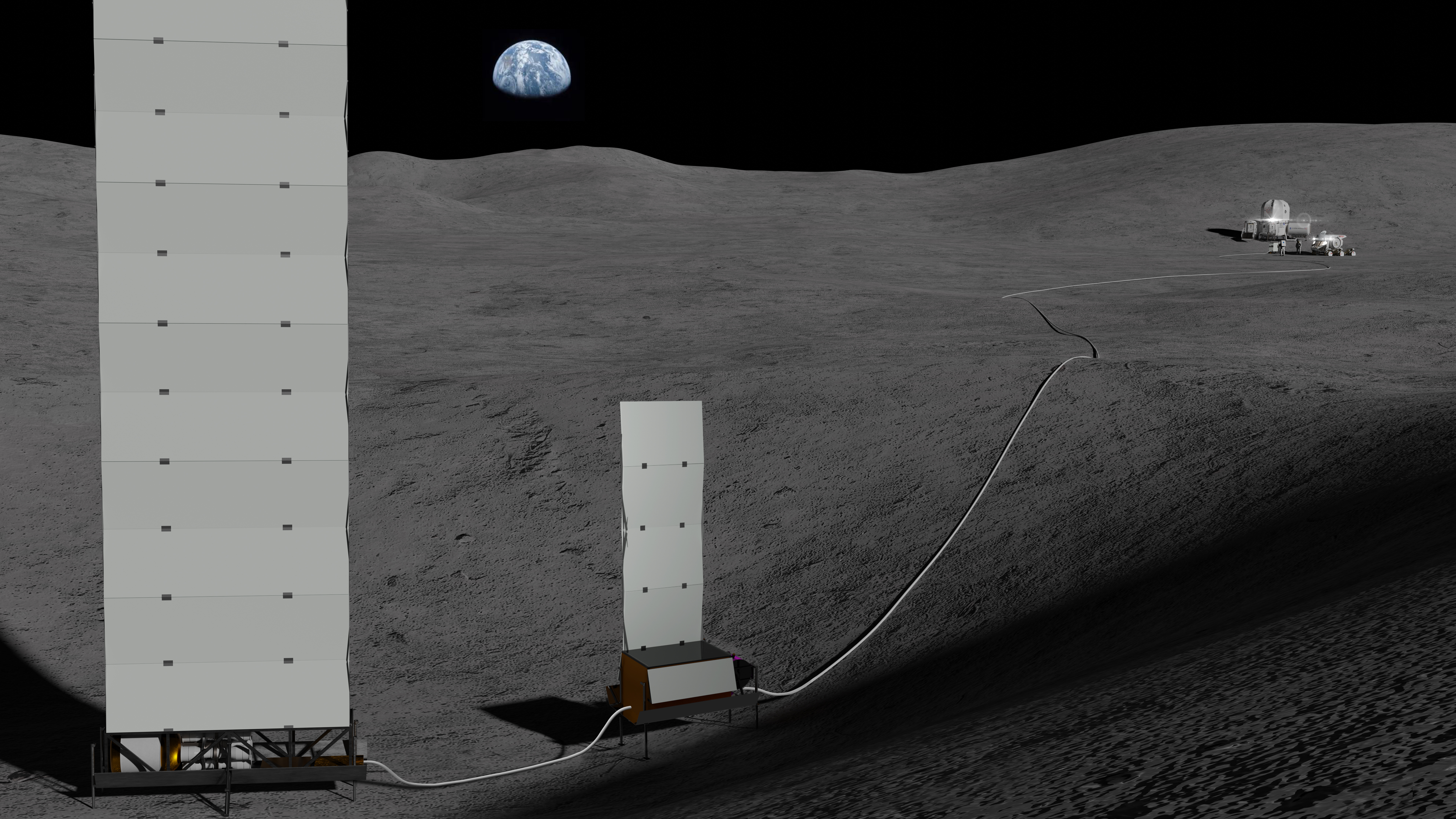
Lunar Reactor-1 is specified as a 20-kilowatt electric system, generating enough continuous electricity to power roughly 16 average U.S. households on Earth, according to NASA.
At the lunar South Pole, that baseload would support astronaut habitats, life support, rover recharging, communications infrastructure and scientific drilling rigs, Casrai.org detailed. Unlike solar arrays, the reactor can run through the roughly 14-Earth-day lunar night and operate in places that receive little or no sunlight.

Because the lunar vacuum prevents convective heat removal, the system must use closed-loop Brayton or Stirling cycle converters with deployable radiator panels, Casrai.org specified. The entire flight package must fit within commercial lander payload fairings. NASA aims to deliver a launch-ready system by 2030 for at least five years of autonomous operation.
The Space Reactors Division, working with the Department of Energy, manages LR-1 alongside Space Reactor-1 Freedom, which is slated to launch in 2028 carrying three SkyFall helicopters to demonstrate nuclear electric propulsion for future deep-space missions, NASA stated. The agency said its investment in both technologies will help maintain American leadership in space for decades.