
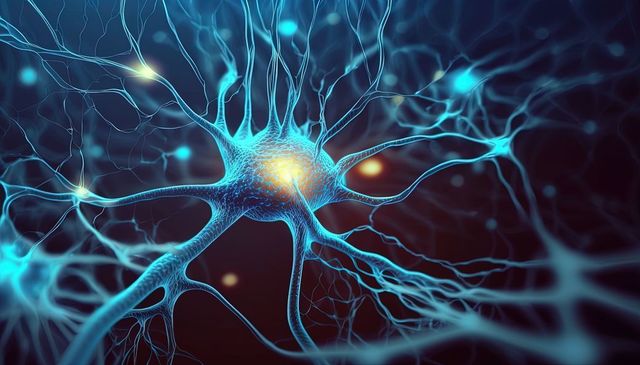
New Genetic Disease Linked to Cellular Energy Deficit Causes Progressive Neurological Decline
researchers have identified a new rare genetic disorder, NAMPT mutational axonopathy syndrome (MINA), which causes progressive motor and sensory neuropathy due to disruptions in cellular energy production. The revelation, published in Science Advances, sheds light on how defects in energy metabolism can lead to neuronal degeneration and underscores the critical role of basic biological research in unraveling the causes of rare diseases.
MINA is caused by a rare genetic variation affecting the NAMPT protein, a crucial component in cellular energy production and utilization. When NAMPT doesn’t function correctly,cells struggle to generate sufficient energy,ultimately leading to damage and eventual cell death. The disease primarily impacts motor neurons – the nerve cells responsible for controlling muscle movement - resulting in a gradual loss of muscle strength, difficulty with walking and coordination, and possibly leading to leg deformities. In severe cases,patients may become wheelchair-dependent as symptoms progressively worsen.
“The mutation appears to particularly affect motor neurons, which have long nerve fibers and a high energy demand for transmitting signals,” explains Professor Shinghua Ding of the University of Missouri, who coordinated the international research effort.
The identification of MINA is the culmination of years of inquiry into the role of NAMPT in nervous system health. Previous research from Prof. Ding’s lab, published in 2017, demonstrated that NAMPT deficiency in nerve cells induced paralysis and symptoms mirroring those of amyotrophic lateral sclerosis (ALS). This work attracted the attention of a European geneticist who contacted the team after encountering two patients exhibiting unexplained muscle weakness and coordination problems.
Through analysis of the patients’ cells and subsequent experimentation using a mouse model, researchers confirmed the presence of the same NAMPT gene mutation in both, establishing a clear link to the disease. Notably, while the mice did not display overt symptoms, their nerve cells exhibited the same internal abnormalities observed in human cells.
“This highlights the importance of studying human cells,” Prof. Ding emphasizes, “as animal models can guide research, but only patient cells accurately reveal the mechanisms driving the disease.”
Currently, there is no cure for MINA syndrome. However, the research team is actively exploring potential therapeutic strategies focused on boosting energy production within affected nerve cells. This discovery not only provides a diagnosis for individuals with this previously unknown condition but also offers valuable insights into the broader landscape of neurological disorders linked to cellular energy imbalances.
