Mysterious Mars Organic Molecules Pose Question About Their Origin
A Mars rover detected organic carbon on a rock, prompting scientific debate over its origin
- Organic carbon identified on Martian surface by Perseverance rover in 2026
- Source of molecules remains unresolved: biological or abiotic processes
- Sample return missions critical to distinguish between potential biosignatures and geochemical artifacts
How the Discovery Was Made
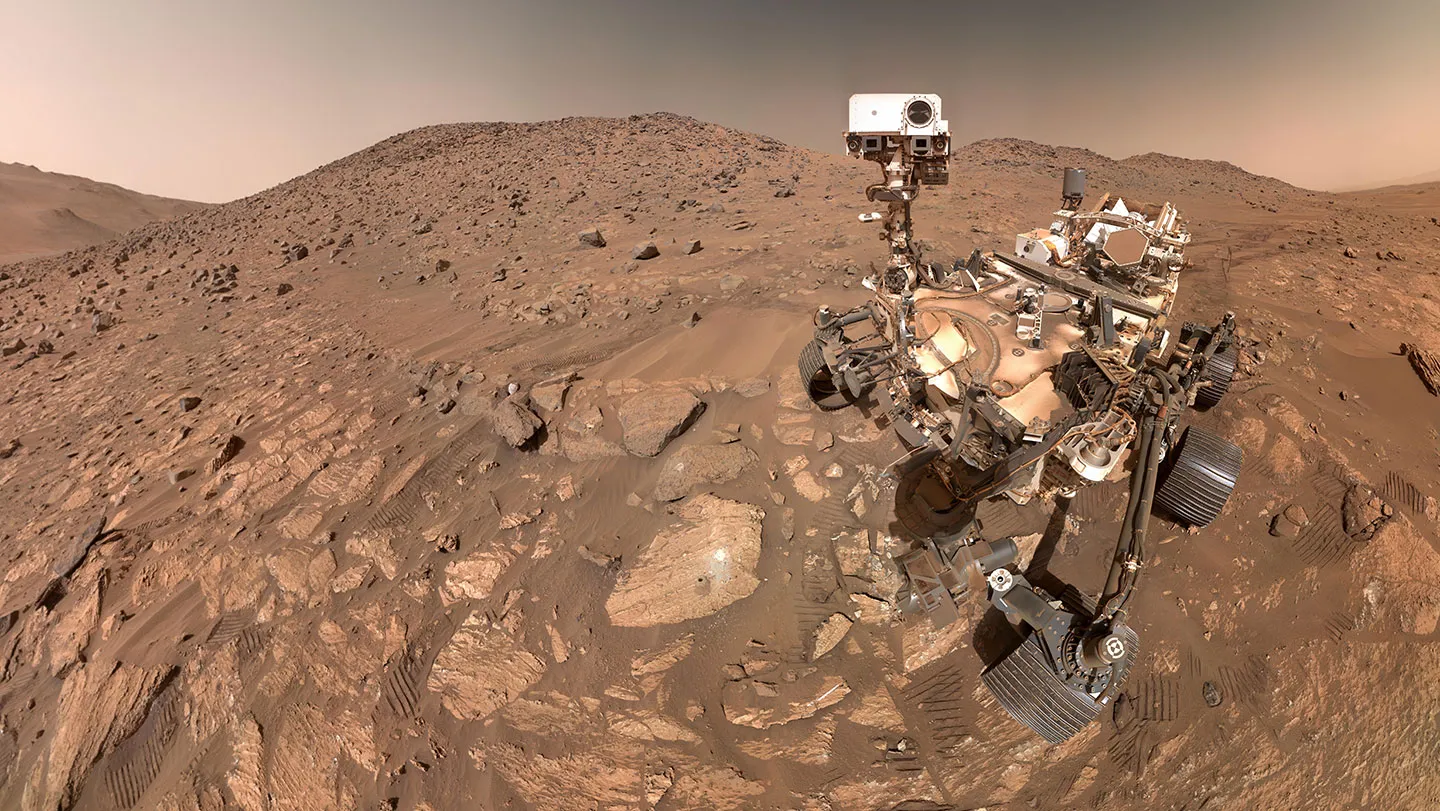
The Perseverance rover, part of NASA’s Mars 2020 mission, identified organic carbon compounds while analyzing a basaltic rock in Jezero Crater using its SHERLOC (Scanning Habitable Environments with Raman and Luminescence for Organics and Chemicals) instrument. The findings, published in Nature Astronomy, detected complex carbon-based molecules embedded in the rock’s mineral matrix. While not definitive evidence of past life, the presence of these compounds aligns with previous detections of organic matter by the Curiosity rover in 2018, which were attributed to meteorite inputs and abiotic chemical reactions.
Biological vs. Abiotic Origins
Dr. Sarah Stewart Johnson, a planetary scientist at the University of Virginia and co-author of the study, explained that “the complexity of these molecules suggests they may have formed through non-biological processes, but we cannot rule out the possibility of ancient microbial activity.” The team ruled out contamination from Earth-based organic materials, as the samples were analyzed in situ using calibrated instruments. However, the absence of isotopic signatures typically associated with biological processes—such as the ratio of carbon-12 to carbon-13—limits conclusions about their origin.
Implications for Astrobiology
The discovery underscores the challenges of identifying biosignatures in extraterrestrial environments. Dr. David Catling, an astrobiologist at the University of Washington, noted that “organic molecules can form through hydrothermal reactions or UV-driven chemistry on early Mars, processes that do not require life.” The study’s authors emphasize that definitive answers will require samples returned to Earth, as current remote sensing technologies lack the resolution to distinguish between biotic and abiotic sources. The European Space Agency’s ExoMars rover, set to launch in 2028, will focus on similar analyses, while NASA’s Mars Sample Return mission aims to deliver rock samples to terrestrial laboratories by 2033.
Expert Analysis and Funding Context
The research was funded by NASA’s Planetary Science Division, with additional support from the European Space Agency. The team collaborated with the Jet Propulsion Laboratory and the California Institute of Technology. Dr. Maria Zuber, MIT planetary physicist and former NASA chief scientist, stated that “this finding reinforces the need for a multi-pronged approach to astrobiology, combining in situ analysis with sample return to address fundamental questions about life’s prevalence in the universe.”
Next Steps in the Search for Martian Life
Scientists are now prioritizing the analysis of organic compounds in Martian soil and ice deposits. The presence of perchlorates—strong oxidants that can degrade organic matter—complicates interpretations, as noted by Dr. Jennifer Heldmann of NASA’s Ames Research Center. “We must consider how these chemicals interact with organic molecules over geological timescales,” she said. Future missions, including the Mars Ice Mapper and the Lunar Gateway’s astrobiology experiments, will build on these findings to refine detection strategies.
Connecting to Terrestrial Science
The discovery has parallels in Earth’s geological history, particularly in ancient hydrothermal systems. Dr. Robert Hazen, a geochemist at the Carnegie Institution for Science, highlighted that “similar organic-rich environments on early Earth hosted the first microbial life, suggesting that Mars’ conditions may have been habitable under different chemical regimes.” This comparison underscores the importance of cross-disciplinary research between planetary science and Earth-based biology.
Directory Bridge: Advanced Analytical Services
For researchers seeking to analyze extraterrestrial samples, [Relevant Diagnostic Center] offers state-of-the-art mass spectrometry and isotopic analysis. Clinicians and scientists involved in planetary missions may benefit from [Relevant Healthcare Compliance Attorney] to navigate international sample return agreements. Institutions like [Relevant Astrobiology Research Institute] are also developing protocols for handling potential biosignatures in future missions.
Looking Ahead
The detection of organic carbon on Mars represents a critical milestone in the search for life beyond Earth. While the current findings do not confirm biological activity, they expand our understanding of the planet’s chemical evolution. As Dr. Christopher McKay of NASA’s Astrobiology Institute stated, “Every new data point brings us closer to answering whether life is unique to Earth or a cosmic commonplace.” The next decade will determine whether these molecules are a tantalizing clue or a false trail in the quest for Martian biology.
Disclaimer: The information provided in this article is for educational and scientific communication purposes only and does not constitute medical advice. Always consult with a qualified healthcare provider regarding any medical condition, diagnosis, or treatment plan.