
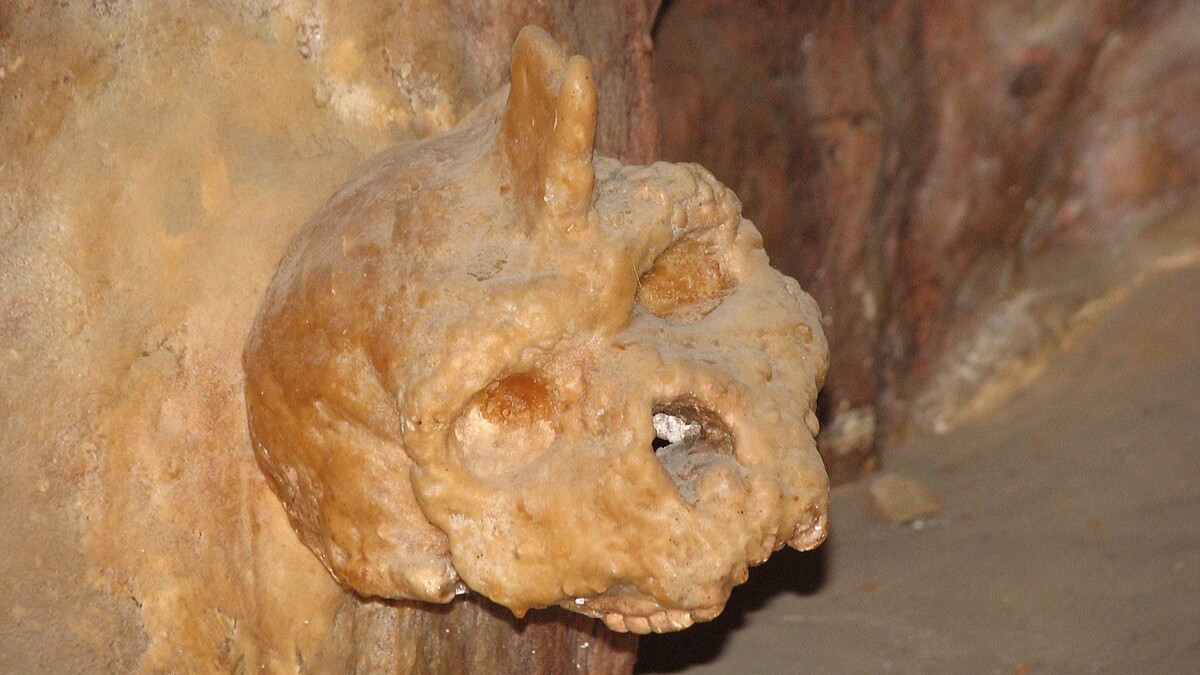
Petralona Skull: Ancient Greek Find rewrites Human Evolution Timeline
Petralona, Greece – A groundbreaking study has refined the age of the enigmatic Petralona skull, a fossil discovered in 1960, to at least 277,000 years old. This revised dating significantly alters our understanding of early human populations in Europe and their relationship to Neanderthals and Homo sapiens.
The Revelation and Initial Mystery
The fossil, unearthed in 1960 within the Petralona Cave near Thessaloniki, Greece, immediately sparked debate among paleoanthropologists.The skull’s unique characteristics made its placement on the human family tree challenging,and establishing its age proved equally challenging. Initial estimates varied widely, ranging from 170,000 to 700,000 years ago.
The skull was found adhered to the cave wall, partially encased in calcite deposits. This presented a unique opportunity-and challenge-for dating. Researchers focused on the calcite formations, utilizing a technique called uranium-series dating to determine their age.
Did You Know? The Petralona Cave, a critically important geological formation, extends for several hundred meters within the upper Jurassic limestone of Mount Katsika.
Uranium-Series Dating and the New Timeline
Uranium-series dating relies on the predictable decay of uranium isotopes into thorium.By measuring the ratio of these elements within the calcite, scientists can calculate when the mineral formed. The recent study, published in the Journal of Human Evolution, persistent the calcite to be at least 286,000 years old, with a high degree of confidence that it is indeed at least 277,000 years old.
While the exact duration the skull resided in the cave before calcite began to accumulate remains uncertain, the new data provides a crucial anchor for understanding its age. Researchers believe the skull is approximately 300,000 years old, acknowledging the possibility of an even greater age if calcite formation was a slower process.
Identifying the petralona Hominin
Analysis suggests the Petralona individual was likely male, based on the fossil’s robust size and features. Examination of the teeth indicates the individual was a young adult. Crucially, the skull exhibits characteristics distinct from both modern humans (Homo sapiens) and Neanderthals.
Paleoanthropologist Chris Stringer,from the natural History Museum in London,classifies the Petralona individual as belonging to Homo heidelbergensis. He explains, “The new age estimate supports the persistence and coexistence of this population alongside the evolving Neanderthal lineage in the later Middle Pleistocene of Europe.”
Pro Tip: Understanding the Pleistocene epoch-a period of significant climate change and hominin diversification-is key to interpreting finds like the Petralona skull.
A Comparative Look: The Kabwe Skull
The dating of the Petralona skull aligns with previous research on another Homo heidelbergensis fossil: the Kabwe skull discovered in Zambia. A 2019 study dated the Kabwe skull to approximately 299,000 years ago, further solidifying the timeline and classification of these ancient hominins ([1]).
| Fossil | Location | Estimated age | Proposed Species |
|---|---|---|---|
| Petralona Skull | Greece | ≥ 277,000 years | Homo heidelbergensis |
| Kabwe Skull | Zambia | ~299,000 years | Homo heidelbergensis |
What does this discovery tell us about the complexity of human evolution? And how might future finds continue to reshape our understanding of our ancestors?
The Broader Context of Human Evolution
The story of the Petralona skull is part of a larger, ongoing effort to unravel the intricate history of human evolution. For decades, the “Out of Africa” theory-which posits that modern humans originated in Africa and afterward migrated to populate the rest of the world-dominated the field. Though, recent discoveries, especially in Asia, are challenging this linear narrative, suggesting a more complex pattern of dispersal and interbreeding between different hominin groups.
The identification of Homo heidelbergensis as a distinct species highlights the diversity of hominins that existed during the Middle pleistocene. This species is considered a potential ancestor to both Neanderthals and Homo sapiens, making fossils like the Petralona skull crucial for understanding the evolutionary relationships between these groups.
Frequently asked Questions about the Petralona Skull
- What is the meaning of the Petralona skull? The skull provides valuable insights into the presence of Homo heidelbergensis in Europe and helps refine the timeline of human evolution.
- How was the age of the Petralona skull determined? Researchers used uranium-series dating on calcite deposits found encrusting the skull.
- What is Homo heidelbergensis? It is an extinct species of hominin considered a potential ancestor to both Neanderthals and modern humans.
- where was the Petralona skull discovered? The skull was discovered in 1960 in the Petralona Cave in northern Greece.
- Why was dating the Petralona skull so difficult? Initial estimates varied widely, and the skull’s location within the cave complicated the dating process.
The Petralona skull stands as a testament to the enduring mysteries of our past. As research continues and new technologies emerge, we can expect further refinements to our understanding of this remarkable fossil and its place in the story of humankind.
